Introduction
Rupina La Pass, Tsum Valley, Ganesh Himal & Manaslu Circuit Trek: if you crave true, untouched adventure within this specific timeframe, then this is the ultimate backcountry experience.
With an experience for bravehearts, and the walk route for at least 5 to 7 hours a day, pushing through nature’s most thrilling and rugged wilderness, this journey is unique in how it seamlessly integrates and blends nature’s raw art and craft with profound cultural experiences.
One week, you are navigating the hidden ancient Tibetan Buddhist sanctuaries of the Tsum Valley, and the very next week you are tackling the high-altitude challenges of the Rupina La Pass.
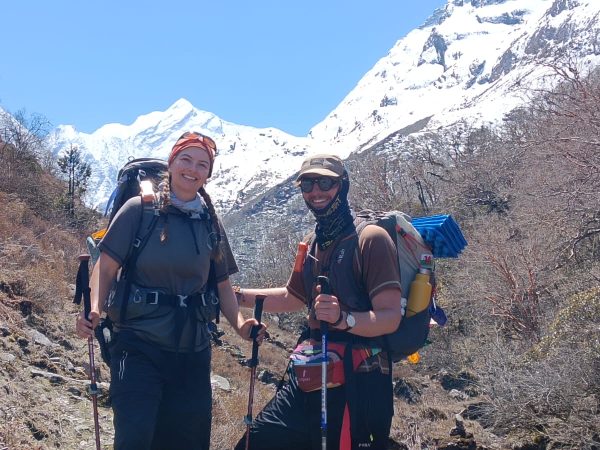
Surrounded by towering peaks of the Manaslu and Ganesh Himal ranges for the majority of the time on the trail, this adventurous trip provides a masterclass in alpine cultural and biological diversity and isolation of alpine villages along with dramatic icy and glacial landscapes, for any adventure lovers who want to escape the hustle and bustle of regular life and want to experience the authenticity of Himalayan life, this trek is a pinnacle.
Highlights of the Rupina La Pass
Gorkha: The starting point
Now, for those who are unfamiliar with the history of Nepal, they might feel like what’s so special about the starting point is that it’s a highlight in itself
.But the district of Gorkha isn’t just a topographical highlight; rather, when we are here, it’s the very core of the foundation of modern Nepal where we’ll be standing, as the very conquest of modern Nepal started, which is now known to the world.
The major highlight here we will be witnessing is the palace of the “Founder of modern Nepal”. The “Shree Panch Badamaharaj Dhiraj” Prithivi Narayan Shah, which is located on top of a hill standing on the edge, which also houses the sacred cave of the Lord Gorakhnath.
The Cultural transition.
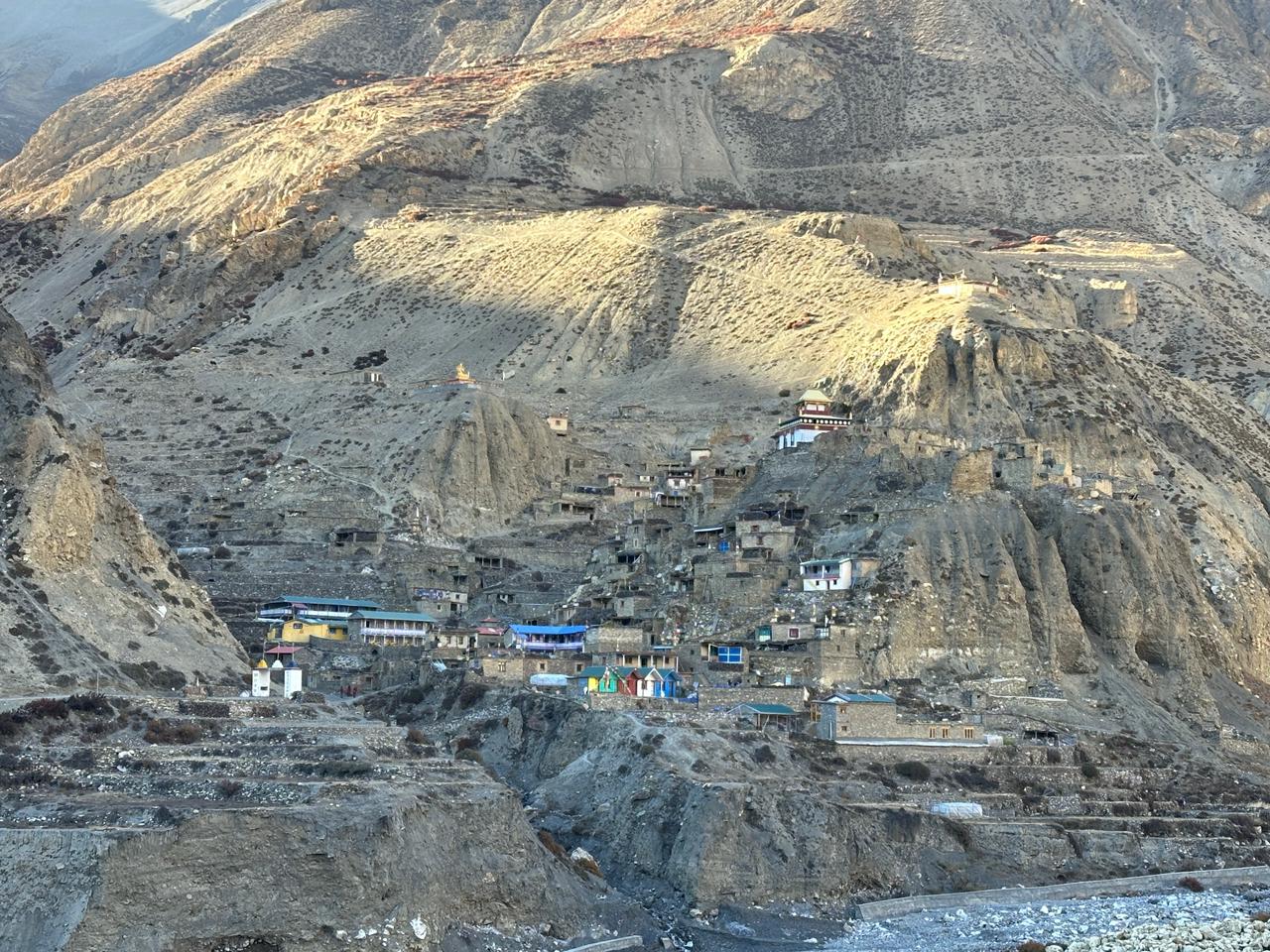
Another highlight within the Gorkha district is the cultural amalgamation of different ethnic groups. You’ll find a diverse fusion of language and architecture as you transition from lower to higher elevation, and you’ll get to witness the diverse ethnic tapestry, from Hindu heritage in the lower elevations to the beautiful and culturally vibrant Gurung village of Barpak and Laprak before stepping into the Tibetan Buddhist culture of the Tsum Valley.
Visuals of Manaslu and other peaks
Let me make you something clear: when you think about trading in high-altitude elevations and places like Nepal. Which is mainly covered by the. Some of the highest peaks of the world and its panorama. Anywhere or everywhere you go in the high elevations, you will get to witness the visuals of peaks.
The same is during this trip; you will get to witness the ranges and some of the highest peaks of the world like Mount Manaslu, the Bouddha Himalayan range, and the Himalchuli massif, the Shringi Himal and Ganesh Himal.
Wilderness trekking experience.
As for the experience, unlike any other routes where tea houses are there to serve you and facilitate you, keep you warm. This route will have none of it.
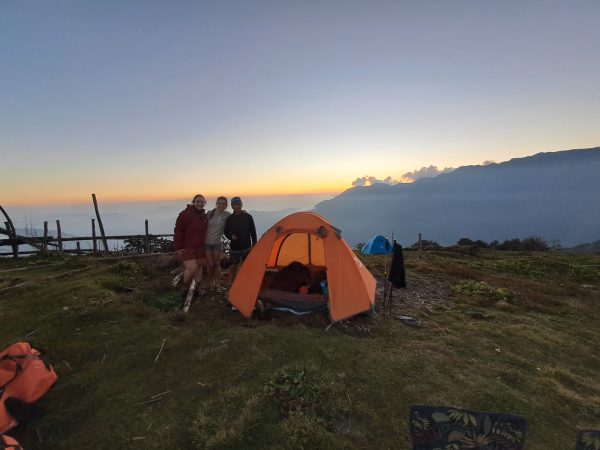
You’ll be camping, cooking for yourself. Staying in a tent or camping services that you carry with yourself along with your Crew members. This right here, this will be the truly wilderness experience, being the part of your trek, which is why this experience feels completely different from the other regular trekking areas.
Chaotic glacial moraine
Now let’s talk about something chilling cold and chilling, alright?
See, we will be travelling and walking several ups and downs, navigating glacial Moraines and icy surfaces, and we’ll be working on thin icy sheets full of risk, thrills, adventure and adrenaline.
Oftentimes, when your steps push into the surface underneath you, you can hear the crisp crackling of the icy sheets. The walk on the glacial moraine will be breathtaking, literally, and very chaotic.
The best thing you need to do what you can do is walk steadily, maintain a good pace and stay calm.
Panoramic Twin Valley
Let’s talk about the panoramic Twin Valley.
But before that, let’s know why it is called the “Twin Valley”.
The nickname Twin Valley is given to it as you are standing at the crest of the Rupina La Pass (4,720 m) and balancing on a geographical knife-edge, with two entirely different worlds and river systems.
While you look back, you will get to see the lush, terraced and Gurung-dominant Valleys that are carved by the Daraudi River, and while you look forward, it reveals the stark, rugged granite beauty of the Budhi-Gandaki River that leads into the high alpine Tibetan Buddhist wilderness.
And once you step over this threshold, the twin nature of the trek truly comes to life. You will be transitioning instantly from a wild, self-sufficient camping expedition into a deeply spiritual and culturally rich Tsum Valley. The visual will be a staggeringly contrasting one.
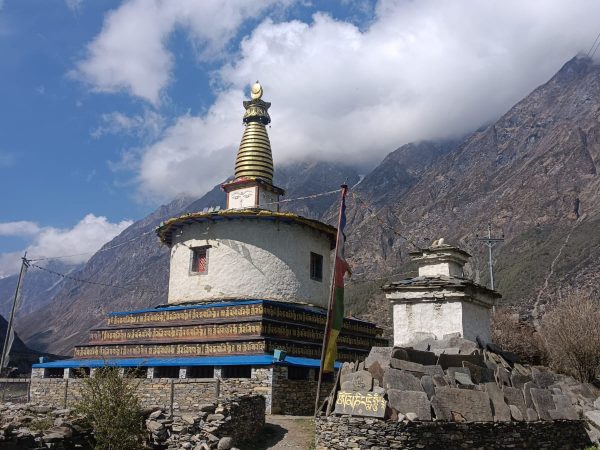
Like one moment you are navigating raw glacial moraines, and next you are walking past ancient mani walls and chortens framed by towering peaks of Manaslu and Ganesh Himal.
Best time to do Rupina La pass with Tsum Valley Manaslu circuit trek
Autumn (October to November)
It is the best time of the year, as the skies are clear and the weather is stable, and the safest conditions for crossing the Rupina La Pass.
Also, the whole nation goes through a clearing session, making the weather and trail crisp, clear, dry, and safe, which is why it is also favoured by the majority of tourists and considered the peak season even if the surroundings aren’t green and filled with blossoms.
Spring (March-May):
Spring is the season when nature wakes up. Lower trails of the Manaslu Circuit come alive as the hillsides burst into the vibrant blanket of blooming red, pink and white wild Rhododendrons.
This season offers comfortably warm daytime hiking temperatures and spectacular, crisp views of the snow-capped peaks against a brilliant blue sky.
There’s something to keep in mind is the fact that During the early springs While you navigate through the trails, there are still the leftover snows and the Heavy snow packs at the high elevations from the winter which gives trekkers a caution to undertake regarding the fact that they should be prepared for the temporary block or Complicated Phases during the crossing of the Larkya La pass As it sometimes makes the pass Impassable.
Required paperwork and permits
Now let’s talk about the official papers that are required to do this trek.
Since the trip combines with highly restricted and sensitive border regions, you will need this specific, detailed paperwork as mentioned below.
Manaslu Restricted Area permit (RAP)
This right here is your primary permit, which is required to trek the trail between the villages of Jagat and Dharapani.
Because it is a border-adjacent zone, pricing fluctuates based on the trekking season and is counted strictly by the number of days you spend inside the restricted area.
As for the pricing of the permits, it varies based on seasons:
Autumn, Peak season (September to November): $100 USD per person for the first seven days.
$15 USD per person for every additional day after the first week.
Winter, spring & summer (December to August): $75 USD per person for the first 7 days.
$10 USD per person for every additional day after the first week.
Tsum Valley Restricted Area Permit (RAP)
If you decide to take a detour to explore the ancient, hidden Tsum Valley before continuing on the main Manaslu Circuit, you must purchase this separate Restricted Area permit. Like the Manaslu RAP, it is season-dependent.
Autumn peak season, September to November: $40 USD per person for the first 7 days.
$7 USD per person for every additional day.
Off-peak season (December to August): $30 USD per person for the first 7 days.
$7 USD per person for every additional day.
Manaslu Conservation Area Project Permit (MCAP)
This permit funds local environmental protection, community development, and trail maintenance from the start of your trek through the high Pass. The prices are fixed year-round and don’t change based on how many days you stay.
- Foreign Nationals 3000 NPR (approx. $23 to $25 USD)
- SAARC Nationals: 1000 NPR (approx. $8 USD)
Annapurna Conservation Area Project (ACAP)
Even though this is the Manaslu trek, your descent after crossing the Larkya La Pass takes you into the Annapurna region (Bhimtang down to Dharapani/Besisahar).
Because you exit through this zone, the government requires an ACAP permit. It is also a flat rate and valid for single entry.
Foreign Nationals: 3000 NPR (approx. $23 to $25 USD)
SAARC Nationals: 1000 NPR (approx. $8 USD).
A summarised checklist for the standard circuit (peak season)
If you are doing a standard Manaslu trek (without Tsum Valley) in October, you will typically spend about 10 days inside the restricted zone. Your total permit cost will be calculated like this:
- Manaslu RAP (7 days+ 3 Extra days: $100+ $45 = $145 USD.
- MCAP: Approx 23 USD/ 3000 NPR.
- ACAP: Approx 23 USD/ 3000 NPR.
- Local municipality fee: approx $8 USD (1000 NPR)
- Total estimate: ~$199 USD per person.
Packing list and gear guide.
Let’s breakdown about thespecialised gears and the essentials, or whatever accessories you might need during the trip.
- Footwear: Broken-in trekking boots, camping shoes and high-quality woollen socks.
- Clothing layers: Moisture-wicking base layers, an insulating fleece, down jacket and a waterproof windproof shell (Vital for Rupina La pass)
- Pass Essentials: Headlamp (with extra batteries for the pre-dawn pass crossings), microspikes (depending on the season and trekking poles.
- Sleeping: A 4-season sleeping bag rated to -10°C/15 °C.
Accommodation and food
Below is a clear explanation outline regarding the food and accommodation provision during your whole trip.
cf
The wilderness phase, Day 1 to 7: This is a complete wilderness phase that involves camping (including a tent, mess tents, and a camp kitchen crew while crossing the Rupina La Pass.
The cultural phase, Day 8 to 14: Cosy Tibetan-style tea house and unique monastery stays like Mugabe and Gumba Lungdang, where meals are ordered from a menu.
Acclimatisation & safety protocol
It’s necessary to have crucial health information and know about the safety protocols while ascending such high peaks, possibly to avoid or deal with AMS.
Acute Mountain Sickness (AMS) monitoring & Symptoms.
Regardless of age, physique or health conditions, altitude sickness can affect anyone out of nowhere, which is why it’s important to Practice and maintain the practice of climbing high and sleeping low and closely monitor for warning signs.
Mild symptoms include a throbbing headache, dizziness, loss of appetite, nausea, mild fatigue or trouble sleeping.
Severe symptoms include Persistent vomiting, extreme breathlessness even while resting, severe coughing, loss of physical coordination (ataxia) or mental confusion. These indicate advanced conditions like HAPE or HACE and require immediate evacuation.
Hydration and fueling guidelines.
There at the high altitude is dry and thin, and thus causes rapid dehydration, increasing the chances of altitude sickness through loss of fluid in the body.
So it is suggested, as per health experts, that you do daily fluid intake of about 4 to 5 litres, which can be of a wide range from clean drinking water to electrolyte solution, Hot garlic soup or any sort of local remedy.
On this long trail, water might not be available all the time everywhere, which is why you need to follow guidelines like, to boil the Water, and If possible carry necessary Items like water purification tablets, UV filters, and it’s better to avoid water from open sources like streams, ponds, rivers, or even taps before drinking to avoid any source of harmful infections as it might not sit well with the GI system If you are new to the environment, so drink only boiled or purified water.
And as for dietary consumption, prioritize high carbohydrate meals like the traditional and typical local meals, rice and lentils, as it gives your body a clean form of energy and doesn’t require much energy to process it at high elevation, thus avoiding this strain on the body.
And please avoid alcohol, sleeping pills or any form of intoxication at high altitude, and also avoid caffeinated drinks and beverages at high altitude, as all of these substances might cause insomnia, contributing to altitude sickness, complicating situations and creating and leading the worst-case scenario.
Emergency evacuation and insurance protocols.
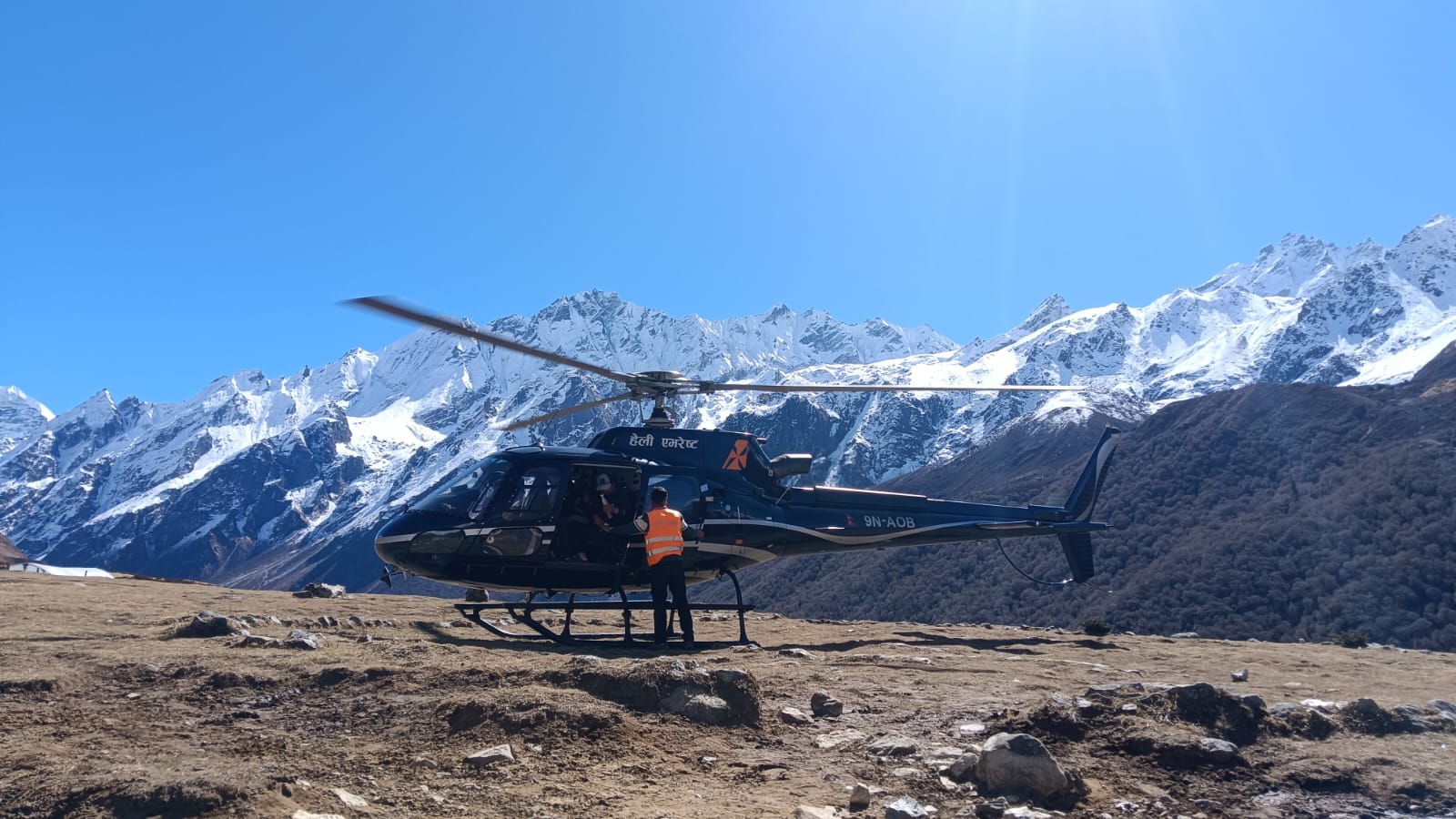
We’ll be in a high-altitude zone where there is no way to access by land transportation, meaning if any sorts of hazardous calamities or any emergency occurs, then the only way out of this situation is the evacuation through helicopter services which is why you need an insurance policy that covers your health alongside the emergency evacuation services during the emergency and please make sure that it also covers trekking up to 6,000 meters of elevation explicitly including the Unrestricted emergency helicopter evacuation.
As for the process of evacuation in the event of a severe medical emergency or advanced AMS (Acute Mountain Sickness), the lead guide holds the ultimate authority to call for an immediate satellite-coordinated helicopter evacuation to a hospital in the nearby vicinity or, if needed, the Advanced Hospital Services in Kathmandu.
And do keep in mind the fact that the money for this emergency evacuation will not be refunded, as all the resources and manpower have to be kept ready and on standby, prepaid and equipped with the necessary resources for any moment of emergency.
Guidance and logistics.
The trip is a couple of weeks long, and it’s impossible to do the trip without assistance for logistics and guidance since it involves multiple logistics, supplies of necessary resources, as it involves camping and its setup, and also cooking to be done by the trekkers themselves alongside their crew member for food.
And another important part that requires Logistics support at the elemental level is because the trek involves switching of itinerary and route from camping expectation to a standard teahouse trek through the midway, and hence adding logistics support while switching becomes much more helpful and easier during transition.
Wifi and Internet
Most teahouses offer paid services like Everest Link, though the connection becomes unstable at higher altitudes.
You can also acquire data using the data SIM card of Nepal Telecom, which is highly favoured by high-altitude travellers due to better coverage.
As for the Wi-Fi, it is usually available in teahouses and lodges.
Its coverage at lower altitudes is good but fades away with increasing altitude, and also a few dollars’ worth of charge will be charged for the usage of wifi in the high-elevation teahouse, but since it’s all about camping, it means no teahouse Wi-Fi is also available; as a result, you’ll have to acquire adequate data from your carrier.
Alternative routes
Rupina La+ Manaslu Circuit
Instead of the standard trip, if we start the trip from Barpak, then go through the rugged Rupina La pass (4,720m) and then merge with the classic Manaslu circuit trek at Nyak/Deng while making our way through the Samagaon to cross Larkya La (5,106m). Then this alternative links two massive passes, completely avoiding the busier lower trails.
Rupina La+ Tsum Valley
Rupina La is the tough one, which is why we will tackle this first. But instead of pushing towards the Manaslu Basecamp, we will diverge from there into the isolated Tsum Valley, as this transition will directly lead us to the Ancient, deeply spiritual Tibetan Buddhist sanctuary like Mu Gompa.
Barpak to Laprak/Ruby Valley
I like to suggest this to anyone to take this trail as alternative who is trying to pass and trek with full camping gear over treacherous and unmarked 4,270m pass, which is way too extreme and is also a pressure on your body regarding how extreme the geography can be on your physique which is why you divert to the lower circui as you will be starting in the historic village of Barpak and experience the cultural heart of the Gurung community with a display of Ganesh Himal.
The team.
Guide
The team will be led by a licensed, English-speaking, and very well-experienced wilderness trekking guide with extensive high-altitude and first-aid training who can help and assist you during altitude-related emergencies.
Porter ratio
The standard ratio is a 2:1 porter ratio, meaning one Porter carries a maximum baggage weight of 25KG combined for two trekkers, which means they will carry specifically 12.5 kg per client, and if you need to carry more load, then you will need to hire an extra porter.
Camping crew.
From day 2 to 7, the Rupina La Wilderness Camping section. The package includes dedicated camp cooks and kitchen hands to manage the tent setups and all wilderness meals before your arrival. Point. As they will be ready by then. To set up your camp and prepare your meal before you call it a day.
Is Solo Trekking to Rupina La Pass Worth It?
It is only a matter of time and a matter of individual preferences.
Whether a solo trip to Rupina La Pass is Worth it or not ultimately boils down to your personal Preferences. Standards and choices.
If you are someone who loves a raw, self-sustaining expedition rather than a standard tea house trip, while carrying your own essentials and accessories beyond commercialisation in the raw wilderness for 5-7 hours of each day and spending the night under the cold, chilling and beautiful night sky of the high Himalayan While being comfortable with anything available in the least comfort zone, then this trek is absolutely for you.
Note: If you would like to skip Rupina La Pass and only do the Tsum Valley, Ganesh Himal, and Manaslu Circuit Trek, you can choose our 25-day Tsum Valley, Ganesh Himal & Manaslu Circuit Trek package.