Introduction
When it comes to trekking in Nepal, most travellers default to thinking about mainstream treks like the Annapurna or Everest region.
However, if you are searching for something raw, something untouched by modernity and its noise and profoundly spiritual in your journey, the 18-day Manaslu Circuit trek with Serang Gumba and Kal Tal is the ultimate adventure alternative.
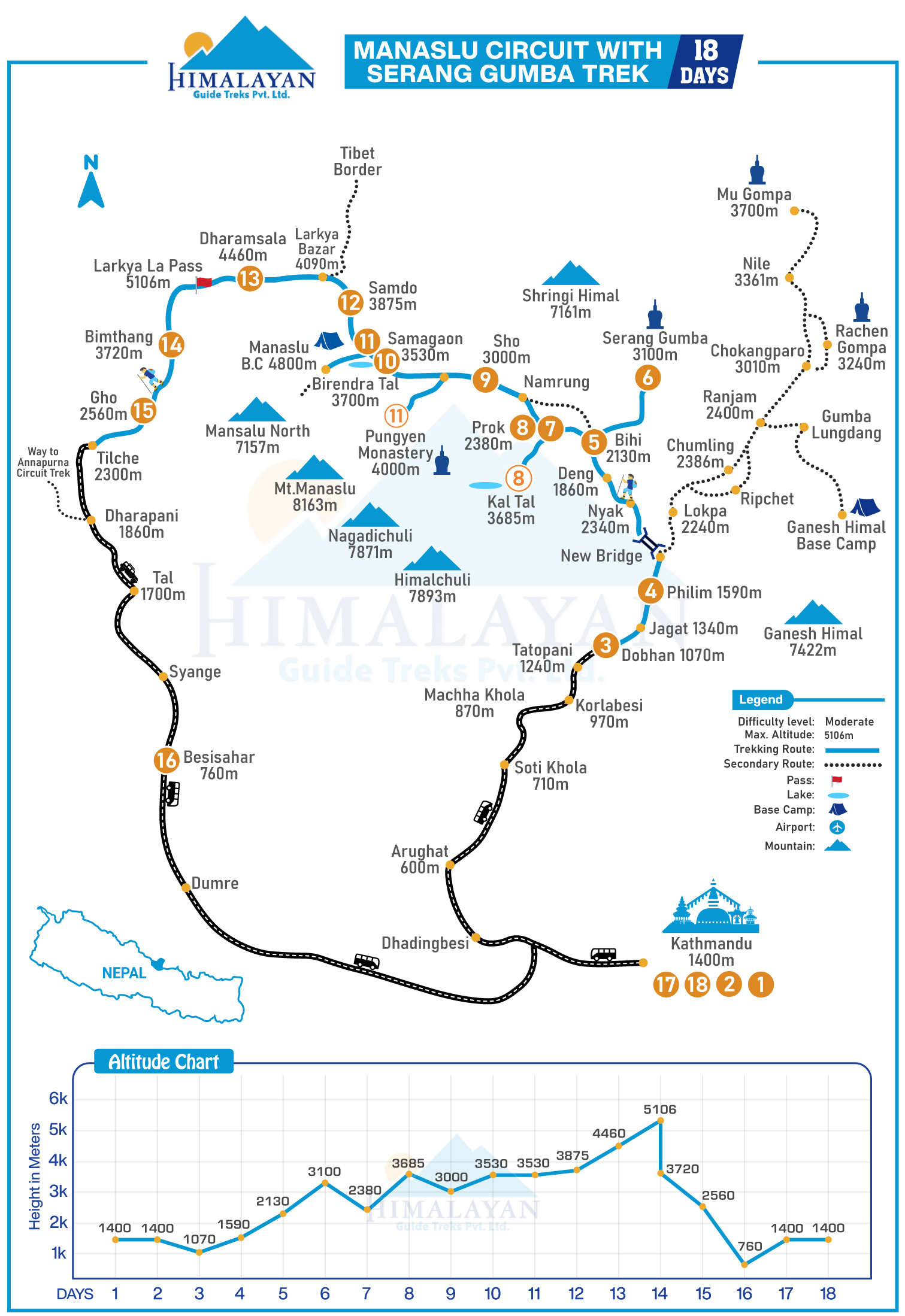
This specialised itinerary takes you from the classic loop around the world’s eighth highest peak, Mt. Manaslu (8,163m), and separates you from the standard commercial tea house trails.
By branching into the deeply isolated borderlands of the Upper Nubri region. You step directly into the living time capsule of the Tibetan Buddhist culture that has remained undisturbed and untouched for centuries from modern world influence.
This trail challenges you mentally and physically and gives you a spiritual insight like you never had before.
Major Attractions
Serang Gumba, The Holy Sanctuary
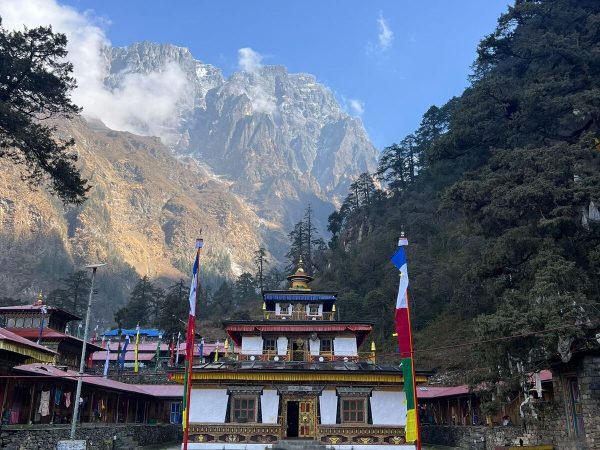
An ancient Tibetan monastery that dates back 500 years, hidden inside a secluded mountain region at the foot of Shringi Himal. Overnight stay here will give you an opportunity to have unforgettable moments being part of the monastic life, ancient meditation rituals, and complete spiritual isolation.
Kal Tal ( Black Lake)
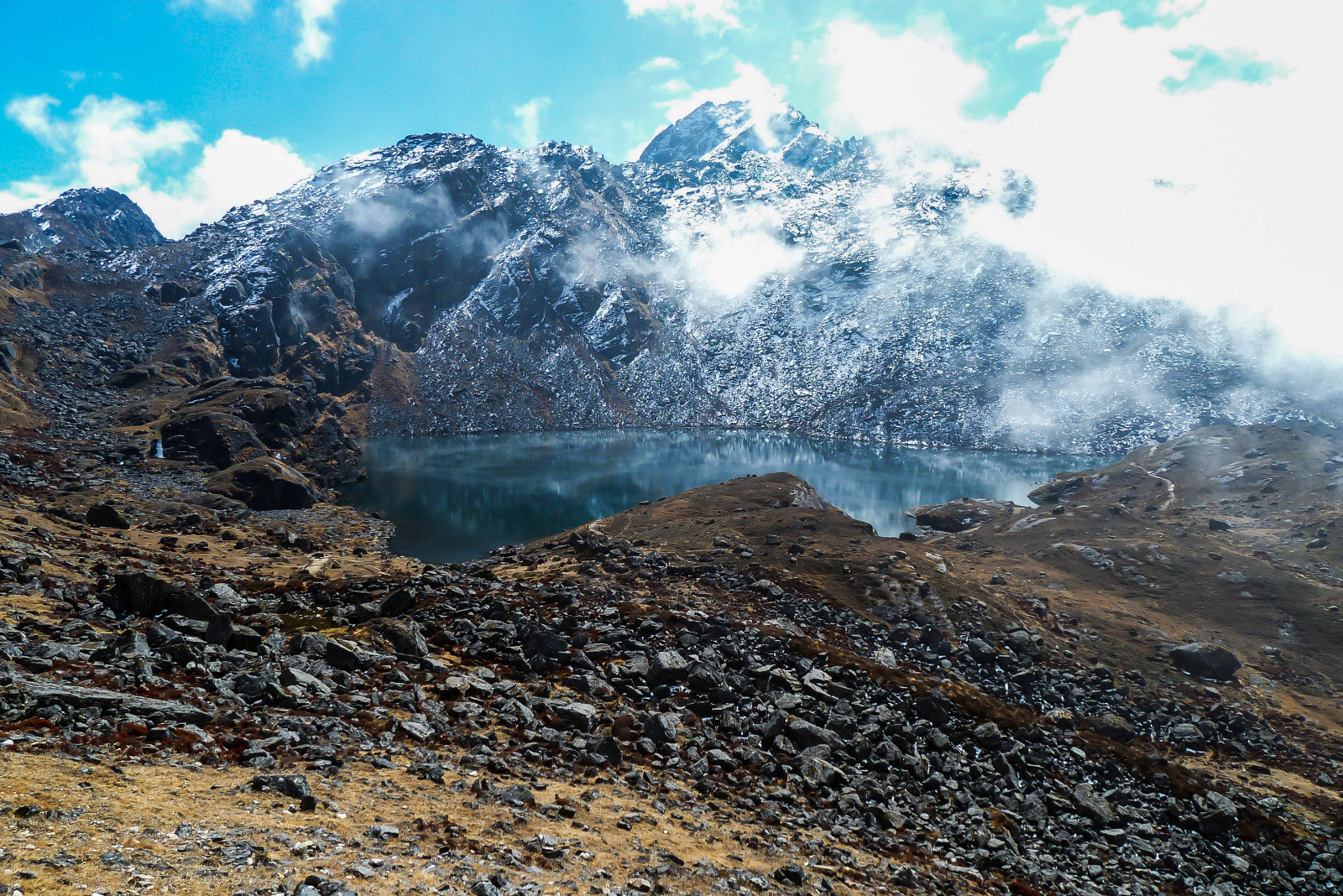
A raw, off-the-beaten-path day hike to a pristine Alpine lake sitting at 3,554 meters, surrounded by wilderness. Glassy in appearance with dark waters and offers an unobstructed front-row mirror reflection of Mount Manaslu’s twin peaks.
The iconic Larky La Pass
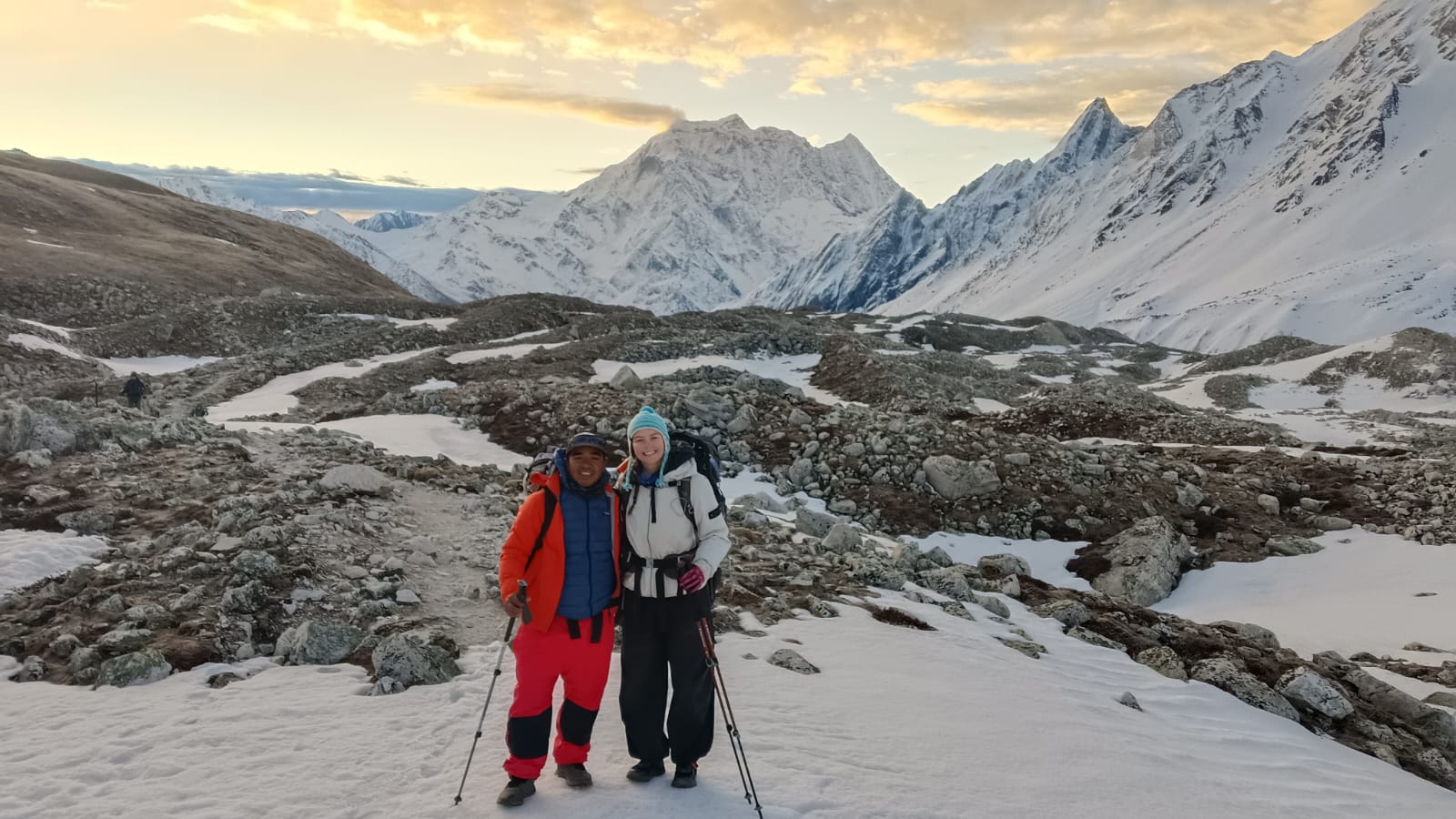
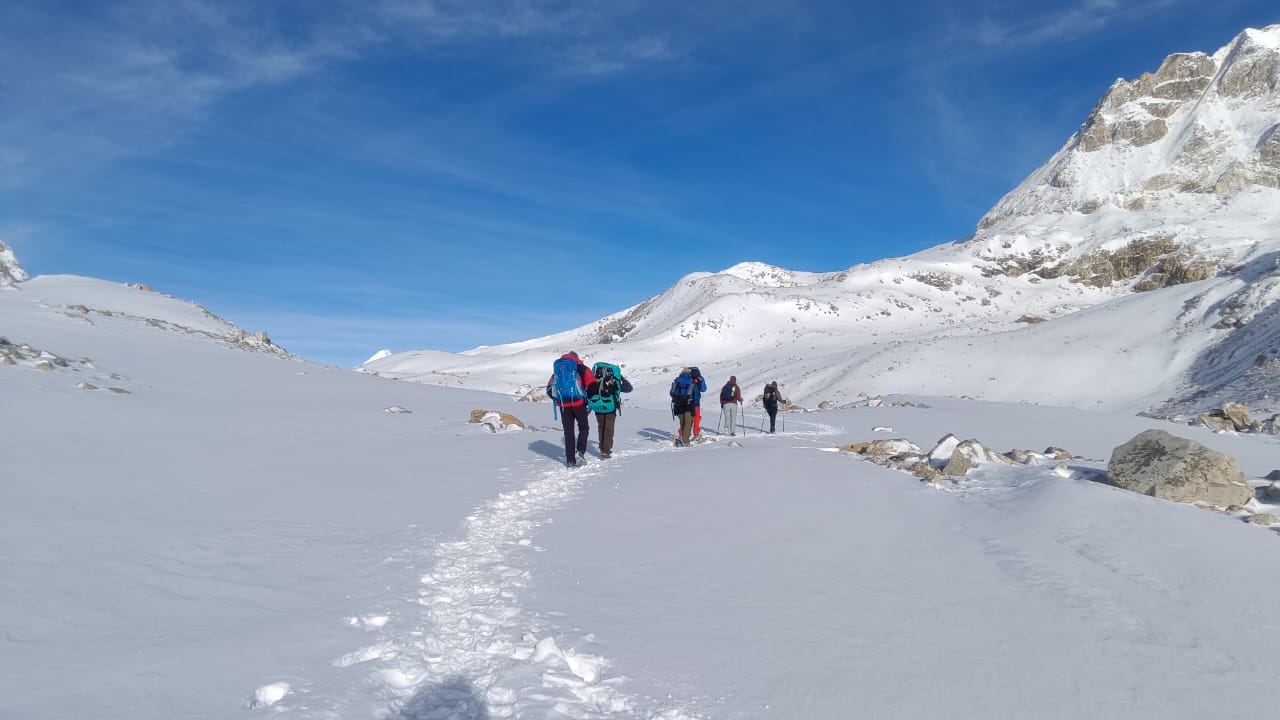
Surrounded by prayer flags, standing at an altitude of 5106 meters, this high Alpine summit rewards your endurance with jaw-dropping 360-degree views of Himalung Himal, Cheo Himal, Kang Guru and Annapurna II.
Pungyen Gompa vantage point:
A dramatic acclimatisation hike to an ancient Cape of a monastery sitting directly underneath the massive crumbling icefalls of Manaslu’s eastern face at 4,040 meters.
Ancient Nubri Cultural hubs:
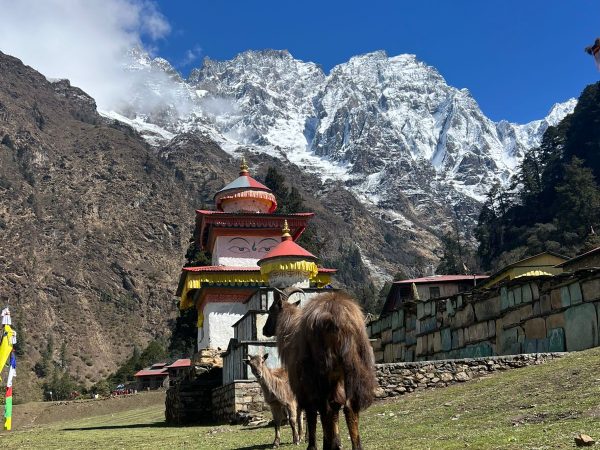
Classic stone-paved Tibetan influence villages like Prok, Lho and Samagaon, where you will encounter immense Mani stone walls, spinning prayer wheels and grazing yak caravans.
Weather and Best seasons
It’s a high-altitude trip, and the climate and weather are very unstable due to the status of elevation and keep changing frequently. So below are some of the best trekking seasons to the region.
Autumn (September to November)
Basically, autumn is the best and peak season to trek, as the mountain rains have cleared, wiping off the dust and clouds and offering flawless, crisper blue skies and the sharpest mountain views, which is basically heaven for photographers or videographers.
As for the daytime temperatures in the lower valleys? It hovers around 20 degrees Celsius, while at high altitude, nights at Dharmasala will plunge and will be around the freezing point of -5 degrees Celsius or -10 degrees Celsius.
Spring (March to May) blossom season.
Autumn was the time sof sheddingand Spring is just the opposite of it.
The leaves and flowers start blooming on the trees that were bare for the years.
Greenery sweeps in and coats the majority of the region of the country. Along with the blooming Rhododendron forest that sits below 3,000m, whereas the high passes still carry winter snow, adding an adventurous edge. Daytime temperatures are pleasant, though afternoon clouds are more common than in autumn.
Winter and monsoon (limited / off-season)
This time is around the months from June to August and is usually not recommended, as it brings heavy rains, leeches and severe landslide risks on the trail. Whereas the winter season starting from December to February brings extreme temperatures that go below the freezing point, causing the blockage. On the trail, heavy snow also increases the risk of slips and avalanches. In addition, the Closing of tea houses entirely.
Difficulty grade and transportation accessibility
Accessibility is the most important element for travel, because without accessibility there is no travel at all.
So now let’s talk about difficulty grade and transportation accessibility of Manaslu Circuit with Serang Gumba Trek.
The difficulty grade is strenuous/challenging and requires a good level of physical endurance, as it involves continuous days of hiking.
The trip is a steep, rugged and uncommercialized ascent to the sacred monastery at 3,100 meters, where accommodations are deeply rustic compared to the other mainstream trekking routes in Nepal.
As for the hardest and most physically challenging and tough hurdle, it is the Larkya La Pass at 5160 meters, which involves a summit push over the ice and a punishing descent which starts pre-dawn.
As mentioned before, you will need a high-level of cardiovascular fitness and endurance as the route enters a restricted area. And keep in mind the fact that solo trekking in here is strictly illegal.
That is all about difficulty grade; now let’s talk about transportation and accessibility to the region. For transportation accessibility,, this trek has no flights and is entirely land-base,d either be it on a transportation or on foot. The drive begins from Kathmandu and goes all the way along through Machha Khola.
The highway initially turns into a rough, unpaved cliffside dirt track quickly, where a private 4WD Jeep is highly recommended over slow, bumpy local buses. After finishing the trek in Dharapani, returning to Kathmandu requires a two-step journey that starts with a 3 to 4 hours of rough shared jeep ride down to Besisahar.
From Besisahar, the trip gets smoother on a private vehicle or public bus as per your choice and takes around 5 to 8 hours of driving as the roads are black-pitch-topped.
Accommodation
The field offers the raw community-based trekking experience that varies by altitude.
The standard tea houses for the majority of nights, you will stay in warm stone lodges that are operated by families.
As for rooms, they are very basic and unheated, typically featuring two twin beds with thin mattresses and pillows.
You must bring a high-quality sleeping bag rated down to -15°C, as teahouse blankets are insufficient in frozen upper valleys due to the lower temperature, which can plummet further down during the night time.
Serang Gumba Stay:
Commercial stays or lodges do not exist around the monastery. All you have is the basic rustic pilgrim quarters, which are simple communal rooms that are managed by the monastery. Facilities are extremely modest, and the peaceful spiritual atmosphere is more than what makes up for the lack of luxury.
Bathroom and Amenities
The squat toilets are standard in higher zones, which are often located outside the main buildings. As for the hot showers, they are available in the lower region via Gas geysers for a small fee that might cost up to $3 to $5. But once you pass the 3,500m elevation, running water freezes overnight, and your only option is a paid bucket of hot water.
Food and lodging
Diet and food consumption are the most vital and essential part of the trip, as without it the energy supply for the body will be in a crisis situation.
The daily menu.
Let’s talk about what’s on the table for food.
The lower villages offer surprisingly varied menus featuring eggs, pancakes, noodles, soups, and pasta. However, as you climb higher, the ultimate fuel is fresh hot Dal Bhat (Rice, lentil soup and vegetable Curry) that’s packed with clean calories and cooked over wooden fires and always comes with free refills, which will satiate your hunger and provide enough energy for your trip ahead.
The vegetarian rule.
I think I mentioned somewhere around in the beginning also about the fact that the region is absolutely vegetarian, as no animal sacrificing or slaughtering is allowed in the region due to the Buddhist principles where hunting, slaughtering and harming animals are forbidden, and you gotta absolutely respect that.
And since any meat that is found in the high tea houses must be carried refrigerated for days on porters’ backs from lower valleys, it is highly recommended for you to follow the strict vegetarian diet to avoid crippling stomach bugs.
Power supply and communication.
The journey is basically unplugging and disconnecting yourself from the modern world chaos of the Internet, but that does not mean completely cutting off people from communication.
We still need to talk to people, which is why you need to prepare smart.
The high elevation is a very high and windy place.
Hence, the infrastructure for communication services is a bit difficult to make work. As a result, the power supply and communication might be uneven at times.
Cellular networks: Buy both Ncell and NTC Nepal Telecom SIM cards in Kathmandu; Ncell works well in the lower river gorges, while NTC provides better coverage in the higher villages like Samagaon and Samdo.
You can expect complete dead zones with zero signal for several days, especially around the Serang Gumba and high passes.
Charging devices: If you need to charge your devices, mostly in high-altitude teahouses, they usually rely entirely on the solar panels or micro-hydro grids, and it might cost you a small fee of around 200 to 500 Nepalese rupees per device, with rising altitude.
So it’s recommended for you to bring a high-capacity power bank ( At least 30,000 mAh or larger).
Satellite Wi-fi: In major hubs like Namrung and Samagaon, tea houses offer paid satellite Internet access, such as (Everest Link cards). These packages cost a few dollars, but speeds are slow and highly vulnerable to the freezing mountain weather.
Hydration and safety
You’re at high elevation; there’s very little moisture up in there; hence, dehydration is one of the major causes while ascending to that high altitude, which contributes to altitude sickness/AMS in the majority of trekkers.
As per the doctors, you are suggested and advised to drink at least four to five litres of water daily to combat altitude sickness and avoid dehydration issues.
And do keep in mind that. For drinking water, using plastic bottles in the region is very strictly prohibited, which is why you will need to get your own reusable water flask or metal bottles to carry water.
You can also carry water with you by filling it from the teahouse taps or boiling it from the mountain taps/natural sources, but never drink it raw. Always drink it after treating it with chlorine or iodine tablets or a filtration system, in case it’s not boiled.
Comprehensive travel insurance requirements.
Mandatory high altitude insurance specifications.
Travel Insurance is something that you cannot compromise on, particularly on high-elevation trekking like in Nepal, which is why you must explicitly cover high-altitude trekking up to 5,500 meters to safely account for the Larkya La Pass.
It is also mandatory that your policy includes emergency evacuation (search and rescue), since there are no roads for advanced medical clinics past Jagat, or helicopter is the only legal and physical method of evacuation if you experience severe acute mountain sickness (AMS) or physical trauma.
Please make sure that your provider handles all the payments via direct billing with helicopter operators in Kathmandu, or else you might end up paying several thousand dollars upfront out of your pocket during a medical emergency.
Tip: If you are interested in trekking only the Manaslu Circuit, our 15-day Manaslu Circuit Trek package can be an ideal option for you.