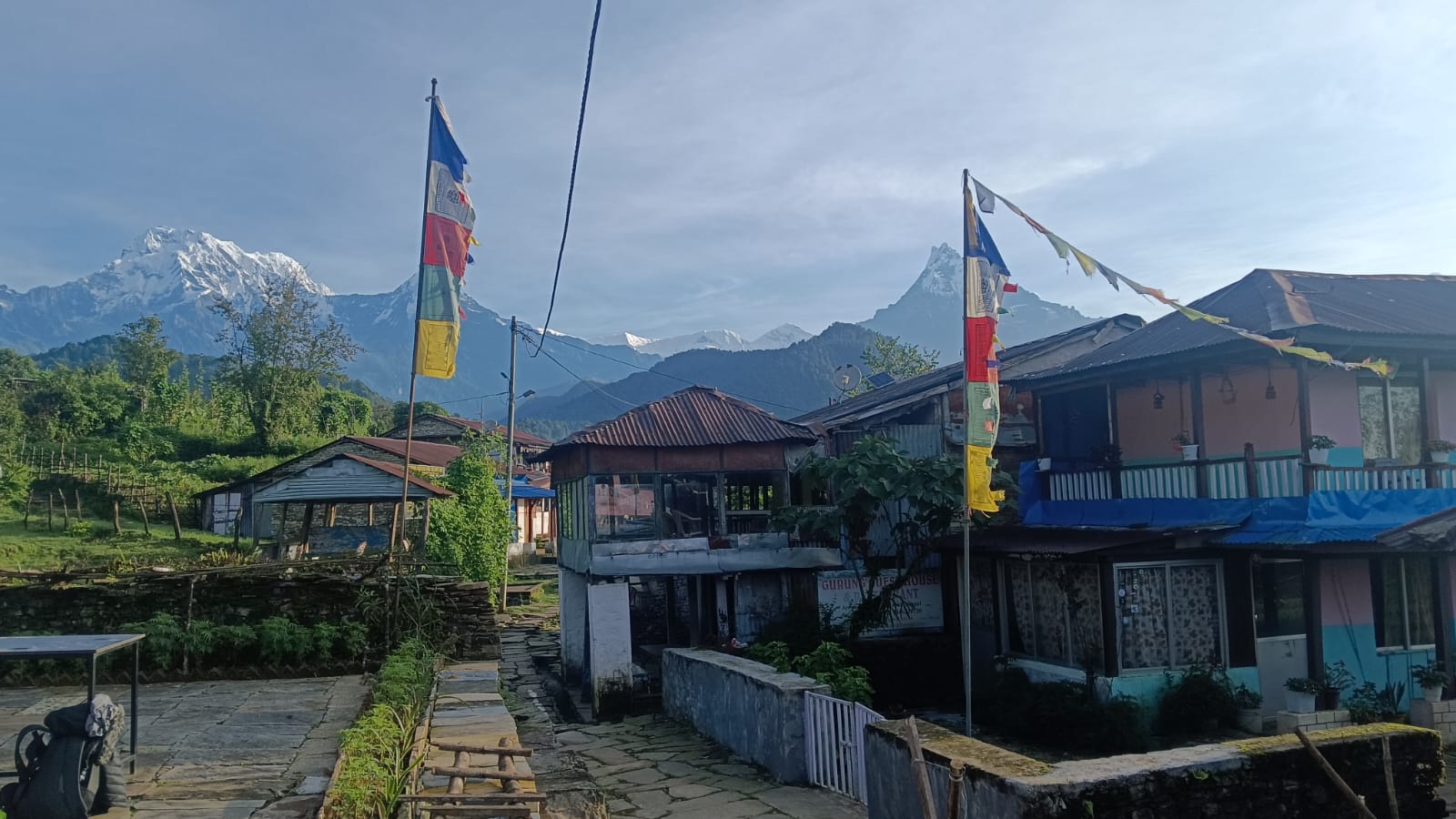
Nepal is famous around the world for its Himalayan peaks, ancient temples, diverse cultures, and unforgettable trekking routes. But for many travelers, some of the most memorable experiences happen not on the summit, but inside a small, welcoming tea house in the mountains.
Tea houses are an essential part of trekking culture in Nepal. From the foothills of the Annapurna region to the high valleys of the Everest region, these simple lodges provide trekkers with a place to sleep, eat, rest, and connect with local communities.
What Is a Tea House in Nepal?
A tea house is a small mountain lodge that provides basic accommodation and meals for trekkers. Traditionally, many were family-run establishments where local families welcomed travelers into their homes.
Today, tea houses range from very simple rooms with shared facilities to comfortable lodges offering private rooms, hot showers, Wi-Fi, charging facilities, and a variety of meals.
Despite these improvements, the traditional spirit of mountain hospitality remains an important part of the experience.
Why Are Tea Houses Important for Trekking?
Tea houses make trekking in Nepal much more accessible.
Instead of carrying tents, cooking equipment, food, and other camping supplies, trekkers can travel relatively lightly and stay at lodges along the route.
A typical tea house may provide:
- Comfortable beds and blankets
- Shared or private rooms
- Dining areas
- Traditional Nepali meals
- Hot tea and coffee
- Hot showers in many locations
- Electricity and charging facilities
- Wi-Fi in many popular trekking areas
- Basic snacks and trekking supplies
The facilities become more basic as you travel to higher and more remote elevations.
The Tea House Experience
One of the most enjoyable parts of staying in a Nepalese tea house is spending time in the common dining area after a long day of trekking.
Imagine arriving tired after several hours on the trail. You remove your backpack, order a hot cup of ginger tea, and sit beside a warm stove while talking with fellow trekkers.
Outside, the mountains slowly disappear into the evening darkness.
Inside, you hear conversations in different languages, laughter, the sound of cooking, and stories from the trail.
This simple experience is one of the things that makes trekking in Nepal so special.
Food at Nepalese Tea Houses
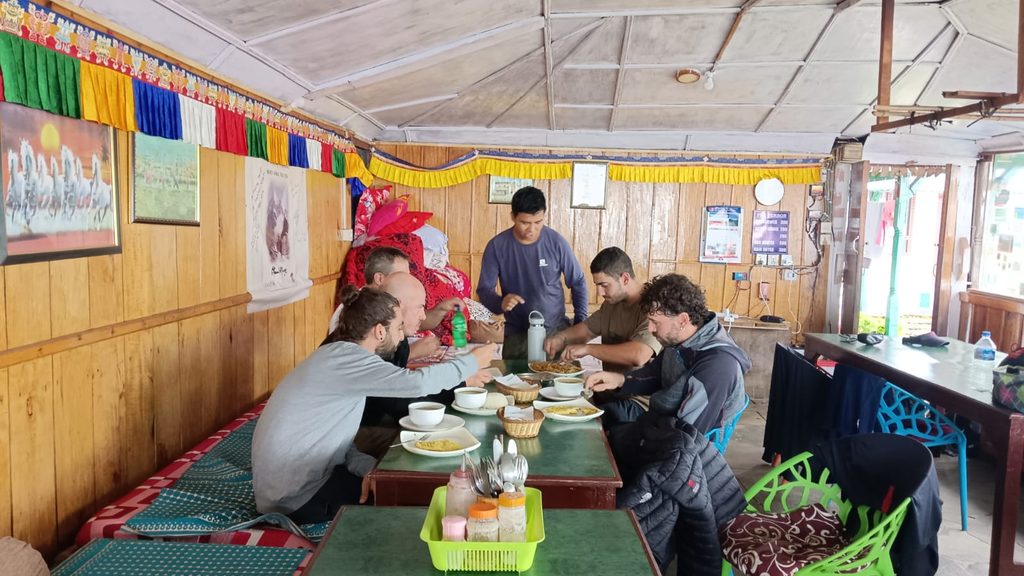
Food is an important part of the tea house experience.
Most tea houses offer a combination of local Nepali dishes and familiar international meals.
One of the most popular choices is Dal Bhat — rice, lentil soup, vegetables, pickles, and sometimes meat. It is nutritious, filling, and particularly suitable after a long day of hiking.
Other common options include:
- Momos
- Thukpa
- Fried rice
- Noodles
- Pasta
- Soups
- Pancakes
- Eggs
- Tibetan bread
- Potatoes
- Porridge
- Tea and coffee
In higher-altitude areas, menus can become more limited because ingredients have to be transported from lower elevations.
Tea Houses in Popular Trekking Regions
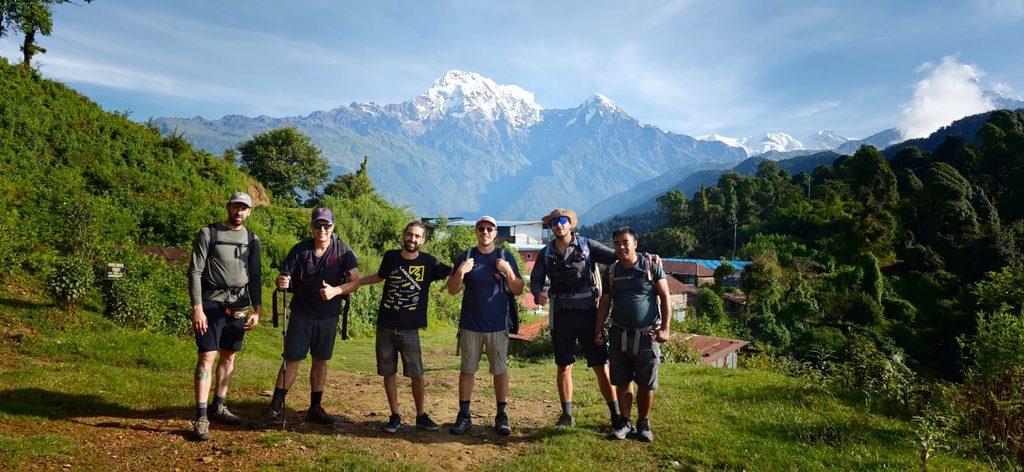
Everest Region
The Everest Base Camp trekking route has a well-developed tea house network. Places such as Namche Bazaar, Tengboche, Dingboche, and Lobuche offer accommodation for trekkers.
Staying in a tea house while trekking toward Everest Base Camp allows travelers to experience both the spectacular Himalayan landscape and the hospitality of the Sherpa communities.
Annapurna Region
The Annapurna region is another excellent destination for tea house trekking.
Popular routes such as the Annapurna Circuit, Annapurna Base Camp Trek, and Mardi Himal Trek have numerous tea houses along the trails.
The landscape changes dramatically as you travel from lush valleys and villages to alpine terrain and high mountain passes.
Langtang Region
The Langtang Valley is relatively close to Kathmandu and offers a quieter trekking experience compared with Everest and Annapurna.
Tea houses along the Langtang route provide accommodation while allowing trekkers to experience Tamang culture, mountain landscapes, forests, and traditional villages.
What Makes Tea Houses Special?
The biggest attraction of a tea house isn’t luxury. It is connection.
Tea houses bring together trekkers, guides, porters, and local families.
You may begin the day walking alone but finish it sitting around a dining table with people from several different countries.
For local communities, tea houses also provide an important source of income and employment. Tourism supports accommodation providers, cooks, guides, porters, farmers, transport operators, and many other local businesses.
Are Tea Houses Comfortable?
Comfort varies depending on the trekking region and altitude.
In popular lower-altitude destinations, some lodges offer surprisingly comfortable facilities, including private bathrooms, hot showers, Wi-Fi, and charging points.
At higher elevations, facilities are generally more basic.
Trekkers should therefore approach tea house trekking with the right expectations. The purpose is not luxury accommodation; it is to experience the mountains while having a safe and comfortable place to rest.
Responsible Tea House Trekking
Travelers can help mountain communities by choosing locally owned tea houses and spending money within the local economy.
A few simple practices can make a difference:
- Respect local customs and traditions.
- Minimize plastic waste.
- Carry a reusable water bottle.
- Avoid wasting food and water.
- Follow trekking and conservation guidelines.
- Treat local staff respectfully.
- Support locally owned businesses whenever possible.
Responsible tourism helps ensure that Nepal’s mountain communities continue to benefit from trekking for generations.
Tea Houses: More Than Just Accommodation
For many trekkers, a tea house becomes more than a place to sleep.
It becomes the place where they share stories after crossing a mountain pass, celebrate reaching a destination, meet lifelong friends, or enjoy their first cup of hot tea after hours in the cold.
The Himalayas may be the reason people come to Nepal, but the warmth of its people often becomes the reason they want to return.
Life Inside a Himalayan Tea House
A tea house is more than accommodation—it is a window into everyday life in the Nepalese Himalayas. Many tea houses are operated by local families who have lived in these mountain communities for generations. Their homes and lodges often become a meeting point where travelers from around the world experience local culture, food, stories, and hospitality.
After several hours of walking, reaching a tea house can feel like reaching a destination in itself. Trekkers remove their heavy backpacks, find a comfortable seat, order a hot drink, and relax while admiring the surrounding mountains. During the colder evenings, the dining room often becomes the warmest and most social place in the lodge.
For many travelers, these quiet evenings become some of their favorite memories of Nepal.
A Warm Cup of Tea in the Himalayas
Tea is naturally an important part of the tea house experience. Whether it is black tea, milk tea, ginger tea, lemon tea, or a traditional Himalayan herbal drink, a hot cup of tea can be incredibly refreshing after a demanding day on the trail.
Imagine sitting outside on a sunny afternoon, holding a warm cup of tea while looking directly at snow-covered Himalayan peaks. There may be prayer flags moving in the mountain wind, trekkers discussing their day’s journey, and local people going about their daily activities.
It is a simple experience, but it captures the essence of Himalayan travel.
Meeting People From Around the World
One of the unique advantages of tea house trekking is the opportunity to meet fellow travelers.
A dining room might include trekkers from Europe, Asia, North America, Australia, and many other parts of the world. Everyone may have different reasons for visiting Nepal, but the mountains create a shared experience.
Conversations often begin with simple questions:
“Where are you from?”
“How far are you trekking?”
“Which route are you taking?”
“Did you reach the viewpoint today?”
These conversations can develop into friendships, shared meals, and sometimes even future travel plans.
Experiencing Local Mountain Culture
Tea houses also provide travelers with an opportunity to experience the culture of Himalayan communities.
Depending on the region, visitors may encounter Sherpa, Tamang, Gurung, Thakali, Magar, and other ethnic communities with distinct traditions, languages, architecture, food, and lifestyles.
Traditional houses, monasteries, prayer wheels, mani walls, colorful prayer flags, and mountain festivals can all become part of the trekking experience.
Instead of simply passing through a destination, tea house trekking encourages travelers to slow down and experience the communities along the route.
The Journey Is Part of the Experience
Trekking in Nepal is not only about reaching Everest Base Camp, a mountain pass, or a viewpoint.
The journey itself is an important part of the adventure.
Walking through forests, crossing suspension bridges, passing traditional villages, meeting local people, and stopping at small tea houses creates a rhythm that is very different from ordinary tourism.
There is something rewarding about walking for several hours, reaching a small mountain settlement, and realizing that your accommodation, food, and a warm bed are waiting for you.
Tea Houses and Sustainable Tourism
Tea house tourism plays an important role in supporting mountain communities.
Tourism creates income for local families and supports a wider network of people, including farmers, cooks, porters, guides, transport operators, shopkeepers, and local suppliers.
When travelers stay at locally operated lodges, eat local food, purchase products from village shops, and hire local guides and porters, more tourism revenue remains within the community.
Responsible travelers can further contribute by reducing plastic waste, carrying reusable bottles, avoiding unnecessary waste of food and water, and respecting local traditions.
What Should You Expect?
Travelers should remember that tea houses are mountain lodges, not city hotels.
Facilities can vary considerably depending on altitude and location. In popular trekking areas, some lodges may offer private rooms, attached bathrooms, hot showers, electricity, Wi-Fi, and charging facilities. In remote and high-altitude areas, facilities may be much simpler.
The experience is about embracing the mountains rather than expecting five-star luxury.
For many trekkers, the simplicity is actually part of the charm.
A Night to Remember
As darkness falls over the Himalayas, the atmosphere inside a tea house changes.
The temperature outside drops, the mountains disappear into darkness, and trekkers gather inside. A warm meal is served, tea is poured, and conversations continue around the dining table.
Some people discuss the next day’s route. Others review photographs from the day’s trek. Guides share stories about the mountains, while local families continue preparing meals and welcoming guests.
Eventually, the dining room becomes quiet.
The next morning, trekkers wake up early, put on their hiking boots, pack their bags, and step outside into the crisp mountain air.
Another day of adventure begins.
Why You Should Experience a Nepal Tea House Trek
If you want to experience Nepal beyond sightseeing, tea house trekking is one of the best ways to do it.
You will not simply see the Himalayas—you will walk through them.
You will not simply photograph mountain villages—you will meet the people who call them home.
And you will not simply stay in a hotel—you will become part of a unique mountain-travel experience.
From a simple cup of tea to an unforgettable sunrise over the Himalayas, tea houses add warmth, culture, and human connection to the trekking experience.
The mountains may be the destination, but the tea houses are where the journey comes alive.
Plan Your Tea House Trek in Nepal
Whether you dream of reaching Everest Base Camp, exploring the Annapurna Circuit, walking to Annapurna Base Camp, discovering Mardi Himal, or experiencing the peaceful Langtang Valley, tea house trekking offers an authentic way to experience Nepal.
The combination of spectacular Himalayan scenery, traditional villages, local food, and genuine mountain hospitality creates an experience that goes far beyond ordinary travel.
Himalayan Guide Treks Pvt. Ltd. can help travelers arrange trekking packages, accommodation, transportation, guides, permits, and customized Himalayan experiences in Nepal.
Come to Nepal for the Himalayas. Stay for the people, culture, and unforgettable tea house experience.Leave with memories that last a lifetime.
FAQ’s
What is a tea house in Nepal?
A tea house is a small, usually family-run mountain lodge that provides accommodation, meals, and basic facilities for trekkers. Tea houses are common on popular trekking routes such as Everest, Annapurna, Langtang, and Manaslu.
What are tea house rooms like in Nepal?
Most tea houses offer simple twin-sharing rooms with beds, mattresses, pillows, and blankets. Bathrooms are often shared, especially at higher elevations.
Do tea houses have private bathrooms?
Some tea houses at lower elevations have attached bathrooms, but shared bathrooms are more common as you gain altitude.
Do tea houses provide food?
Yes. Tea houses serve breakfast, lunch, and dinner, with popular options including dal bhat, noodles, rice, potatoes, soups, pasta, and other local or Western dishes.
Is Wi-Fi available in Nepalese tea houses?
Many tea houses offer Wi-Fi, particularly on popular trekking routes. However, the connection can become slower or unavailable at higher elevations, and an additional fee may apply.
Can I charge my phone at a tea house?
Yes, many tea houses provide electricity or charging facilities. At higher elevations, charging may be limited and usually costs an additional fee. Carrying a power bank is recommended.
Do tea houses have hot showers?
Many tea houses provide hot showers, usually for an additional charge. At higher altitudes, hot showers may be limited or replaced by bucket showers.