Overview Life is a journey, not just any journey, but an adventurous journey, and it would be really vibrant if we could experience a mix of thrills, wouldn’t it? Which […]
Duration: 8 Days
Best Time: Spring and Autumn
Trip Grade: moderate
Start from Kathmandu and End to Kathmandu
Min 2 to Max 10 Pax in a group
Meals: Breakfast, Lunch,and Dinner
Accommodation: Tea House
Overview
Life is a journey, not just any journey, but an adventurous journey, and it would be really vibrant if we could experience a mix of thrills, wouldn’t it? Which is why we now offer you a unique blended experience of the Annapurna Base Camp Trek With Heli Return
This trip might not be a long one, but it’s unique and obviously, adventurous and thrilling, ultimately exciting. It’s a blend of adventure, fatigue, thrill, joy, and something you’ll consider worth it.
The major attraction, obviously, is Annapurna Base Camp, alongside the culture, several other natural attractions, and different structures.
So, let’s dive into a unique trip experience that sits beyond an altitude of more than 4,000m that blends trekking with a helicopter flight through the hills, mountains, and sky of the Himalayas, along with a new variation of cultural practises and manifestations for you to know, learn, and witness from up close and many more.
Highlights
The vertical shortcut
One of the advantages of this trip is that the knees don’t need to bear the stress of descending.
If you’ve done trekking or any sort of mountaineering activities that demand physical fitness and go up and down, then you might have felt the knees burning while descending rather than while going up, haven’t you?
But since this is a blend of an uphill trek and a heli return, your knees will bless you. No shaky legs, no trembling knees from strain, just relaxed inside the chopper while watching the views of the trail from above you conquered. Isn’t that an awesome feeling?
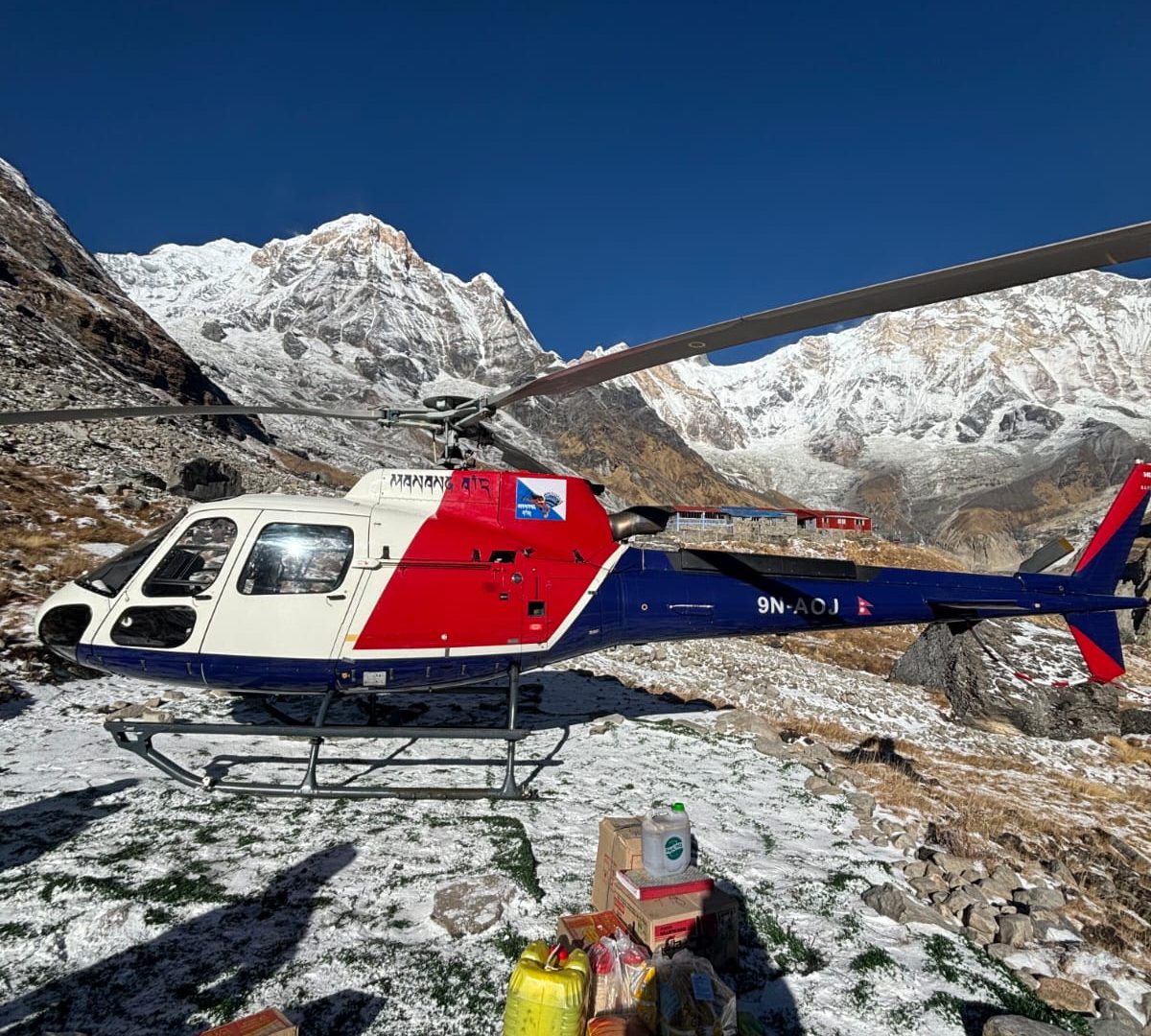
Instead of returning your track for 20-plus hours on foot. You simply board the aircraft and glide back to Pokhara in under 20 minutes. It’s the ultimate luxury for those who want a full trekking achievement without the physical toll of the Return.
I bet you might even say,y “Wow! This feels awesome” when inside the chopper.
360° mountain sanctuary
Modernity. Technologies. They have made life easier and things possible that were imagined impossible at one time by humankind, but it came with a cost. And the cost was? Mental peace, solitude, and the connection with nature, everything is chaotic now. There’s nothing untouched by technology. In this age of the Internet, nothing feels like pure nature.
People in this modern era feel like they are stuck under a glass ceiling, and it is quite right, but this trip will be like you have broken the barrier and gotten yourself some time to be in nature. When you are there, you will experience that profound silence that you might have never felt in your life, and to make it cherry on top, you’ll feel much better when you spend the night at the foot of Annapurna (8,091m), the 10th highest peak of the world and the first 8000m giant ever summited.
Speaking from my personal experience, when I got there for the first time and stood watching the scene, I was like “Damn, this feels like a glacial amphitheatre of nature. Well, Mother Nature has done a great job carving this structure”. And I’m quite sure you feel similar.
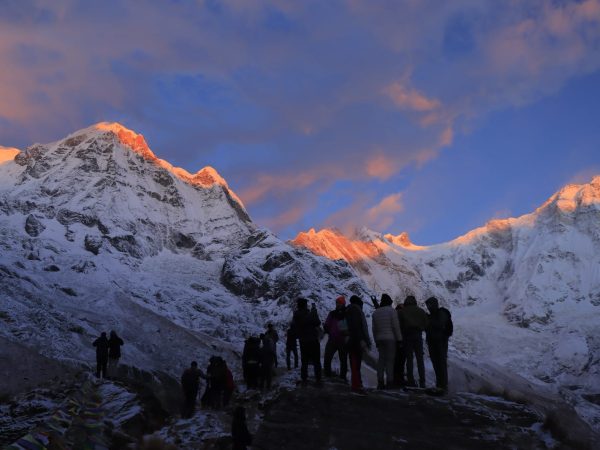
Have you seen Frozen? That was fantasy; this is real. When the night falls, the stars will feel close enough and at dawn, you will just see the first golden light on the near-vertical south face. Everything feels surreal. This right here is more than just a heli trip. This is more than a sanctuary where the scale of the Himalayas becomes a 360-degree reality.
Ghorepani & Poon Hill
Pushing into the deep sanctuary, you scale the legendary Pool Hill to witness the iconic sunrise in the Himalayas. From this tactical advantage, the horizon explodes as the sun illuminates the massive Dhaulagiri and Annapurna simultaneously.
You and the “Fishtail” peak of Machhapuchhre glow orange while the deep valley below remains draped in the morning mist. It feels like some sort of sci-fi movie. It’s a must-see and must-watch sight. You’ll enjoy it. Here’s the essential psychological and physical milestone that prepares you for the higher altitudes waiting at the base camp.
Cultural Insertion
You’re in a wide range of diversity in cultures, and along with that, there will be visuals for you to see that Mother Nature has offered as an exhibition.
Besides that, the legendary hospitality of the “Gorkha” heartlands, where traditional lifestyles, terraced farming, and deep-rooted Buddhist traditions remain unchanged. Whether sharing a meal in Ghandruk or passing through the flagstone streets of Chhomrong, you get a deep respect for the resilience of these mountain communities. Every village offers a new tactical insight into how life thrives in the vertical world.
The sanctuary flyover
So, by now you know that this trip is a blend of trekking and a heli return. First comes the trek and then the return on the heli. You soak in the adventure and adrenaline, and then flyback, all laid back and relaxed, watching out of the window and smirking with pride on what you conquered and lived, the new environment you lived in all.
You gain a perspective from a different dimension, to be honest.
Kinda like a high-speed visual summary of your entire journey, providing one last rush of Himalayan Adrenaline.
Best time for the ABC trek with Heli return
For the ABC trek with Heli return, we’ve got two of the best seasons for you.
The Spring season and the Autumn season, which are among the most favoured seasons by tourists, be they national or international.
So let’s explore more about these seasons.
Spring (March to May)
The period from March to May is basically a wake-up call for nature in Nepal as it welcomes the season of Spring, also known as Basanta Hritu.
If you’ve been around here before, then you might have noticed the patterns, even while walking on the streets.
The bare trees on the streets are starting to show signs of green leaves, something that gives a vibe of a fresh new start and warmth after the chilly winter in the Himalayas.
As for the trail, it bursts with the colours of the Rhododendron, which you can get to see during the trek. The trail will feel innumerable times better than walking on a fancy red carpet, and as for the return flight, the morning skies are a must-see sight.
It’s Mother Nature’s welcome for you.
So click pictures, inhale the scent of flowers in the atmosphere, and most importantly, feel alive.
Autumn (September-November)
So let’s talk about the high definition here. The Golden window for flights and trek, with occasional breezes, you know, cause it’s Autumn.
If you make a checklist of the beauty of Autumn, even when the greenery fades, it would be a lot to tick off.
For instance, the clear sky post-monsoon was checked. The dust-free atmosphere and blue sky, checked. The stable weather, the firm trail, and the absolutely relentless, beautiful view, checked.
There are many more, but let’s not keep going, ok? What a time to be alive. Isn’t it?
And to top it all, the flight was as talked about at the start, it’s the icing on the cake.
Important notes
So there are a few points that need to be taken into consideration during and for the fight. So let’s talk about that.
Weight management: At this altitude, there is thin air, meaning there is less oxygen for the engine to breathe and less air for the rotors to grab for lift. If the aircraft is overloaded, its aerodynamics are compromised, making it harder for the pilot to stabilise the aircraft against this sudden gust of wind. This is why we enforce strict weight limits, typically 400 to 500 KG total per load.
Staying within this limit ensures the engine has enough power to manoeuvre safely and reach the oxygen-rich lower altitude quickly.
Step count: Be prepared for this stairway to heaven, the ascent from Nayapul to ABC involved thousands of stone steps.
The Extraction Window: Helicopter departures from ABC usually happen before 10:00 AM to avoid the high wind that picks up in the sanctuary later in the day.
The Altitude Factor
Ascending to 4130 meters is no small feat. It is high today, which is significant. And your body has to work overtime to adapt. We don’t see the attitude. We don’t see attitude sickness as something that we need to fight; rather, we see it as an environmental condition to be respected and managed with strategy by following certain rules for the safety of our physiological needs.
The Golden Rule: Acclimatisation.
This is the reason why in almost all of our trekking trips, we go up and then the way down we go, to again get up the next day with ease as our bodies are preadjusted form the optional hike the day before, which allows your RBC to naturally multiply, helping you breathe at the top.
We follow a steady pace; this isn’t a race, we’re following the pattern to build endurance. We listen to the rhythm of our lungs and the signals from our bodies.
Hydration and fuel
The mountain. You’ll be drinking more water than you ever thought was possible, three to four litres a day. We also recommend high-carb meals (like Dal Bhat) to keep your body the slow-burning fuel it needs to process oxygen more efficiently in the thin air.
Reason to do the ABC Heli return.
Well, the trip is a classic masterpiece in itself, and now with the blend of traditional hiking and modern accessibility, it saves your time, energy, and reduces physical strain, along with an opportunity to witness the view from a whole different perspective and dimension.
You test your grit and endurance, but also transform the trip into a standard and elite expedition with a blend of heli return.
Instead of spending your final days managing sore knees and dust on the trail, you focus 100% of your physical energy on the ascent and the objective.
You get the satisfaction of reaching the sanctuary on your own two feet, standing amongst the giants, and soaking in the 360° glory.
But the moment the mission is accomplished, you swap the heavy boots for a headset.
Outline Itineray
Day
Itinerary
Elevation
01
Arrival in Kathmandu
1,400m
02
Kathmandu to Pokhara
822m
03
Jhinu Danda to Chhomrong
2,170m
04
Chhomrong to Himalayan Hotel
2,920m
05
Himalayan Hotel to Annapurna Base Camp (ABC)
4,130m
06
ABC to Pokhara by Helicopter (Aerial Extraction)
822m
07
Pokhara to Kathmandu
1,400m
08
International Departure
—
Itinerary
If you want tailor-made trip or want to personalize this itinerary, just feel free to contact us. We are always there to help you to make your holiday plan. Contact us
Day 01
Arrival in Kathmandu, 1400m.
Altitude1400m
AccommodationHotel
MealsBreakfast
Upon your landing at the Tribhuvan International Airport, you will be intercepted by a logistics team and transferred to your hotel for a tactical briefing. This initial phase is your final opportunity for Gear check to ensure that your life support layers are mission-ready for the high altitude environment.
We will review the emission parameters, weather windows, and emergency protocols while you just walk around the Capital City corners, trying to absorb the energy of the city and its hustle before shifting into the quiet intensity of the mountain ranges tomorrow.
Day 02
Kathmandu to Pokhara, 822m.
Altitude822m
AccommodationHotel
MealsBreakfast, Lunch,and Dinner
You move to the lakeside city of Pokhara via a 25-minute flight. The flight is short, but will obviously be a worthy one because it's going to be a scenic one, or if you want to enjoy the views on the road trip, you can also take a 7-hour overland journey through deep river valleys. The choice is yours.
And as for Pokhara, the city serves as a primary staging area. Providing a calm environment. Mentally prepare yourself for the vertical push ahead. You will spend the afternoon at the lakeside. And then check your back. Wait and ensure your hydration labels are optimal for the upcoming climb. Because it's necessary, you know. The evening is just spent comfortably at the hotel,l and time is spent resting before the early morning vehicle transit to the official trailhead.
Day 03
Jhinu Danda to Chhomrong, 2,170m.
Altitude2,170m
AccommodationTea House
MealsBreakfast, Lunch,and Dinner
So we will be on a 3 to 4-hour jeep ride to the Jhinu Danda, which is the official start line, where you will cross a massive suspension bridge over the Modi Khola, following which you will immediately face the trial of steps. A relentless stone staircase that climbs and tests your cardiovascular rhythm right out of the gate.
The objective is Chhomrong, a ridge-top Gurung village that serves as a strategic gateway to the Upper Annapurna Sanctuary. From your lodge, you will have a clear line of sight view of Machhapuchhre (fishtail) and the massive Annapurna South Face towering directly above.
Oh yeah, and a special surprise for you. There is a natural hot water spring in Jhiun Danda. If you want, you can take a dip or bathe, as it has healing properties, so it would be good on your end if you take a hot bath in the natural hot spring, as it has healing properties and helps in circulation, and makes your body active and oxygenated for the trip.
Day 04
Chommrong to Himalayan Hotel, 2,920m.
Altitude2,920m
AccommodationTea House
MealsBreakfast, Lunch,and Dinner
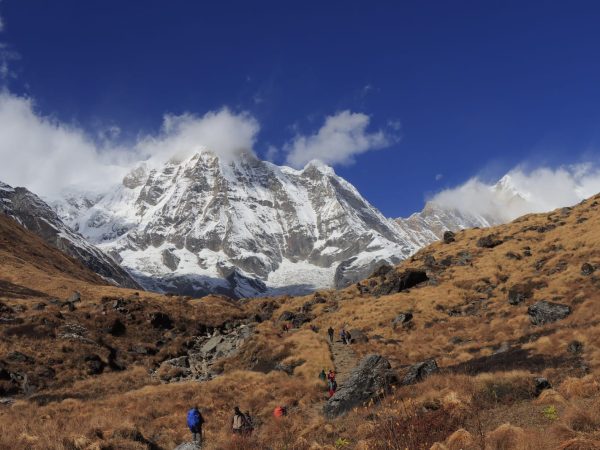
My friend, this is a heavy endurance day, starting with a long descent to the river. followed by a steep climb into a narrowing Gorge. The navigation goes through the dense Rhododendron and bamboo forests. The river is thunderous, and the valley will gently begin to tighten around you.
The see-saw trail profile tests your grit as you pass through the tactical checkpoints of Sinuwa and bamboo into the cold alpine air. The day concludes at the Himalayan Hotel, a remote outpost tucked under the massive cliff that drips with glacial melt, water, and ancient ice. It will be a sight to see, trust me.
Day 05
Himalayan hotel to ABC, 4,130m
Altitude4,130m
AccommodationTea House
MealsBreakfast, Lunch,and Dinner
Talking about this day, we’ll walk past the Hinku Cave and through the high altitude avalanche zone, before reaching the Machhapuchhre Base Camp, and it'll be a thrilling experience.
As you exit Canyon, the walls fall away to reveal the sanctuary- A massive amphitheatre of 360 degrees with peaks at elevations of 7000m and 8,000 m.
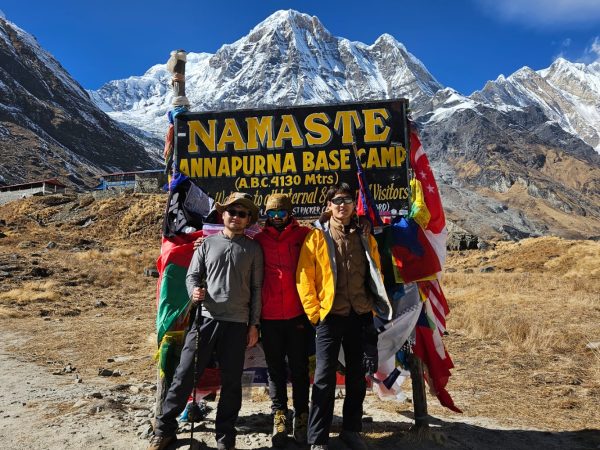
The objective of the Annapurna Base Camp (4,130m) is secured by late afternoon, standing at the foot of the. Vertical surface of Annapurna I.
Spend the evening with the alpenglow of the summit, marking the successful completion of the uphill phase of your mission.
Day 06
ABC to Pokhara on a helicopter-Aerial extraction, 822m
Altitude822m
AccommodationTea House
MealsBreakfast, Lunch,and Dinner
This day will be an amazing experience because you will wake up at the centre of the massif for a high-altitude breakfast as the first light hits the surrounding glaciers and peaks.
As per the helicopter, it initiates an aerial transit, lifting you vertically from the sanctuary and flying over the rugged trails you would spend days climbing. In just 15 to 20 minutes, you will transition from frozen high altitude to the subtropical warmth of Pokhara lakeside.
And by midday, you'll be enjoying a hot shower and a celebratory lunch, successfully bypassing the gruelling 3-day return march on foot.
This moment in Pokhara will be one of the most beautiful times of your life. It will be peaceful, calm, and serene.
I recommend you sit down by the lakeside during the evening as the sun sets and the lake changes its colour. Sit in across-leggedg position and meditate. I bet you'll feel the shift in your energy and the calmness in your brain, and any stress slowly fade away.
Day 07
Pokhara to Kathmandu 1,400m.
Altitude1,400m
AccommodationHotel
MealsBreakfast, Lunch,and Dinner
We will take a morning flight to return to the capital. It'll be one last aerial view of the Himalayan spine from the cabin window. The afternoon is reserved for the “cultural intelligence” Tour of the Valley, visiting Ancient UNESCO sites like Bouddhanath or Pashupatinath.
This day allows you to decompress and process the rapid transition from high altitude wilderness back to urban ccivilisation enjoy a farewell dinner in the city, reflecting on the mission's success and the ground you covered in record time.
Day 08
International Departure.
After a final breakfast in Nepal, you will be transferred to the International Airport for your homeward flight. Ensure all mission photos and data are secured as you prepare for your final departure from the country.
The mission officially concludes as you board your flight, leaving the mansions behind with the objective fully achieved. Safe travels. Mission accomplished.
Inclusions
What's included
What's not included
Frequently Asked Questions
What are the early signs of altitude sickness?
Usually, a persistent headache, loss of appetite, or a feeling like you have a hangover.
Does ginger tea really help?
It's a local secret for a reason. It aids circulation and settles the stomach, making it a tried favourite.
Is supplemental oxygen available?
We carry emergency oxygen on our flight to ensure every passenger stays stable during the extraction.
What is the best way to prevent altitude sickness?
Work slowly, stay hydrated, and never ignore what your body is telling you.
How long is the flight from ABC to Pokhara?
It is a 15 to 20-minute scenic dash.
Can the helicopter fly to Kathmandu instead?
Yes, but it requires a significantly higher fuel load and budget.
Is there an age limit?
No. As long as you can manage the trek up, the Heli return is safe for everyone.
What happens if the weather is bad at ABC?
We wait for a safe window or, in rare cases, descend on foot to the lower landing.