Overview Nepal has got jewels, a collection of jewels, unique and rare, like nowhere else, or very limited in scale. Multiple regions, full of different scales and grades of adventures […]
Duration: 1 Days
Best Time: Spring and Autumn
Trip Grade: easy
Start from Kathmandu and End to Kathmandu
Min 2 to Max 5 Pax in a group
Meals: N/A
Accommodation: N/A
Highlights
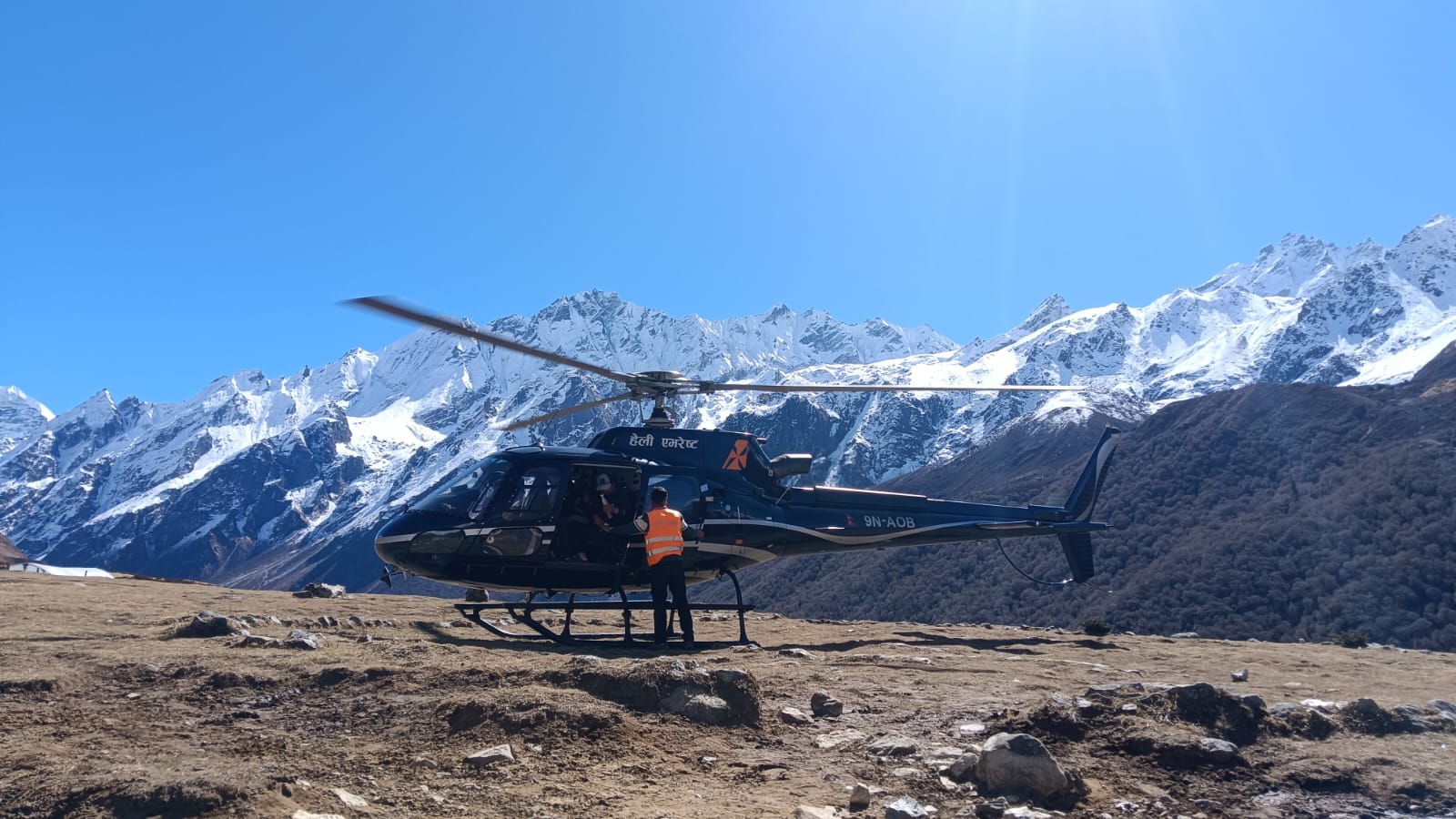
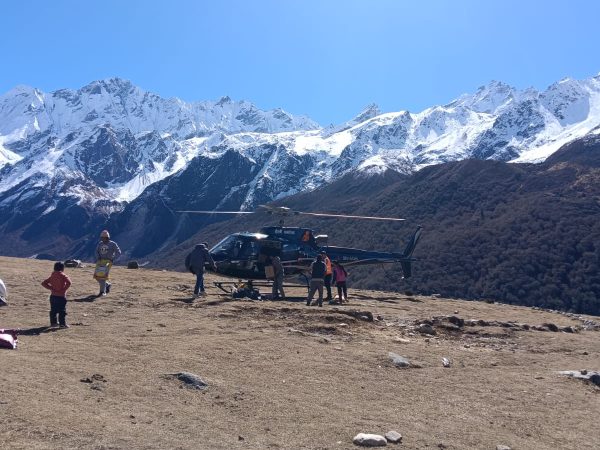
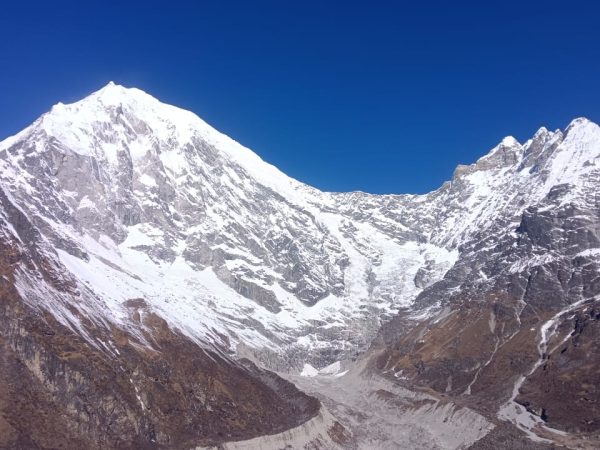
The Valley of Glaciers, aerial entry :When you leave the greenfields of the government valley and enter the stark ivory-white world of Lantang National Park. From the air, the Langtang reveals its massive scale, looking like a frozen river carved by gods. Front row seats to the 7000m Giants: As mentioned before. The peaks are above 7000 meters, majestic, standing as a godly figure. The Langtang Lirung (7,227 meters). Your flight path brings you so close to the peaks that you can see the deep blue fissures in the ice and rugged ridges of the Ganesh Himal and Dorje Lakpa guarding the Tibetan border. The Kyanjin Gompa Landing (3,870m): Step out. Step on the soil of the spiritual valley. Look around, and what you will get to see is the. 360 degree wall of snow. This ancient settlement is decorated with fluttering prayer flags and stone Mani walls that have stood for centuries. A moment of pure bliss and breathless tranquility. A “Hello” to the Himalayan Heritage Dairy: A highlight unique to this region is the Kyanjin Yak cheese factory. Established with Swiss expertise decades ago, the oldest in Nepal. Here you can taste authentic Yak cheese produced using the traditional method, a true “Jewel” of the Himalayan culinary culture. So, don’t forget to take a bite. Wildlife observation from the sky: So it's obvious you will be. Inside the chopper. On the air overlooking every structure’s topography nd every beauty mother nature has given, which doens’t exclude the wildlife for sure. Wildlife is also jewels of the trip, like every other visual feast. The views from above, the bird-eye perspective of the Rhododendron and bamboo forest feels like a completely unique experience. And the elusive red panda and Himalayan Thar, their presence makes the trip like a cherry on top.
Overview
Nepal has got jewels, a collection of jewels, unique and rare, like nowhere else, or very limited in scale. Multiple regions, full of different scales and grades of adventures to quench your thirst for adrenaline, and adventure has masterpieces.
“Verticality” is the term you might find suitable to use while defining Nepal, and why not, since it has more than half a dozen peaks above 8,000m vertically rising from above sea-level.
Renowned among trekkers, the Langtang valley trek, an adventure-filled trip, full of thrills, excitements, surrounded by glaciers and cultures, like jewels sitting around the neck of Mother Nature, shining like bright ornaments, adding “icing on top of the cake.”
Langtang valley Heli tour is one among those transcendent experiences that will make anyone take a sigh of breath, not just due to strain during trek or the sheer size when observed from sky, it just feels like a structure giving off energy that can make anyone breathless with the blend of ancient culture and collection of glaciers and heritage sites.
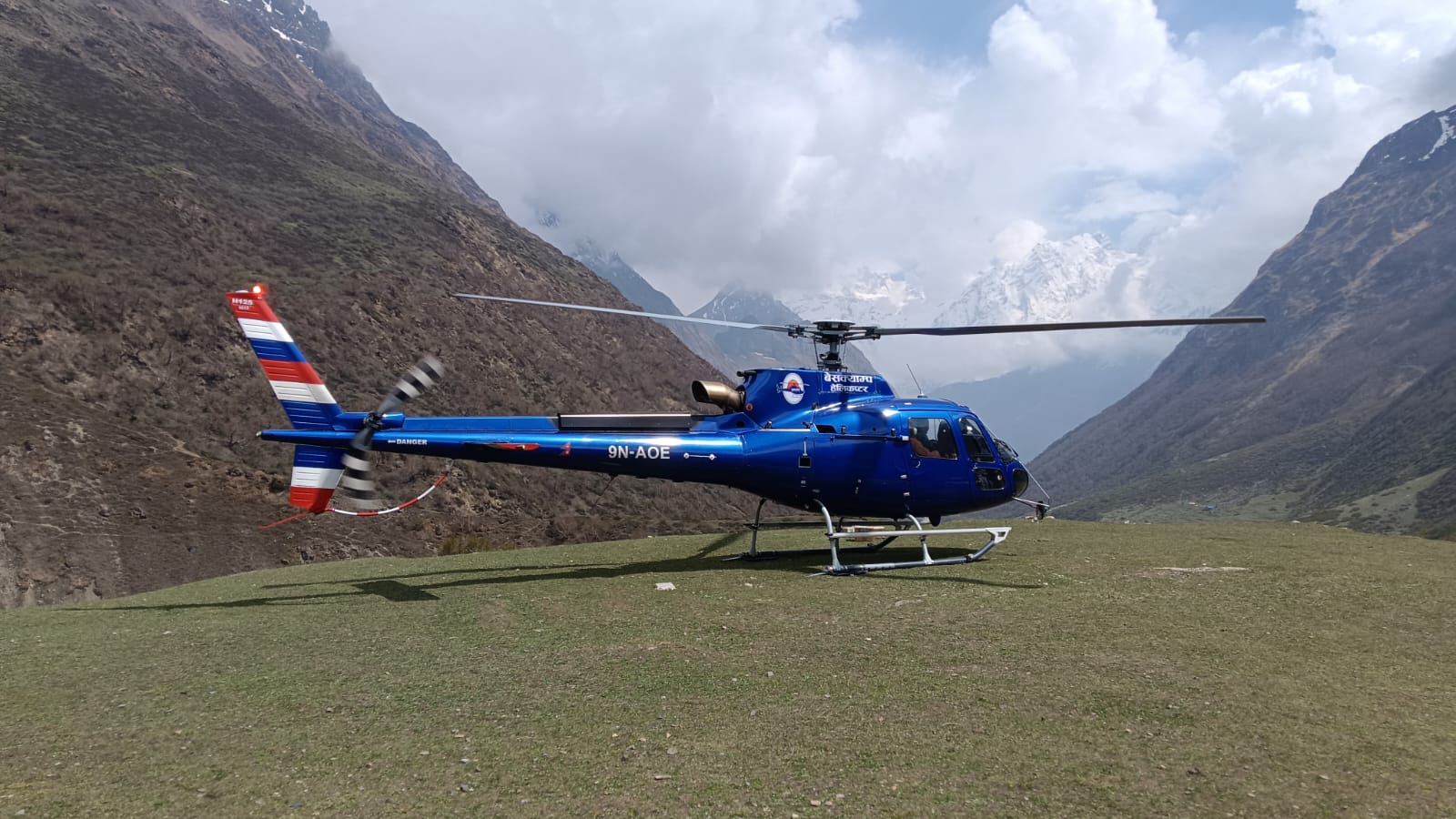
Through our specialized Lantang Heli Package, we’ve removed the barrier of a long, arduous road. Instead of days spent navigating rocky trails, you’ll be soaring above them, taking in the majesty of the Himalayas from the comfy seat of the high-performance chopper.
So sit tight, hold your breath, and gently soar in the sky. The view, out of the world, and no less than an adventurous world of science fiction drama.
Trip details
Total duration: 2-3 hours (round trip from Kathmandu)
Landing point: Kyanjin Gompa
Ground time: 30-45 minutes
Flight duration: 25-30 minutes
Cruising altitude: 5,500 to 7,300 m/ 18,000 to 24,000 ft.
Lets breakdown “Langtang valley Heli tour” in a sequence so it becomes easier for you to analyze and know the details better. So here is exactly how it unfolds.
Phase 1: The ascent from Kathmandu (7:00-7:30 am)
The departure: Taking off from Kathmandu’s domestic terminal, you immediately leave the urban sprawl behind. Within 10 minutes, the horizon is dominated by the Ganesh Himal and Jugal Himal ranges.
The Green Transition: You’ll fly north over the Shivapuri National Park. From the chopper, you can see the sharp contrast between the emerald-green terraced hills and the looming white peaks ahead.
Entering the gorge: The flight enters the narrow Langtang River Gorge. This is where the verticality becomes real; you are flying into massive cliff walls that lead directly into the heart of the National Park.
Phase 2: The Sanctuary landing (7:30 am- 8:15 am)
Kyanjin Gompa (3,870m): As the valley opens up, the helicopter touches down at the Kyanjin Gompa. This is the high-Alpine hub of the Langtang region.
360° Amphitheater: When the rotors stop, the silence is profound. You are surrounded by natural stadiums of peaks like Langtang Lirung (7,227m), which towers directly above you to the north, while Kimshung and Yansa Tsenji guard the flanks.
Ground Exploration (30 to 45 minutes): This is your time to move. You can walk to the local Kyanjin Monastery, meet the local Tamang residents, or take a short walk toward the glacier moraine for a better angle of the icefall.
Phase 3: The High-altitude “Taste” (8:15 am – 8:45 am)
The Cheese Factory: A unique part of the Langtang breakdown is the visit to the legendary Yak cheese factory. It’s a sensory experience, smelling the fresh Alpine milk and tasting cheese made at nearly 4000 meters of elevation.
The photography window: The light at this altitude is incredibly thin and crisp. Making it a gold mine for photographers. You have yet high contrast shots of prayer flags against the deep blue sky and the jagged shadows of the mountain.
Phase 4: The return & Gosaikunda overflight (8:45 am-9:15 am)
The high route: On the way back. Typically takes a slightly different approach. You’ll soar over the Gosaikunda Lake region. From above, the sacred turquoise lakes look like a drop of ink on a rocky canvas.
Final Descent: The air begins to warm up as you descend back into the Kathmandu Valley, completing the loop and landing back at the airport Just as this city is warming up to catch up with the day.
Tactical Gear Guide
Langtang’s famous for being called “Valley of Glaciers”. The cold here is wetter and more piercing because you are closer to massive icefalls.
The gear
You specifically need UV-400 polarized sunglasses. The glare of the Langtang Glacier is specifically more intense than the rocky base of Annapurna.
Other equipment, like gloves, a beanie, a woolen scarf, a mask, and weather-suitable socks are also recommended.
Safety and altitude protocols.
Safety and protection are the most important parts of any trip, and something not to be compromised in exchange for anything. You’ll be given a briefing and a recommendation to stay safe and protect yourself on the high elevation, and you’ll have trained personnel with you all the time, so it’s advised that you listen and follow the protocols well and smoothly.
And since you are making the sudden jump from the lower altitudes. For a few early hours or even half an hour on that level of elevation and a sudden decrease in the oxygen supply to your body, you might start to feel the pressure of the elevation.
And the symptoms of the. Altitude sickness might start to sink in the longer you stay there, which is why it is essential to keep a note of time.
Reason to visit Langtang
So whenever trekking and adventure topics about Nepal pop up, the famous trails in the Annapurna region, along with its alternative routes, Mardi Himal, are always in the spotlight and part of the bucket lists of many trekking enthusiasts, as it offers the panorama of mountains, which feels like a theatre experience, which often overshadows the cultural part.
But the Langtang region is very synonymous with cultures, its authenticity, and the way of life people live. It’s unique because it offers a blend of two different nations. Shared border, cultural practises, dressing sense, and even cuisine from both nations make it a perfect blend, a melting pot of two different nations.
Try not to miss the flavour of the region. Pay a visit to the Swiss-style Himalayan cheese factory. It’s a “Secret Jewel” that fewer people pay a visit to compared to other regions.
Try it, give it a shot, it’s worth it.
When to Visit
While the tour runs year-round, the experience changes drastically with the seasons. The attractions and highlights differ and alter as per decisions. And it gives different vibes according to it Which is why. You need to look. A bit deeply. Before turning up for the tour, to suit your needs.
Spring, March to May: The verticality is softened by blooming rhododendrons in the lower valleys, and the air is mild. The air, even though a bit warmer, the greenery circulates and keeps the cool of the surrounding making it a decent and good time to go for the trip.
Autumn, September to November: The jewels are at their clearest. This is the peak season for photography because the post-monsoon air is scrubbed clean of dust.
Winter, December to February: For those who want the full whiteout experience, the valley becomes a true winter Wonderland, though it is biting cold. The high elevations full of snow and capes covered by it, a must-visit time, truly gives travelers a wonderland experience.
The “Group vs Private” strategy.
Group sharing
For solo explorers or couples looking to optimize their investment, group sharing is the tactical choice to experience the Langtang Jewels without the private charter cost. By coordinating with a small group of up to five passengers, you share the mission expenses while enjoying the same elite flight path and high altitude ground time.
It is a highly effective way. Two, secure a seat in the cockpit. Allowing you to focus on the resources for your photography and gear while we handle the logistics of filling the manifest.
Private charter
For explorers seeking unmatched exclusivity, the Private Charter mission is the ultimate luxury, providing a tailored Himalayan experience designed entirely around your schedule and preferences. By booking the entire aircraft, you unlock the 100% window access for unobstructed photography, allowing you and your party to curate a customized pace on the ground in the Kyanjin Gompa.
Whether celebrating a milestone with the family or securing perfect lighting for a photography expedition, this option offers total privacy and the flexibility to adjust the itinerary to your specific needs, ensuring a seamless, high-touch journey through the Langtang Valley.
Itinerary
If you want tailor-made trip or want to personalize this itinerary, just feel free to contact us. We are always there to help you to make your holiday plan. Contact us
Inclusions
What's included
Tactical air charter
Door-to-door Logistics
Park access permit
Government compliances
Service and Tax
Oxygen and safety
The “cheese factor.”
What's not included
Personal gear: (Warm clothing and boots)
Personal insurance: Travel and emergency medical/ evacuation insurance.
Gratuities: Tipping your staff
Personal insurance: Mandatory travel insurance that particularly covers high-altitude helicopter evacuation up to 5,000m
Nepal entry fee
Contingency costs: Any additional expenses incurred due to weather delays, flight rescheduling, or personal medical requirements.
Frequently Asked Questions
What if the weather turns?
We provide a full refund or a mission reschedule for the next clear window.
Is altitude sickness a risk?
Ground time is too short for sickness, but on board, oxygen is always ready for backup.
Can I bring pro camera gear?
Yes, just ensure your total kit weight is coordinated with our flight manifest.
Are there any restrictions?
No. This mission is designed to be accessible for explorers of all generations.
Why choose Lantang over Everest?
It offers faster access. Closer glacial proximity and unique. Cultural stops.
What is the maximum weight limit?
Each helicopter carriers are upto 450 to 500 kg in total; individual weights over 100 kg may require an extra seat.
What is the best time to see the jewel?
This spring, March to May, for blooming Rhododendron,s and Autumn, September to November, for peak visibility.
Is there a dress code for the mission?
Wear heavy layered clothing, polarized sunglasses, and sturdy boots to handle the sub-zero glacial temperatures.
How long is the actual flight?
The aerial journey takes a round. 25 to 30 minutes each way from Kathmandu domestic terminal.
Can I book a private charter?
Yes, private missions are available for groups of up to 5. Offering 100% window seat access and a custom pace.
Do I need physical training?
No, physical training is not required. The helicopter handles the verticality, making it accessible for all mobility levels.