Overview
When you think about mountains and the highest peaks, what typically comes to mind?
For me personally, it’s the country of Nepal, the nation of Himalayan, the nation from where the head of the overseas world is, while carrying glacier lakes with it.
With more than a dozen peaks above 8,000m, the view you’ll get to see is unlike anywhere else in the world.
And if you’re looking for a high-impact, low-friction addition to your mission, the Annapurna Base Camp Heli Tour is the ultimate shortcut to one of the really dramatic mountain sanctuaries on earth.
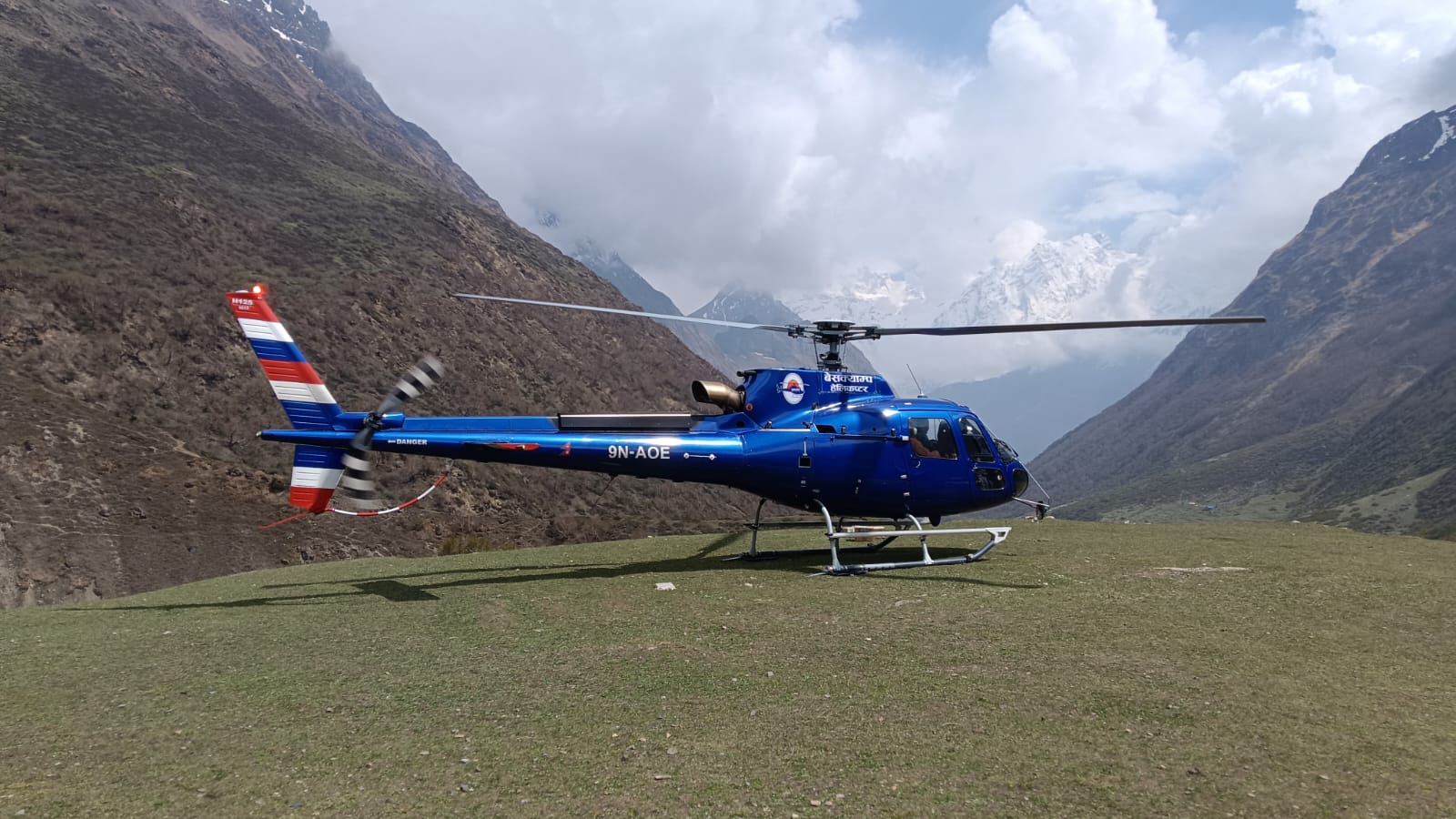
And now with our Annapurna Base Camp Heli tour package, it’s even better. You can now get to witness an aerial view of these high mountains while comfortably sitting inside a chopper.
Now let’s talk about what’s in the bag for you.
If this were a trek, then it’d have been several weeks, long and arduous. But you’re on a heli tour. So buckle up and get ready.
And the best part of this trip, even if costly, is that any age group can do it. There are times when people have programs on their bucket list but cannot make it due to several reasons, and their physical condition catches up. So, for those people who also want to taste the thrill, no matter the age, this Annapurna Base Camp Heli Tour is perfect for them.
Stay with us, and you’ll get to take in all the visual feast you deserve.
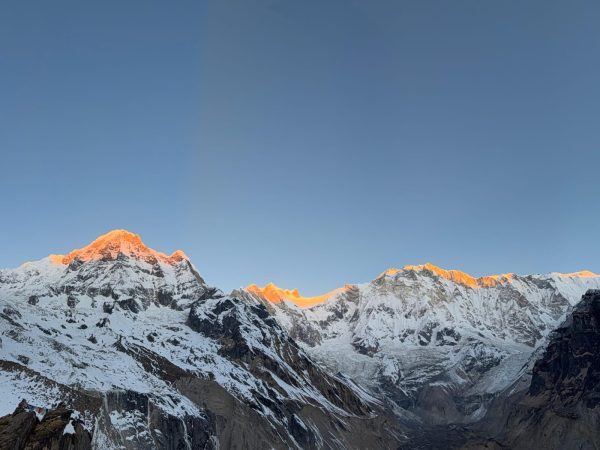
Starting from Pokhara, the Annapurna Base Camp Heli Tour will be one of the most panoramic aerial trips of your life, with 360° views of mountain peaks like Mt.Dhaulagiri (8,167 m/26,796 ft), the 7th highest peak in the world, the mighty Machhapuchhre (Fishtail), Himchuli, and of course the mighty Annapurna itself.
And who can forget the waterfalls, glaciers, rivers, terraced farmlands, and ridges, the jewel stones of the trip that make the trip complete, isn’t it?
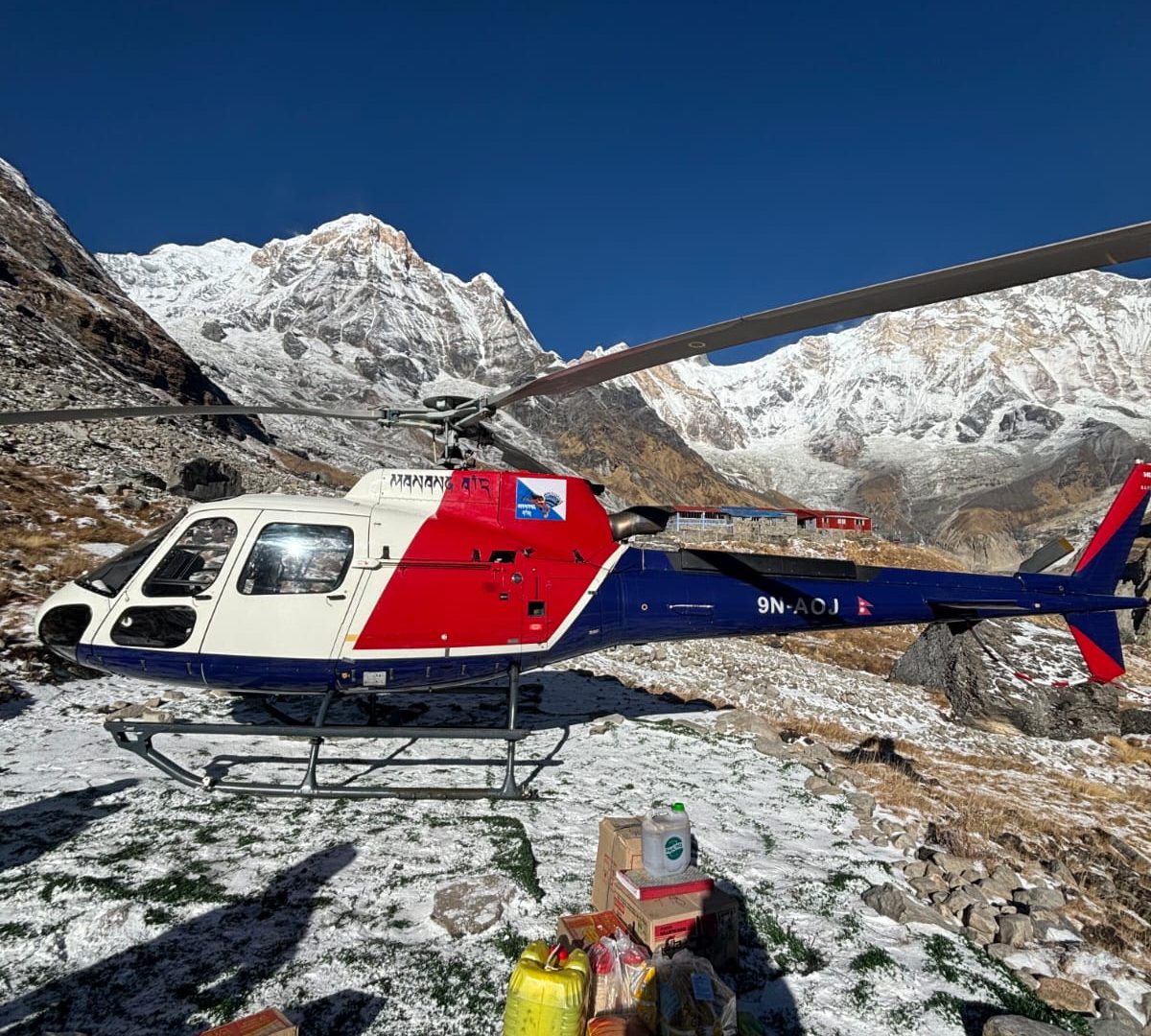
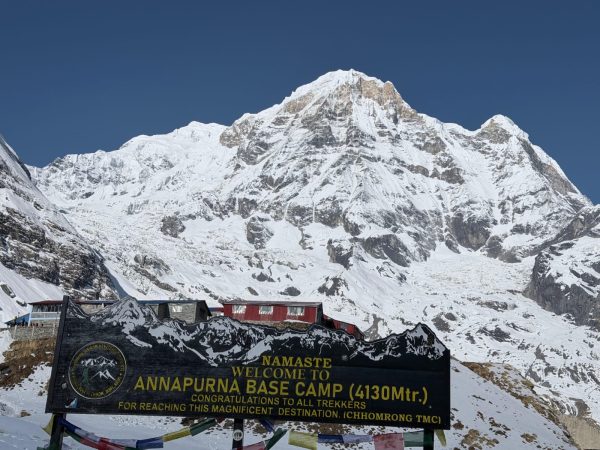
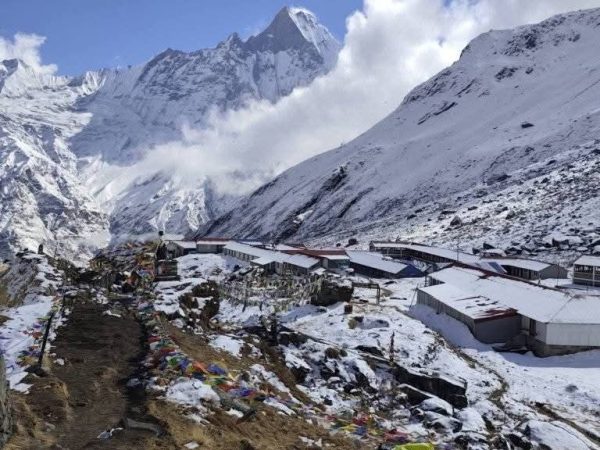
Landing at the base camp of Mt. Annapurna will provide you with 360° panoramic views of the Himalayas. Apart from this, you can have breakfast at the base camp on the lap of the Himalayas, and around 20-25 minutes will be allocated to enjoy in the base camp.
So, with the view, you can enjoy tea and coffee, and taking pictures will add an extra benefit during this tour. Get ready with your camera or your mobile phone to snap the views that you might have never witnessed in your life, which could be an once in a once-in-a-lifetime opportunity for you.
Details of the trip
- Flight Duration: 1.5 to 2 hours round trip (Pokhara)
- Kathmandu: 3 to 4 hours round trip.
- Ground time: 20 to 30 minutes at the base camp standard safety limit.
- Maximum altitude: 4130 meters/ 13,550 feet (at the landing site)
- Cruising altitude: Upto 4,600m+ during the transit
Highlights of the Trips
Flight from Kathmandu (1,350m) to Pokhara (850m)
The strategic transit phase takes you from the bustling capital to the serene lakeside city of Pokhara in just 25 minutes. As you’re flying west, you leave the urban density behind for a landscape of rolling green hills and Deep River valleys. This leg serves as a perfect low-altitude introduction to the massive wall that dominates the northern horizon.
Pokhara to Annapurna Base Camp (4,130m)
The real mission begins as the helicopter lifts off from Pokhara and gains nearly 3,300m of verticality in less than 20 minutes. You will soar over traditional Gurung villages like Gandhruk and follow the deep Modi Khola gorge into the heart of Annapurna Sanctuary.
The flight culminates in a dramatic approach to the base camp, where it will land directly in a massive amphitheater of 7000 and 8000m peaks.
Breakfast at Annapurna Base Camp
Landing at 4,130 meters, you will step out in the thin crisp air for a once-in-a-lifetime “Glacial Breakfast” on the lap of the mountains. Surrounded by a 360° wall of ice and rock, including Annapurna I and the iconic Fishtail, you will enjoy your hot tea and meal while soaking in the silence. Unlike the high-speed landings at Everest.
The AC altitude allows for a longer, more relaxed ground time to explore and capture professional-grade photos.
Flight from Pokhara to Kathmandu
After completing your mountain mission and a brief refueling, stop in Pokhara. The return leg to Kathmandu offers a final chance to reflect on the landscape. This phase allows you to see the transition of central human lives in a new light as the sun rises. You will touchdown at the domestic terminal by mid-morning. Completing a journey that would normally take a 10-day trek.
Birdseye aerial views
From the cockpit, you gain a “God’s eye perspective” of the Annappura region that ground explorers never see. You will witness the raw power of the Annapurna South glaciers as they carve through the rock and look down into the deep turquoise rivers of Phewa, Begnas, and Rupa Lakes. Every window offers a view of the vertical world from the emerald terraced farms below to the ivory white summit above.
Peaks visible during the flight
So the Annapurna mountain range consists of six prominent peaks above 7000m.
This includes Mount Annapurna I (8,091m), Annapurna II (7,937m), Annapurna III (7,555m), Annapurna IV (7,525m), Annapurna South (7,219m), and Gangapurna (7,455m).
Other less prominent peaks include Khangsar Kang (7485m), Annapurna Fang (7,647m), Tillicho Peak (7,135m), Nilgiri Himal North (7,061m), Machhapuchhre / fishtail (6,993 m), and Hiunchuli 6,441m.
A detailed breakdown of the Annapurna Helicopter Tour
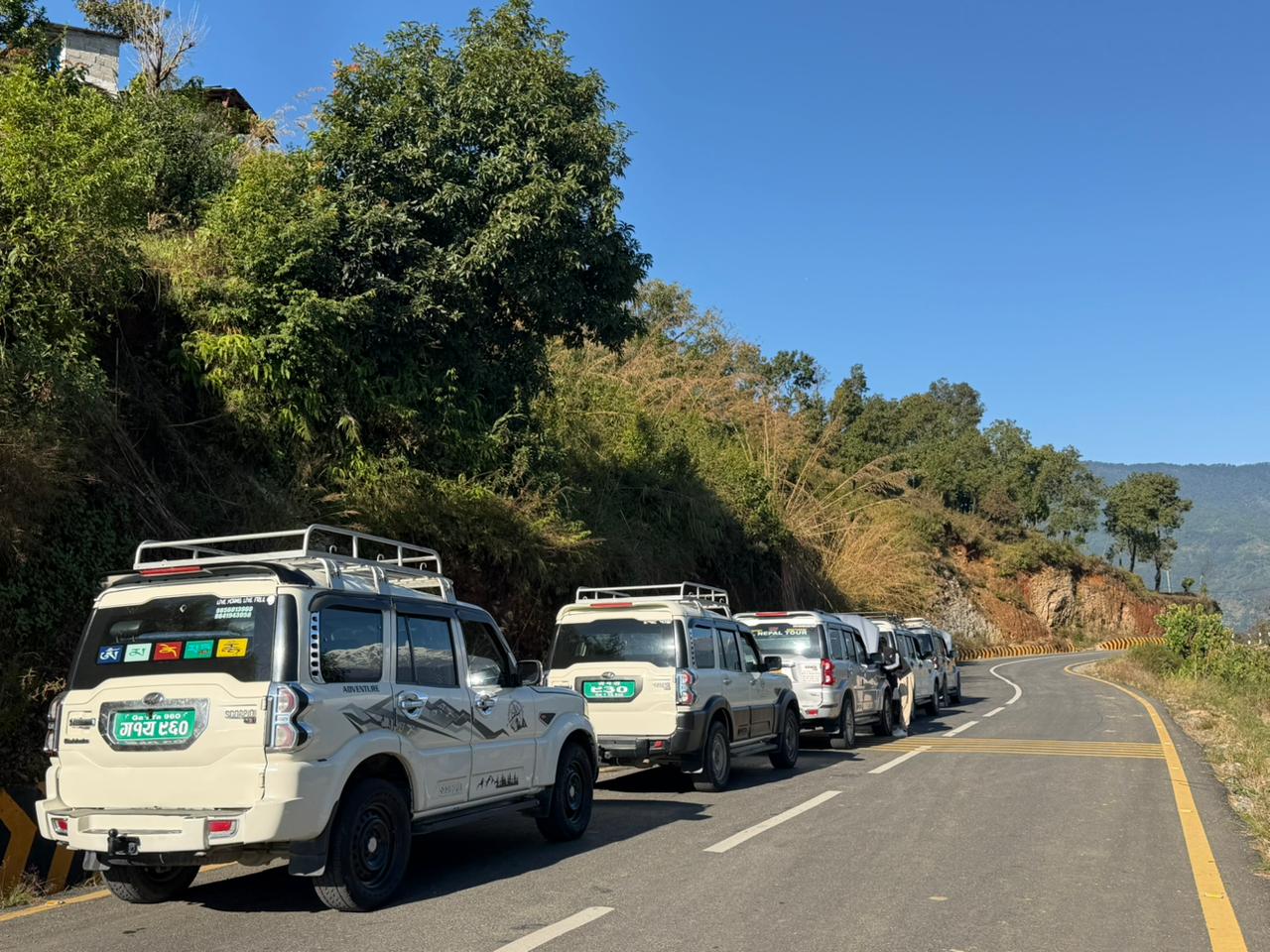
A representative from the Himalayan Guide Treks will escort you to the airport in a private ride from your respective hotel. And we’ll arrange all the measurements necessary for the documentation.
6:00 AM: Pick up from the hotel and ride to Tribhuwan International Airport.
A delegate from our office will escort you in a private ride to the Tribhuwan International Airport, and all the necessary people. Works will be done smoothly beforehand for your efficiency.
6:20 AM: Check into the airport.
Security check in and drive towards the early pad at the airport. Here, your pilot will brief you about the day’s tour.
7:30 AM: Helicopter flight to Pokhara.
Flying will be approximately 45 minutes. This will be the majestic views of Langtang, the Himalayan range, rivers, hills, villages, and an aerial
view of the city. Upon landing in Pokhara, you will have some time to explore the surrounding areas.
9 AM: A helicopter ride to Annapurna Base Camp.
Starting from Pokhara with the views of the city and lakes, your flight will bypass the Hills and through the river gorge with a splendid view of Annapurna and the Himalayan range into the Annapurna base camp.
Here you will be allocated a sufficient amount of time to explore the area for breakfast, enjoy taking pictures and videos, and fly back to Pokhara.
Now you might think. While being in one of the best places, feeling heavenly, this is a very short duration to be there. But remember and keep this in mind. The fact that it is a very high-altitude place. And the weather is very unstable and can go south at any moment. So we’ll be there for one brief moment. No matter how beautiful it is.
10:40 AM: Annapurna Base Camp to Pokhara
Upon reaching Pokhara, you can spend some free time exploring around. The helicopter will inform you about the flight schedule, and take a helicopter ride to Kathmandu.
12:15 PM arrival in Kathmandu.
So the views are majestic of all the valleys, hills, and mountains. And after savouring those moments and beautiful views, you will arrive at Kathmandu Airport. And once again delegate from Himalayan guide treks will be there, present at your service to escort you to your hotel on a private ride.
And a very important note to keep in mind. All of the above-mentioned is a tentative time for the Annapurna Base Camp helicopter tour, and in some cases, it might take longer due to unpredictable factors.
So be prepared with all the possibilities. Himalayan guide tracks will inform you a day earlier, before your helicopter tour to the Annapurna base camp. In case you want the starting time to be arranged by yourself, please let us be informed.
Helicopter tour to the Annapurna Base Camp with a landing option
Since Annapurna Base Camp, a helicopter tour, is the only luxury trip in Nepal where you can land at the base camp of Mount Annapurna or any Himalayan peaks above 8000m, and that too, with very little to no strain on your body, which is what makes the cost reasonable. It’s about the luxury, you see?
Now let’s talk about the landing options.
First landing
The Heli Tour begins from Kathmandu, takes you to Pokhara for the first landing. Pokhara is not just a place for landing, but it will be the process of refueling the helicopter before heading towards the Annapurna Base Camp.
Second landing
Departing from Pokhara, the helicopter will transport you to the base camp at 4,130m above Mount Annapurna. You will have ample time to explore the whole area and enjoy breakfast at the lodge located in the Annapurna Base Camp.
Third landing
From Anapurna Base Camp (4,130m), you will take a short ride to Pokhara Airport for a short break and fly back to Kathmandu.
Fourth landing.
Finally, from Pokhara you will take a ride to Kathmandu airport, and your tour ends. Himalayan guideTreks will escort you in your private car towards your hotel.
What is the cost of the Annapurna Base Camp Helicopter tour?
The Annapurna Base Camp helicopter tour is affordable and comparatively cheaper than the Annapurna Base Camp trek due to its nature.
The cost for Annapurna is mainly determined by these factors:
Pokhara: The starting point of the Helicopter Tour
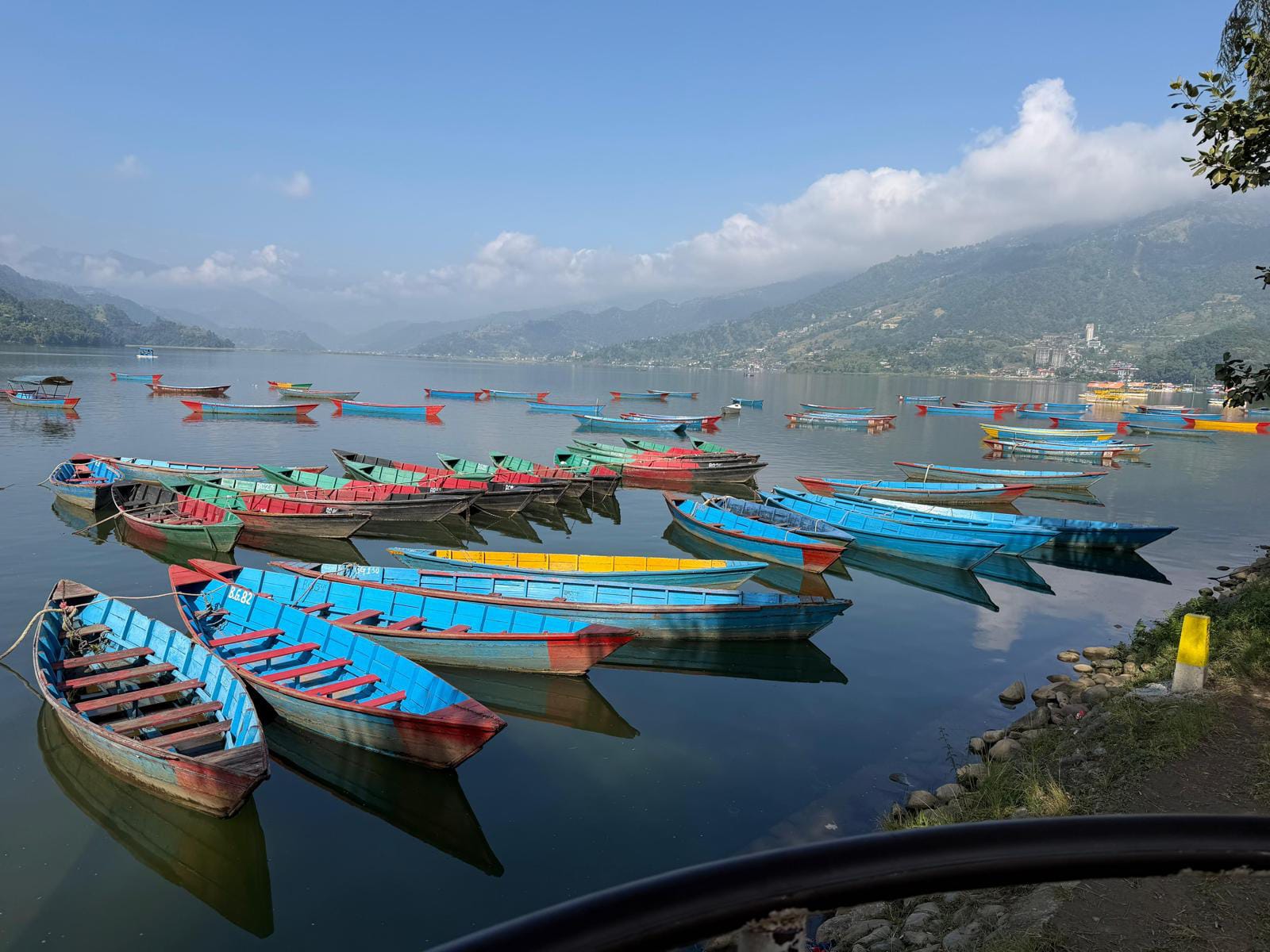
The beautiful city of Pokhara, one of the jewels of Nepal and Mother Nature, sitting near Mount Annapurna, feels like a piece of heaven on Earth.
The helicopter journey to Annapurna Base Camp can be undertaken either from Kathmandu or Pokhara, depending on the location.
And ultimately, the point of start of the helicopter tour also alters the cost of the Annapurna Base Camp Heli Tour and experience.
From Kathmandu
The Capital is also a point from where you can kick off your flight tour. If you wanna make the starting and ending points the same, i.e., Kathmandu, for the Annapurna Base Camp helicopter tour, then we can make the arrangement along with necessary paperwork and permits with pickup and drop-off at your respective point (Hotel).
Annapurna Base Camp Private helicopter tour.
Get to enjoy every moment of the trip, it’s personal, an ultimate luxury, and most importantly, private.
You, at the foot of the 10th-tallest mountain in the world. Trust me when I say that you will feel different. You will feel transcended.
Whether you are departing from Kathmandu or Pokhara, this exclusive journey is tailored to your preferences.
You also have a choice. Either embark on this adventure solo or invite your friends or family to share in the memorable experience at a time that suits you best, and create a memory of a lifetime.
Group joining the Heli Tour.
Experiencing a helicopter tour to Annapurna base camp is available from both Kathmandu and Pokhara. This tour typically involves a group of four to five travelers per helicopter. The cost of the tour varies based on the number of participants.
While the Annapurna Base Camp Helicopter Tour from Kathmandu is less popular compared to its Everest counterpart, it is highly advisable to book in advance for group tours to secure your spot.
Conversely, we offer daily helicopter tours to Annapurna from Pokhara. Please reach out to us for more information about arranging a helicopter trip to Annapurna Base Camp, whether from Pokhara or Kathmandu.
Strategic clothing and Gear
Even if it is 20 °C in Pokhara, it is likely. That it is about – 5°C to- 10 degree Celsius at the base camp.
Footwear: Wear sturdy boots, not sneakers. You will be walking on a mix of rock. Ice or packed snow near the helipad.
The Heli-Wind: The rotor wash (winds from the blade) is powerful and freezing. Wear a windproof outer shell and a warm beanie that fits tightly. Loose hats will fly away and can be dangerous if they hit the rotors.
Sunglasses: Polarized lenses are a must. The snow glare at the Sanctuary’s binding, which can ruin your visibility and your photos. If U aren’t protected.
Through the lens
The window seat: Sit on the left side of the helicopter when flying towards the mountain from Pokhara for the best initial use of the Machhapuchhre (Fishtail) Ridge.
Clean your lens: Clean your camera lens before boarding. The change in temperature and humidity inside the cabin can cause fogging once you step out into the cold air.
The “Why” Altitude and safety?
The short ground time isn’t just because the pilot is busy. It is a vital safety rule to prevent altitude sickness. Because you are flying from Pokhara, 800m to the base camp, 4130m, in only twenty minutes, your body doesn’t even have the time it needs to adjust to the thinner air.
The “How”: landing strategy.
When you step out of the helicopter, keep it simple: Do not run or overexert yourself. Move at a relaxed pace, focus on taking deep breaths, and keep your activity level low. This helps prevent sudden dizziness and keeps you feeling steady while you enjoy the views.
So let’s talk about some necessary cautions and lines to be noted and undertaken.
Even though not hiking or trekking or not much physical strain, we are flying at the level of clouds, and it is dangerous considering the fact that earlier in the day, we were on the ground under the normal atmospheric pressure.
But now we are several thousand meters above the ground, which makes it difficult for the body to adjust, as we have not properly acclimatized.
So it’s. Recommended, strongly recommended And advised that you have proper insurance to deal with any health emergencies in case.
In the world of high altitude missions, insurances in just a piece of paper; it is our financial extraction plan and lifesaver.
Why do you need it even for a short flight?
The altitude change is rapid. You’re flying from Pokhara (8,00m) to over 4,100 meters in just twenty minutes. The sudden changes can trigger altitude-related issues even if you are a fit individual.
The cost of non-standard extraction: While your tour includes the flight, it does not include a medical evacuation if you fall ill or get injured at the base camp. A private emergency rescue can cost between $5000 to $10,000 if you have to pay out of pocket.
Weather disruptions: Himalayan weather is unpredictable. Which is obvious. Insurance can help cover costs if your tour is canceled or if you are stranded due to sudden changes in flight conditions.
What must your policy include?
Standard travel insurance often excludes high-risk activities for ABC Heli Tour. Ensure your policy explicitly covers:
Altitude: Up to 4,500m or 5,000m since the flight goes above 4,100m.
Helicopter evacuation: Particularly mentions “Emergency Medical Evacuation” via helicopter.
Medical expenses: Coverage for hospital stays in Kathmandu or Pokhara.
In essence, the helicopter company has its own insurance for the aircraft, but that does not cover you for medical emergencies. Think of your personal insurance as your “Reserve Parachute”-you hope you never use it, but you don’t jump without it.