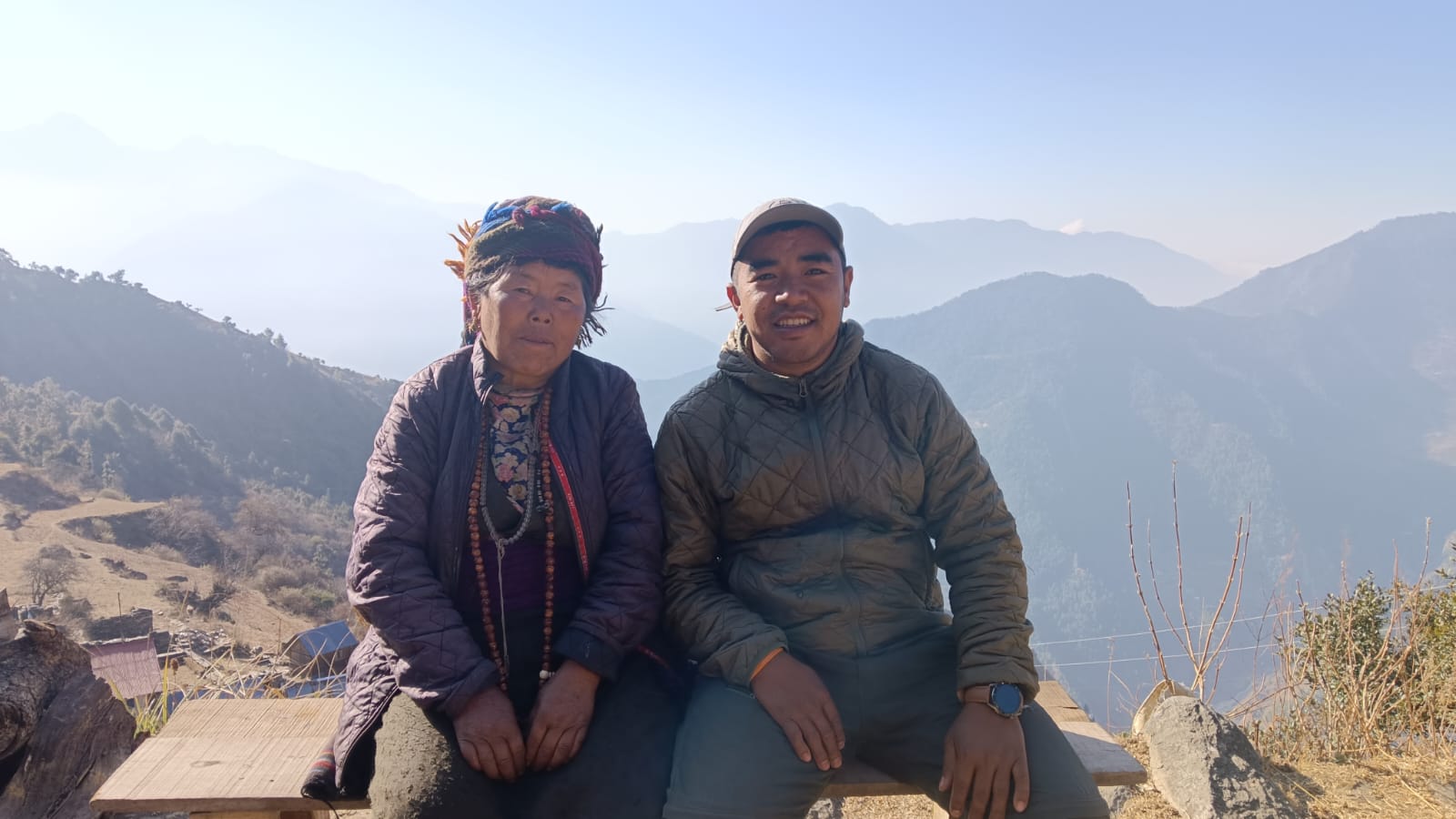
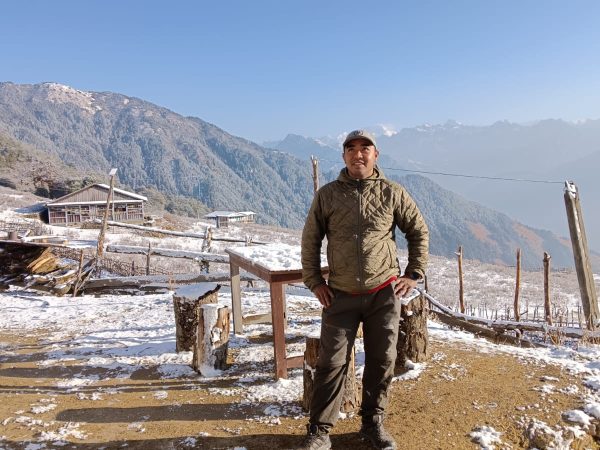
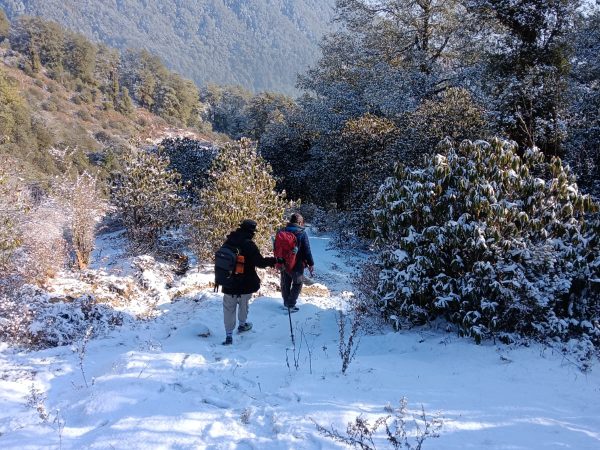
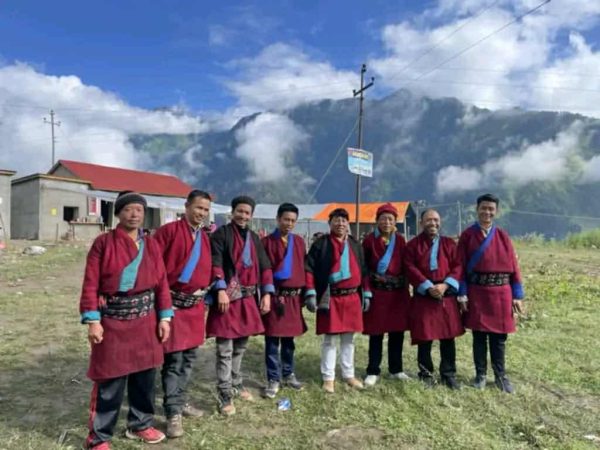
Overview The Tamang Heritage Trail Trek is a captivating cultural adventure that takes you deep into the heart of the Langtang region, home to the indigenous Tamang people. This off-the-beaten-path […]
Duration: 10 Days
Best Time: Spring and Autumn
Trip Grade: moderate
Start from Kathmandu and End to Kathmandu
Min 2 to Max 10 Pax in a group
Meals: Breakfast, Lunch, and Dinner
Accommodation: Tea House
Highlights
Authentic Cultural Immersion: Experience genuine Tamang hospitality through homestays and village interactions
Ancient Monasteries & Traditions: Visit centuries-old Buddhist monasteries and witness traditional religious practices
Tatopani Hot Springs: Relax in natural thermal springs with mountain views
Pristine Mountain Scenery: Marvel at Ganesh Himal, Langtang Lirung, and Tibetan border peaks
Diverse Landscapes: Trek through rhododendron forests, terraced rice fields, and alpine meadows
Traditional Villages: Explore Gatlang, Thuman, and Briddim—villages preserving centuries-old customs
Off-the-Beaten-Path Experience: Enjoy peaceful trails away from mainstream trekking crowds
Community-Based Tourism: Support sustainable development in remote mountain communities
Tibet Border Views: Stand near the frontier with breathtaking vistas of the Tibetan plateau
Overview
The Tamang Heritage Trail Trek is a captivating cultural adventure that takes you deep into the heart of the Langtang region, home to the indigenous Tamang people. This off-the-beaten-path journey combines stunning Himalayan scenery with authentic cultural immersion, offering trekkers a rare glimpse into ancient traditions that have remained unchanged for centuries.
Located north of Kathmandu in the Rasuwa district, this moderate trek winds through charming Tamang villages, verdant alpine forests, and terraced farmlands, all framed by the magnificent peaks of Ganesh Himal and Langtang Lirung. Unlike the more crowded trekking routes in Nepal, the Tamang Heritage Trail provides an intimate experience where you’ll stay in local homestays, share meals with village families, and witness daily life in remote Himalayan communities.
What makes this trek truly special is its focus on cultural preservation and community-based tourism. The trail was developed with support from local communities to provide sustainable income while protecting their unique heritage. As you journey from village to village, you’ll encounter ancient monasteries, traditional healing practices, natural hot springs, and warm hospitality that defines the Tamang way of life.
With Himalayan Guide Treks Pvt. Ltd., you’ll experience this remarkable journey with certified local guides who bring these mountains and cultures to life, ensuring both your safety and a deeply meaningful adventure.
Trek Difficulty Level
Grade: Moderate The Tamang Heritage Trail is classified as moderate, suitable for trekkers with average fitness levels. Daily walking times range from 5-6 hours, covering 10-15 kilometers with both ascents and descents. The highest point reaches 2,607 meters at Tatopani, significantly lower than most Himalayan treks, reducing altitude-related risks.
Trails include stone steps, forest paths, and occasional steep sections, but nothing technically challenging. The gradual elevation changes allow natural acclimatization. Most trekkers find this route manageable with basic preparation—regular walking or light exercise for 4-6 weeks before departure is recommended.
Best Time to Trek
Optimal Seasons:
Spring (March-May): Excellent visibility, blooming rhododendrons, pleasant temperatures (10-20°C daytime). Peak season with vibrant landscapes and clear mountain views.
Autumn (September-November): Crystal-clear skies, stable weather, comfortable temperatures. The most popular season with perfect trekking conditions and cultural festivals.
Winter (December-February): Possible but colder, especially at night (-5 to 10°C). Clear views but requires warmer gear. Fewer trekkers for solitude seekers.
Monsoon (June-August): Not recommended due to heavy rainfall, leeches, obscured views, and slippery trails. However, the landscape turns incredibly green for adventurous souls. Himalayan Guide Treks operates year-round with appropriate gear adjustments for each season.
Who This Trek Is For
The Tamang Heritage Trail is perfect for travelers seeking cultural depth alongside natural beauty. This trek suits:
Culture enthusiasts interested in authentic Himalayan traditions and Buddhism
Photography lovers wanting to capture rural life and mountain landscapes
First-time trekkers looking for moderate altitude without extreme challenges
Families with older children seeking meaningful adventure
Solo travelers wanting safe, organized group experiences
Those seeking authenticity over tourist-heavy routes
Responsible travelers committed to sustainable tourism
This trek doesn’t require previous high-altitude experience, making it accessible to anyone with reasonable fitness who can walk 5-6 hours daily on varied terrain.
Required Permits
Two permits are mandatory for this trek:
1. Langtang National Park Entry Permit: NPR 3,000 (approximately USD 23) for foreign nationals. This protects the region’s biodiversity and wildlife.
2. TIMS Card (Trekkers’ Information Management System): NPR 2,000 (approximately USD 15). This ensures trekker safety through registration.
Our team handles all permit arrangements in Kathmandu before departure. Please bring:
2 passport-size photos
Passport copy
Travel insurance details
Permits are checked at multiple entry points, so carry them throughout the trek.
Accommodation & Meals
Accommodation: Experience authentic mountain hospitality through homestays and local lodges. Most villages offer simple but clean rooms with twin beds, shared bathrooms, and traditional wood-burning stoves for warmth. Homestays provide unique cultural exchanges—sharing meals with families and learning about daily life.
Facilities are basic but comfortable, with mattresses, blankets, and pillows provided. Electricity may be limited or solar-powered. Charging devices costs extra (NPR 200-500 per charge).
Meals: Enjoy hearty, locally-prepared food including dal bhat (rice and lentils—the Nepali staple offering unlimited refills), momos (dumplings), noodle soups, Tibetan bread, and seasonal vegetables. Breakfast typically includes porridge, eggs, toast, and tea.
Food is freshly cooked, nutritious, and adapted for trekkers’ energy needs. Vegetarian options are abundant; inform us of dietary restrictions beforehand. Tea house menus offer variety, though remote villages have simpler choices.
Transportation / How to Reach the Starting Point
The trek begins with a scenic 6-7 hour drive from Kathmandu to Syabrubesi. Our private vehicle travels through:
Trisuli Bazaar: Major highway town with river views
Dhunche: Rasuwa district headquarters, gateway to Langtang National Park
Descending valley roads: Spectacular mountain scenery
The road is partially paved with some rough sections. Himalayan Guide Treks uses comfortable vehicles with experienced drivers familiar with mountain roads. Return journey follows the same route, arriving back in Kathmandu by evening.
Altitude Profile & Acclimatization Notes
The Tamang Heritage Trail features a gradual altitude profile, making it safer than high-altitude treks:
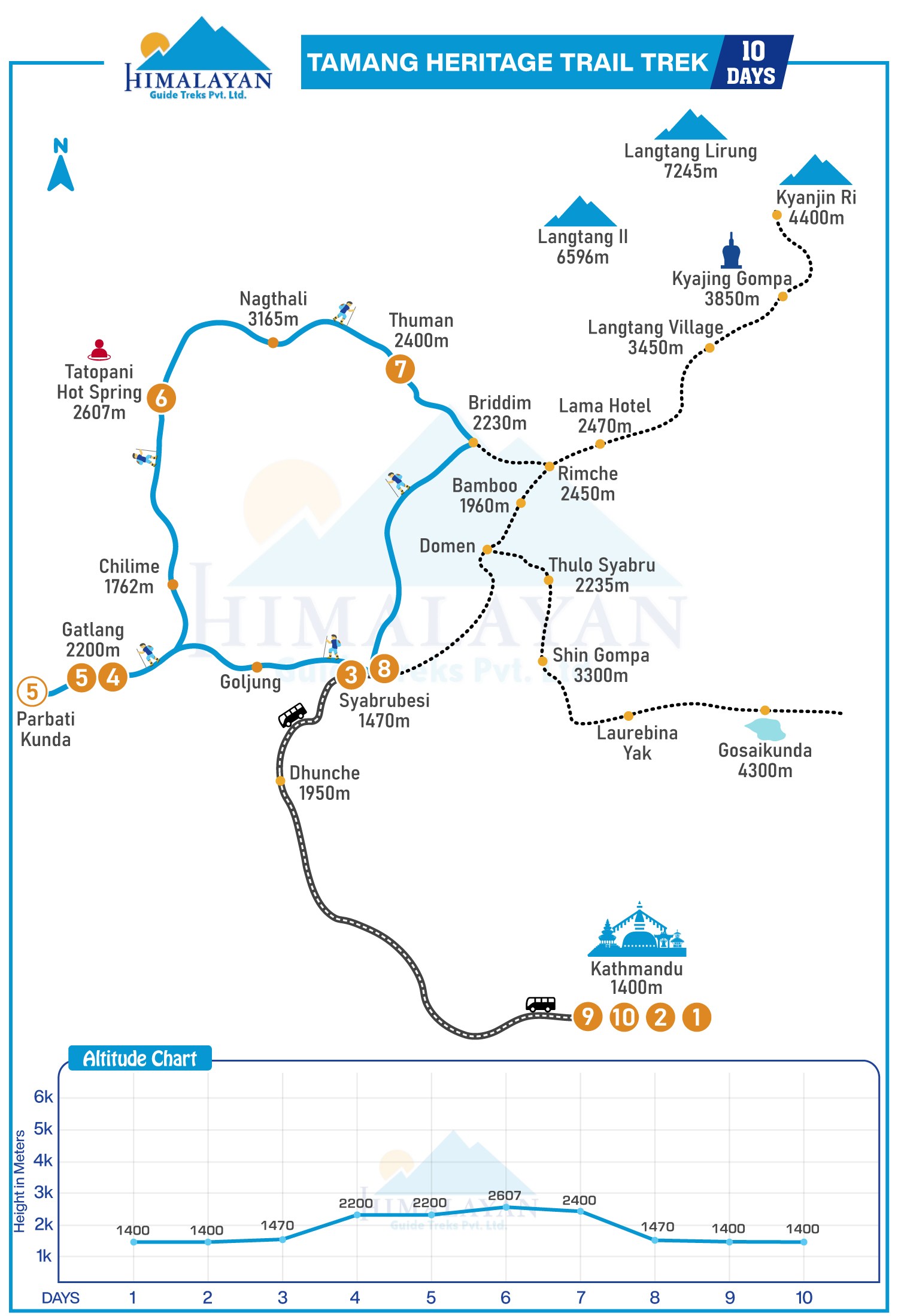
Starting Point (Syabrubesi): 1,470m
Gatlang: 2,200m
Highest Point (Tatopani): 2,607m
Average Trekking Altitude: 2,200-2,400m
The moderate elevation gain allows natural acclimatization without dedicated rest days. However, altitude awareness remains important:
Stay hydrated (3-4 liters daily)
Ascend gradually
Inform guides of any symptoms (headache, dizziness, nausea)
Avoid alcohol and smoking
Maintain steady pace—”pole pole” (slowly slowly)
Most trekkers experience no altitude issues on this route due to the conservative elevation profile.
Weather & Packing Tips
Spring/Autumn: Layered clothing system with light fleece, windproof jacket, t-shirts, trekking pants, and warm layers for evenings.
Winter: Down jacket, thermal layers, warm sleeping bag, insulated gloves, and woolens.
Essential Packing List:
Comfortable trekking boots (broken in)
Daypack (25-35L)
Sleeping bag (seasonal rating)
Water bottles/hydration system
Headlamp with extra batteries
Sun protection (hat, sunglasses, SPF 50+ cream)
Basic first aid kit and personal medications
Trekking poles (optional but helpful)
Quick-dry clothing
Toiletries and wet wipes
Camera and power bank
Cash (limited ATM access)
Pack light—porters carry main luggage (max 12-15 kg), while you carry your daypack.
Guide & Porter Support
Himalayan Guide Treks provides experienced, government-certified local guides who are:
Expert navigators with intimate trail knowledge
Cultural interpreters fluent in English, Nepali, and Tamang languages
First aid trained with emergency response capabilities
Passionate storytellers bringing history and culture alive
Our guides are natives of the Langtang region, ensuring authentic insights and community connections. They handle logistics, accommodation bookings, and permit checks while prioritizing your safety and enjoyment.
Porters carry main luggage, allowing you to trek comfortably with just a daypack. We treat porters ethically with:
Fair wages and insurance
Proper equipment and footwear
Reasonable load limits (25-30 kg maximum)
Equal accommodation and meals
The typical ratio is one porter for every two trekkers, and one guide for groups up to six trekkers.
Travel Insurance Requirements
Comprehensive travel insurance is mandatory for all trekkers. Your policy must cover:
Emergency helicopter evacuation from 6,000m altitude
Medical treatment including altitude sickness
Trip cancellation and delays
Lost or stolen baggage
Personal liability
Verify your policy explicitly covers trekking up to 3,000 meters in Nepal. Standard travel insurance often excludes adventure activities—ensure trekking coverage is included.
Provide insurance details to our office before departure. In emergencies, quick evacuation can be life-saving, and helicopter rescues cost USD 3,000-7,000.
Safety Measures & Emergency Support
Your safety is our absolute priority. Himalayan Guide Treks implements comprehensive safety protocols:
Pre-trek briefings covering safety guidelines and altitude awareness
Daily health monitoring by guides trained in altitude sickness recognition
First aid kits carried by guides with basic medical supplies
Emergency communication via mobile networks (available in most villages)
Evacuation procedures with helicopter partnerships for serious emergencies
Weather monitoring to adjust itineraries if necessary
Group safety gear including oxygen meters and emergency medicines
Our guides maintain regular contact with our Kathmandu office. In case of illness or injury, we arrange immediate medical attention or evacuation based on severity.
Responsible & Sustainable Travel Tips
As responsible trekkers, please follow these sustainable practices:
Respect local culture: Dress modestly, ask permission before photographing people, remove shoes when entering homes and monasteries
Minimize plastic: Carry reusable water bottles; water purification tablets or SteriPEN reduce plastic waste
Support local economy: Purchase handicrafts directly from artisans, tip guides and porters fairly
Leave no trace: Carry all non-biodegradable waste back to Kathmandu
Conserve resources: Use water and electricity sparingly; batteries and firewood are precious in mountains
Wildlife respect: Maintain distance from animals; don’t feed wildlife
Himalayan Guide Treks actively supports community projects including school supplies and healthcare initiatives in Tamang villages.
Why Choose Himalayan Guide Treks Pvt. Ltd.
Local Expertise: As a Nepali-owned company based in Kathmandu, we bring generations of mountain knowledge and authentic connections with local communities.
Certified Professionals: All guides hold government certifications with wilderness first aid training, ensuring competent leadership in all conditions.
Personalized Service: We maintain small group sizes (maximum 12 trekkers) for personalized attention and flexibility.
Safety-First Approach: Comprehensive insurance for staff, well-maintained equipment, and proven emergency protocols protect every adventure.
Fair & Ethical Practices: We pay fair wages, provide proper gear for staff, and contribute to community development projects.
Flexible Itineraries: Customize your trek duration, accommodation style, and departure dates to match your preferences and schedule.
24/7 Support: Our Kathmandu office provides round-the-clock assistance for any concerns during your trek.
Value & Transparency: Competitive pricing with no hidden costs—all inclusions clearly outlined in your package.
Outline Itinerary
Day 1: Arrival in Kathmandu (1,350m) – welcome at the airport and transfer to hotel | 30–40 minutes Day 2: Kathmandu sightseeing and trek preparation (1,350m) | Full day Day 3: Drive to Syabrubesi (1,470m) via scenic foothills | 6–7 hours drive Day 4: Trek to Gatlang (2,200m) through farmlands and forests | 5 hours trekking Day 5: Parbati Kunda Lake visit, Cheese Factory exploration & acclimatization day (2,750m) | 3–4 hours easy hike Day 6: Trek to Tatopani (2,607m), overnight near natural hot springs | 6 hours trekking Day 7: Trek to Nagthali (2,400m) via Thuman with mountain panoramas | 6 hours trekking Day 8: Trek back to Syabrubesi (1,470m) via traditional villages | 6 hours trekking Day 9: Drive back to Kathmandu (1,350m), afternoon free for shopping | 6–7 hours drive Day 10: Final departure from Kathmandu (1,350m) – airport transfer | 30–40 minutes
Itinerary
If you want tailor-made trip or want to personalize this itinerary, just feel free to contact us. We are always there to help you to make your holiday plan. Contact us
Day 01
Arrival in Kathmandu (1,350m) – welcome at the airport and transfer to hotel | 30–40 minutes
Day 02
Kathmandu sightseeing and trek preparation (1,350m) | Full day
Day 03
Drive to Syabrubesi (1,470m) via scenic foothills | 6–7 hours drive
Day 04
Trek to Gatlang (2,200m) through farmlands and forests | 5 hours trekking
Day 05
Parbati Kunda Lake visit, Cheese Factory exploration & acclimatization day (2,750m) | 3–4 hours easy hike
Day 06
Trek to Tatopani (2,607m), overnight near natural hot springs | 6 hours trekking
Day 07
Trek to Nagthali (2,400m) via Thuman with mountain panoramas | 6 hours trekking
Day 08
Trek back to Syabrubesi (1,470m) via traditional villages | 6 hours trekking
Day 09
Drive back to Kathmandu (1,350m), afternoon free for shopping | 6–7 hours drive
Day 10
Final departure from Kathmandu (1,350m) – airport transfer | 30–40 minutes
Trip Map
Inclusions
What's included
Complimentary airport transfers for both arrival and departure.
3-night stay at a hotel in Kathmandu, including breakfast.
Full meals (Breakfast, Lunch, and Dinner), along with a cup of tea or coffee.
Seasonal fresh fruit provided daily.
Accommodation during the trek.
Experienced, first aid-trained, English-speaking government-licensed trekking guide, covering his salary, food, equipment, and insurance.
All necessary national park and TIMS permits.
Private jeep service from Kathmandu to Gatlang and from Syabrubesi to Kathmandu.
Water purification tablets.
Souvenirs: Nepal Nirvana Trails duffel bag, T-shirt, and trekking map.
Official expenses.
All local and government taxes and VAT included.
Himalayan Guides Trek T-shirt
What's not included
International flight tickets.
Nepal entry visa fees.
Travel and health insurance that covers emergency rescues and evacuations.
Porter: One porter for every two trekkers (recommended).
Personal expenses during the trek, including snacks, beer, soft drinks, juice, bottled or hot water, Wi-Fi, hot showers, battery charging, etc.
Lunch and dinner in Kathmandu, and any additional days or hotel upgrades.
Tips for the trekking guide and porter (highly appreciated).
Frequently Asked Questions
Q1: Is the Tamang Heritage Trail suitable for beginners?
Yes, absolutely. With moderate altitude and gradual ascents, this trek is perfect for first-time Himalayan trekkers with reasonable fitness. Our guides adjust pace to match group capabilities.
Q2: Can I trek solo or must I join a group?
Both options are available. Solo trekkers can join scheduled group departures or arrange private treks with dedicated guides. Group treks offer social experiences and cost savings.
Q3: What if I have dietary restrictions? We accommodate vegetarian, vegan, gluten-free, and other dietary needs. Inform us during booking so we can arrange appropriate meals throughout the trek.
Q4: Is Wi-Fi available during the trek?
Limited Wi-Fi may be available in some villages for a fee (NPR 300-500/day), but connectivity is unreliable. Consider this a digital detox opportunity to fully immerse in mountain life.
Q5: How physically fit do I need to be?
Ability to walk 5-6 hours daily on uneven terrain is essential. Regular walking, jogging, or gym sessions for 4-6 weeks before departure provides adequate preparation.
Q6: What happens if weather forces itinerary changes?
Mountain weather can be unpredictable. Our experienced guides make necessary adjustments prioritizing safety while maintaining the trek's highlights. Flexibility ensures enjoyable experiences despite weather variations.
Q7: Can I extend this trek to Langtang Valley?
Yes! Many trekkers combine the Tamang Heritage Trail with Langtang Valley for a 12-15 day adventure. We customize itineraries to include Kyanjin Gompa and glacier views.
Q8: What is the best way to prevent altitude sickness?
Despite moderate altitude, stay hydrated, ascend gradually, avoid alcohol, and communicate any symptoms immediately to your guide. The conservative altitude profile minimizes risks significantly.
Q9: How much should I budget for personal expenses?
Budget USD 10-15 daily for snacks, drinks, charging devices, hot showers, and Wi-Fi. Carry Nepali rupees as ATMs are unavailable on the trail.
Q10: Are there age restrictions for this trek?
No strict age limits exist. We've successfully guided trekkers from 12 to 75 years. Good health and fitness matter more than age. Consult your physician if you have pre-existing medical conditions.