Overview
Today, we’ll be talking about a flower, Rhododendron, also locally referred to as Laligurans due to its particularly red appearance.
This flower has its own pride and importance in the Himalayan nation of Nepal, as it’s the National flower.
They are found at elevations ranging from 1,200m to 3,600m, mostly in cool, moist climates, and are often used for medicinal purposes, local delicacies, and even refreshing juice and wine.
The Velvet Canopies of Nepal: A Complete Guide to the Himalayan Rhododendron
As the winter starts to approach and steps into the grand elevation of the Himalayas, something magical happens: a transformation occurs.
The trail that was once a rugged, barren land everywhere the eyes met gets coated by the beauty of crimson, blush and ivory.
The magical touch of the Rhododendron, i.e Laligurans.
Not just a herb with medicinal properties but also an emblem of the Himalayan Nation’s pride and sovereignty; it represents a foundational pillar of the cultural identity and ecological heritage.
Be it for trekkers, photographers or nature lovers, the forests of Nepal feel like an awakening experience.
Origin and Modern Diversity
While history points to the eastern periphery of the Himalayan ranges along the China frontier as the cradle of the Rhododendron flower, the fossils uncovered in Alaska reveal a unique part of the story in the historical timeline.
The flower has a wide range across the world, according to data from the Royal Botanical Gardens; around 1,073 are scattered across the globe, with its primary concentration in nations like Bhutan, Pakistan, Tibet, and Sri Lanka.
The Rhododendron Hub
Speaking about the variation and its numbers, Nepal alone has 32 unique species that are scientifically catalogued.
The central hub of Floral diversity is the Tinjure-Milke- Jaljale (TMJ) ridge, spanning over 30 kilometres of range and through the districts like Sankhuwasabha, Terhathum, and Taplejung.
This sanctuary hub alone nurtures 29 of the Rhododendron species in that single area, earning the name for itself as the ultimate botanical capital.
Botanical profile
While the majority of Rhododendrons are highly sensitive and require strictly acidic soil conditions, Nepal’s hallmark species Rhododendron arboreum exhibits incredible adaptability and flourishes across diverse soil types, growing into grand trees that reach up to 15 meters (49 feet) in height, characterised by rugged reddish-brown bark and elongated, lustrous emerald leaves.
The sacred national icon.
Rhododendron arboreum was legally designated as Nepal’s national flower in 1962, a prestigious status that was formally reestablished within the country’s 2015 constitution.
The flower is deeply embedded and connected to the nation’s pride, as it is used for different purposes.
From paper currency to state emblem and symbolism, the flower’s likeness is prominently engraved upon the five hundred and thousand rupees Nepali currency, and the blossom is elegantly framed as part of the official coat of arms of Nepal; ultimately, for the local population, the fiery scarlet petals serve as the living metaphor for vitality, natural elegance, and seasonal rejuvenation.
An overview of key species in Nepal’s ecosystems.
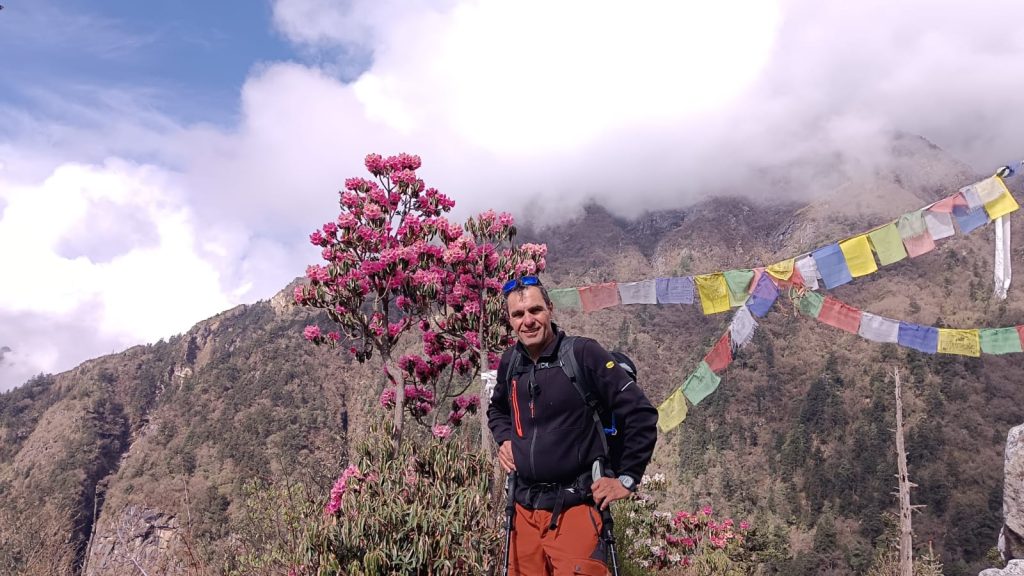
When you are on the path of exploring mountain trails, you will come across an incredible range of sizes, textures and hues of rhododendron flowers. So here’s the breakdown of the primary varieties that are found throughout the trails of the nation and their status.
| Scientific names. | Common names. | Physical features. | Ecological status. |
| R. arboreum | Lali Gurans | Vibrant Scarlet clusters; matures into a massive timber tree | Not globally threatened. |
| R.campanulatum | Chimal | Bell-like blossoms ranging from soft lavender to pure white. | Not globally threatened. |
| R. cinnabarinum | Saano Chimal | Medium shrub displaying tubular yellow to deep copper-red flowers. | Not globally threatened. |
| R. barbtum | Kaalo Chimal | Essentially identified by bristly branches and intense blood-red petals. | Not globally threatened. |
| R.lepidotum | Bhale Sunpati | Miniature shrub with scaly leaves and flowers that shift from pink to amber. | Not globally threatened. |
| R.odgsonii | Lali Gurans | Features robust leather foliage with woolly tan undersides and magenta. | Not globally threatened. |
| R.setosum | Gurans | Alpine dwarf shrub with hairy leaves and bright fuchsia bosoms. | Not globally threatened. |
| R.falconeri | Korlinga | Massive, tree-like variety with oversized leaves and pale yellow or cream clusters. | vulnerable |
| R. nivenum | Hiupatae Gurans | Rare variety showcasing lilac-purple petals and snowy leaf coatings. | vulnerable |
The chronology of Bloom: Altitudes and timelines.
Witnessing the absolute peak of the flowering season requires a basic understanding of mountain topography, as the blooming cycle migrates uphill in response to warming spring temperatures between March and May.
Early spring, late February to early March.
- Elevation ranges: 2000- 2500 meters (6560- 8200 feet)
- The spectacle: As the lower valley begins to warm, the initial waves of deep red blossom break through the forest, waking the landscape from its winter dormancy.
Mid-spring (Late March to mid-April).
- Elevation range: 2500 to 3000 meters ( 8,200-9,840 feet).
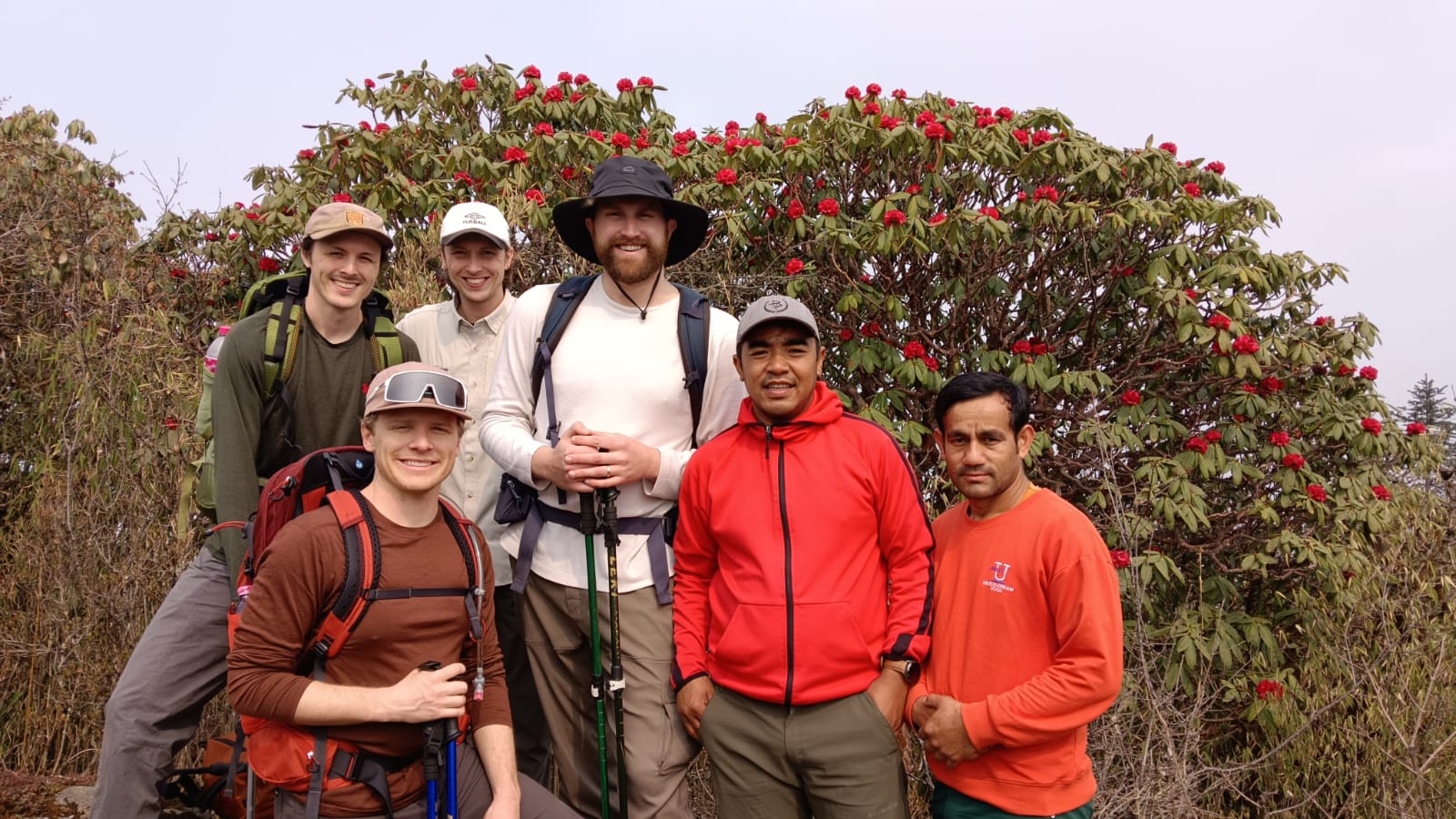
- The spectacle: The Sub-alpine belt reaches its absolute peak. Hikers will find themselves walking through enclosed corridors of dense red, pink and white blossoms.
Late spring (Mid-April to Late May)
- Elevation range: 3000 to 3800+ meters (9,840-12,470 feet).
- The spectacle: High Alpine varieties and rare shrubs take their turn to bloom, painting the mountain backdrops with soft pastel hues as the weather stabilises to offer crystal clear mountain views.
Laligurans: Colour variation and significance.
So, by now we know that the flower of Laligurans has its cultural significance and medicinal importance, making it an important part of the life of People in the Himalayas of Nepal.
But another most important and beautiful side to this part is the fact that. Its colour variation represents different aspects.
The colour variation of the rhododendron is typically red, pink, and white, and each of these colors have their own unique symbolism.
For instance
Red: The colour of red. Rhododendron. Is a symbolism that is deeply rooted in the Nepalese culture, lineage, history and bloodline. It is something that represents the core of the nationality, like bravery, resilience and national pride and their proud history of Gorkha warriors and their descendants who are still renowned around the world for their bravery. And fearlessness.
Pink: Pink, as we know, is the light shade of the colour red, and even though visually almost similar, it represents a completely different aspect, whereas red represents bravery and national pride. Pink represent andd is a symbol of Love compassion. Tenderness from the softness of its visual.
White: White is referred to and associated with peace, and not just peace, but also purity, as it. is free from any kind of touch of any other factors and colours that represent the different aspects of life. White represents a complete purity of life.
Prime destinations for Floral Trekking
The Annapurna Corridor (Ghorepani & Mardi Himal).
Boasting the most expansive continuous rhododendron forest on earth, this region is world-famous. The short 5 to 7 days of trekking routes, especially the Ghorepani and Mardi Himal trek, loop underneath massive, ancient floral canopies that frame sweeping views of the Dhaulagiri, Annapurna and Machhapuchhre (Fishtail).
It also provides access to the historic hospitality of the indigenous Gurung communities in villages like Ghandruk.
The Wilderness of Milke Danda.
For any travellers prioritising boats over Uber crowds, this remote region in eastern Nepal serves as the gateway to the Kanchenjunga and Mount Makalu trail.
Because it hosts 28 co-existing species, the Ministry of Culture, Tourism and Civil Aviation recently designated it as one of the nation’s top 100 emerging tourist destinations. Visitors can combine flower spotting with wild white water rafting on the nearby Tamor River.
Langtang Valley and Helambu.
Renowned as the Langtang Valley, the Valley of Glaciers, this less frequented route is a sanctuary for rare white rhododendron. It offers a peaceful, uncrowded journey through traditional Tamang settlements and local artisan cheese dairies, providing a serene alternative to bustling Everest circuits.
Off-the-Beaten-Path: Manaslu, Tsum Valley & Makalu Barun.
For trekkers and adventure lovers who demand raw solitude and untamed wilderness, these protected isolation zones offer pristine, untouched old-growth forest.
Traversing these trails gives you an opportunity for an intimate glimpse into traditional Tibetan-influenced lifestyles, where local communities actively worship and protect the nature around them. Manaslu Circuit Trek and Tsum Valley Trek provide some of the finest examples of this remote Himalayan cultural and ecological harmony.
The ecological anchors of the mountains.
Beyond the visual art, these sub-alpine forests act as vital, hardworking engines for the entire Himalayan environment:
Wildlife refuges:
The nectar-heavy blossoms are a crucial nutritional lifeline for migratory birds and native insects. Local honey bees utilise this specific flora to produce the region’s rare and legendary “mad honey”. Besides that, the thick canopies provide essential security and camouflage for endangered animals like the red panda, musk deer, and Himalayan black bear.
Geological defensive systems:
The intricate, widespread root architecture of these trees acts as an organic anchor for steep mountain inclines, greatly mitigating the threats of landslides. The trench canopy also intercepts punishing monsoon downpours, preventing severe topsoil erosion while enhancing water absorption into the subterranean aquifers, ensuring a steady water supply for local villages, even during dry periods.
Atmospheric counterbalances:
By observing carbon dioxide and tracking localised humidity, these woodlands create safe, distinct cooling microclimates that buffer Vulnerable mountainous species and extreme climate shifts and global warming.
Cultural Traditions and Folk Medicine
The connection between the local populace and Lali Gurans is deeply spiritual, culinary and medicinal.
Sacred ceremonies
The dried leaves of the high-altitude Sunpati variety are ground into highly aromatic incense (dhoop) used for purification rituals in Buddhist monasteries. During spring, villagers hang fresh garlands over their front doors to repel negative energies and invite prosperity, while communities in Rolpa gather for the Rolpa Gurans Sahitya Mela to celebrate the season with literature and cultural art.
Artisanal spirits
The first petals of Rhododenron Arboretum are frequently incorporated into the mountain distillation process, producing a unique Ruby-tinted traditional wine and mildly sweet, tangy spirit known locally as Ghyampate Raksi.
Indigenous remedies
In Ayurvedic practices, consuming the petals either fresh or dehydrated is believed to alleviate respiratory irritation, calm inflammation, and treat digestive ailments. A popular piece of mountain folklore notes that swallowing a fresh petal is an effective way to dislodge food stuck in one’s throat.
Guidelines for sustainable adventurers.
Along with the rapid growth of adventure tourism comes an impact on the environment and a duty to protect these fragile ecosystems from trail degradation, litter, and wildlife disruption. Practising responsible tourism ensures these habitats remain unblemished and can sustain themselves for the long run by preventing possible hazards that they might face.
Confine your steps to the trail
Diverging from the established path crushes the fragile young seedlings hidden in the undergrowth, hindering their ability to naturally regenerate.
Observe without harvesting
Refrain from plucking the blossoms for photographs or souvenirs. Stripping the flowers directly impedes pollination cycles and reduces the vital food reserves for the local insects.
Manage waste diligently
Minimise your plastic footprint and always pack your non-biodegradable trash back out to the major municipal centres with proper waste management infrastructure.
Prohibit open flames
Rhododendron woodland is highly combustible, which is why you need to avoid starting campfires or camping directly inside the dry woodlands, as a minor spark can trigger a catastrophic fire in the forest.
Patronise green accommodations
Choose to stay with the local tea houses that practice eco-conscious operations such as utilising alternative energy resources rather than burning scarce forest firewood for guest amenities.
Rhododendron: A natural healer and medicinal remedy in Nepali culture
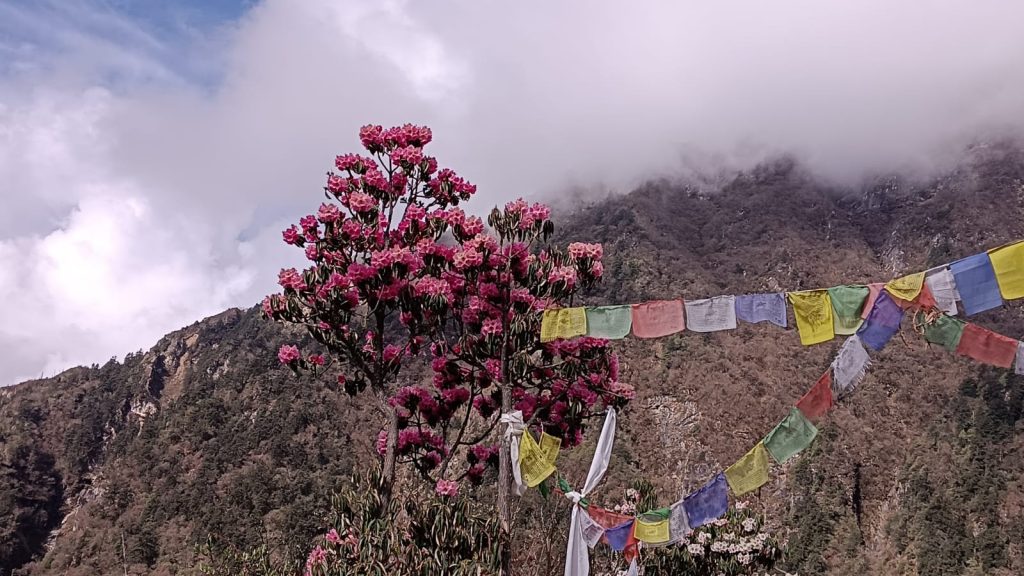
Rhododendron: it isn’t just a flower or a national symbol; it’s more than that. It’s a lifesaving plant gifted by Mother Nature to the Himalayan nation of Nepal, as it helps cure ailments from skin health issues, dysentery, digestive issues and respiratory disorders.
Not just that, but it also helps to cure headaches and potential inflammation. When its juices are extracted and used, they can act as a relief remedy for stomach aches.
The flower has been recognised long since the ancient times by the Vedic medicine practitioners to heal issues of circulation and joints of the body.
Medicinal properties of the flower
Even doctors of modern science faculties. Now. Confirm that the juices of the flowers help in reducing blood pressure, which in turn helps in preventing The risks Of blood pressure and related heart disease issues.
When taken from the petals of the flowers. Help in reducing blood sugar and maintaining the cholesterol llevel Healthy level from its antioxidants present in it.
Immunity enhancement.
As mentioned above, this flower had been used since long time in the era of Vedic knowledge for medicinal purposes, and one of them is. Linked with the Liver health As it protects the liver from health issues like Fatty liver issues from quercetin, Cardiovascular disease and several other health issues.
Alternative Notable facts
The flower of Lali Gurans has not just been a medicinal herb or commercial purpose resources But it. Touched and been part of people’s lives and emotions for a long time.
The name of the flower Rhododendron has been used to illustrate the feelings of people for the expression of their love.
People from almost every generation find pleasure in walking in the woodlands filled with Rhododendron and scarlet Canopies while gathering clusters of flora during high-altitude walks.
Moreover, the Helambu administrative zone hosts a dedicated festival during the peak vegetative stage, where the blossom is integrated into local culinary practices in isolated Alpine territories; inhabitants consume the rockroller unit season with sodium chloride and capsicum.
The symbolism of the Rhododendron.
The flower symbolises purity, love, patriotism, bravery and resilience. Specifically in the Nepalese culture, where it is a national flower. Apart from that, the flower also has a Variation in symbolic meaning from multiple cultural contexts. Colour point of view. In some traditions. Due to the appearance of the flower and its. It’s often linked with danger. And its toxicity. As it can get people intoxicated due to the. Pollination. From the bees.
Proximity to the capital.
It is almost always found at high altitudes in the colder regions, which is why it is impossible to find it in the lower regions like the capital of Nepal. And the only closed regions that can be found from the capital are the Gorepani, Milke Danda and nearby areas.
As for the Langtang Valley, it is itself known as the Rhododendron forest, and the other one is the Godawari Botanical Garden. Besides those places, the Annapurna region and the Milke Danda Area in the eastern region are notable. Some of the notable places where you can find the flower.
FAQ
What is the local name and significance of the Rhododendron in Nepal?
Its local name is Laligurans. It’s the national flower of Nepal and is legally protected under the constitution of the country.
At what elevations do Rhododendron typically grow?
They grow in cool, moist climates at elevations ranging from 1200 meters to over 3600 meters.
Where is the primary hub of Rhododendron diversity located in Nepal?
The Tinjure-Milke-Jaljale (TMJ) is the capital, nurturing 29 of Nepal’s 32 unique scientifically catalogued species.
Which Rhododendron species serves as the hallmark national icon of Nepal?
Rhododendron arboreum, a highly adaptable variety that can grow into a grand tree of 15meters tall, is Nepal’s official national flower.
Where can you see the likeness of the national flower in the official state symbols?
The flower’s prominently engraved on five hundred and thousand rupees banknotes and is elegantly framed within Nepal’s official coat of arms.
Are any of Nepal’s Rhododendron species currently considered threatened?
Yes, two specific varieties, Rhododendron falconeri (Korlinga) and Rhododendron nivenum (Hiupate Gurans), are classified as vulnerable.
When is the best time of year to witness the peak blooming season?
The blooming cycle migrates uphill in response to warming spring temperatures between late February and late May.
Which trekking region boasts the most expansive continuous Rhododendron forest on Earth?
The world-famous Annapurna corridor, specifically around the Ghorepani and Mardi Himal routes, holds the largest continuous forest.
How do Rhododendron forests benefit local wildlife populations?
They offer vital nectar for bees making “mad honey” And provide essential camouflage for endangered animals like red panda and Musk deer.
What crucial geological role do these mountain forests play?
Their widespread root architecture anchors steep slopes to prevent landslides and curbs severe topsoil erosion during monsoon downpours.
Conclusion.
Travelling through the Nepalese Rhododendron forest during the peak spring season is far more than a standard mountain trek. It is much more of an immersion into the vibrant living masterpiece of evolution. These wild woodlands stand as a timeless testament to the untamed spirit of the Himalayas.
By travelling mindfully and respecting the fragile balances of the ecosystem, you ensure that this majestic floral crown continues to burn bright for generations to come.