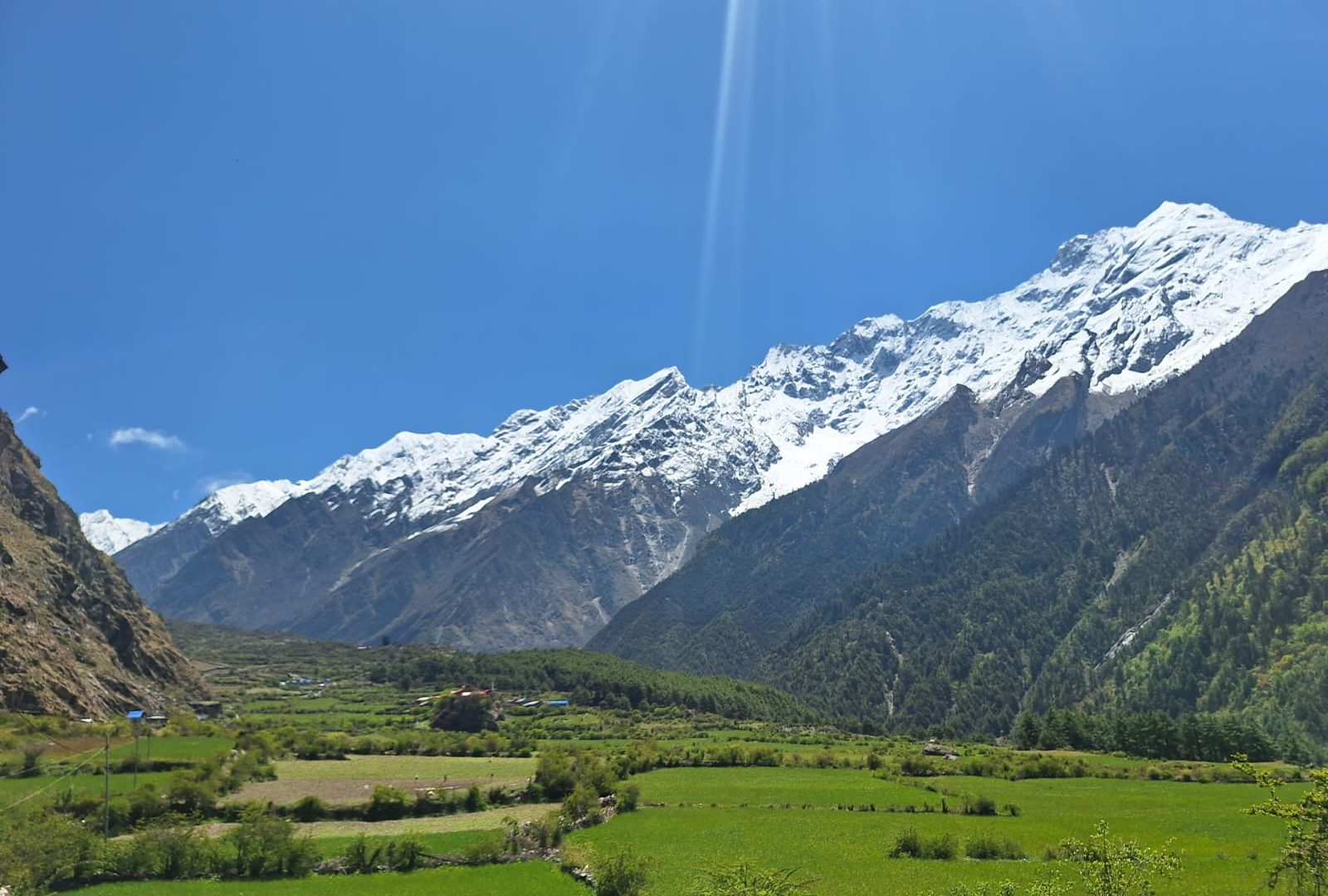
Tsum Valley is one of those destinations that goes and blends perfectly with any trip and destination in Nepal, whether it’s a high-altitude expedition, trekking, or any other activities; one of them is the Tsum Valley trek with Ganesh Himal, which is why it’s also referred to as “The Hidden Gem”, “Valley of Happiness” or “Trekker’s Dream”.
This program, as per our package, will facilitate you for 17 days.
On this trip, you’ll explore from valleys, hills to mountains and plains, settlements almost surrounded by clouds and fog, along with cultures; be part of it and get a new and different perspective to view life.
Trip highlights
These are the highlight that perfectly blends raw Himalayan power and deeply preserve the ancient Tibetan culture.
Mountain and wilderness highlights.
Ganesh Himal Base Camp 4200m.
This is the ultimate wilderness experience with the trek, where you will stand right in front of the massive Ganesh Himal range that sits at an altitude of 7,422 meters, surrounded by the stark, towering amphitheatre of ice and rock.
Icy mountain panoramas
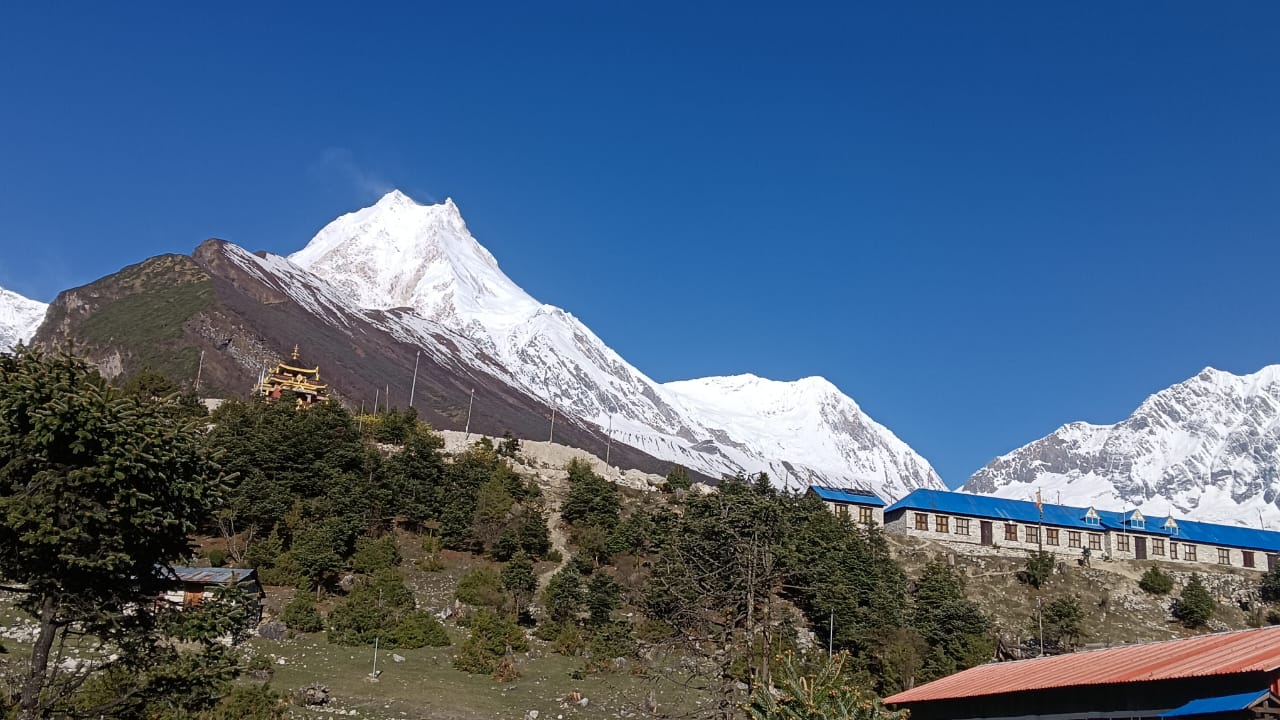
Beyond the Ganesh peaks, you will catch a spectacular up-close view of the Manaslu range, Shringi Himal 7,161m and Bouddha Himal.
The Siyar Khola Gorge
Walking through deep, dramatic canyons, crossing suspension bridges, suspended high over roaring Glacier Rivers and transitioning from lush pine forest to rugged Alpine terrain.
Cultural and spiritual highlights.
The Sacred Hidden Valley:
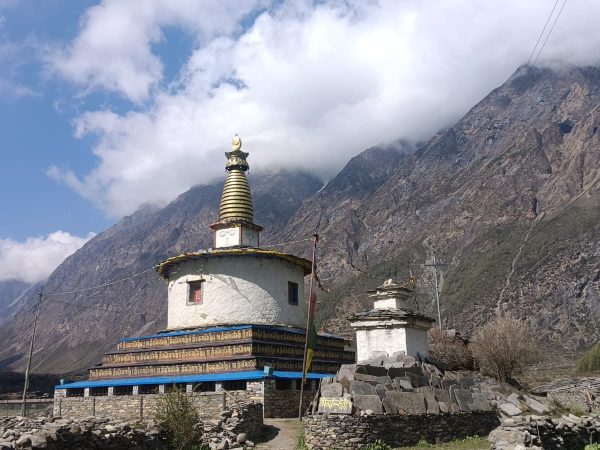
Tsum. It’s one of those distinct Beyuls, Hidden Valleys blessed by Padmasambhava (Guru Rinpoche) as a haven for Buddhism. It was closed to foreigners in 2008. The ancient Tibetan way of life remains completely intact.
Mu Gompa (3,700m
The highest and oldest monastery in the valley, perched on a lonely, windswept hill close to the Tibetan border. The strain here is that a nearby gompa offers an incredible peaceful spiritual insight and atmosphere.
Gumba Lungdang/Nunnery
A remote cliffside nunnery that serves as a launching pad for the trek to Ganesh Himal Basecamp. The hospitality of the nuns here is a memorable highlight for many people.
Milarepa’s meditation cave.
The sacred cave where the famous 11th-century Tibetan Yogi and poet, Jetsun Milarepa, is said to have meditated. The rock inside is believed to bear his footprint.
Longest Mani walls
You will walk past some of the longest and most beautifully carved mantras, the stone walls inscribed with Buddhist mantras and ancient chortens in all of Nepal, particularly around Chhokangparo.
Unique experience
The Shagya (No-kill zone) culture
You will be in a society where you will experience a society that has legally banned the slaughtering of animals, hunting and honey hunting for generations. It creates a uniquely serene and calm environment where wildlife is remarkably friendly to humans, showing how closely interlinked human beings and nature are.
Blissful isolation.
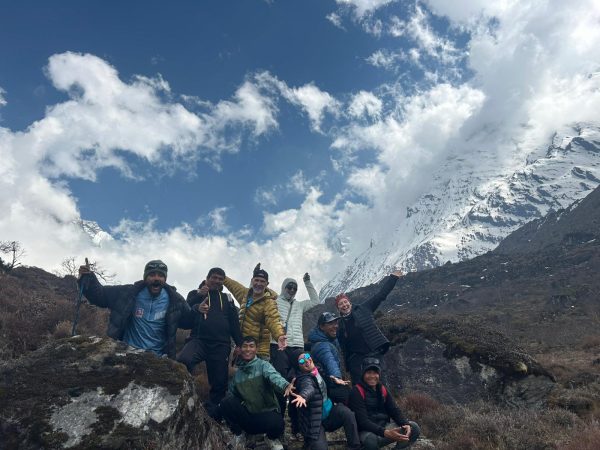
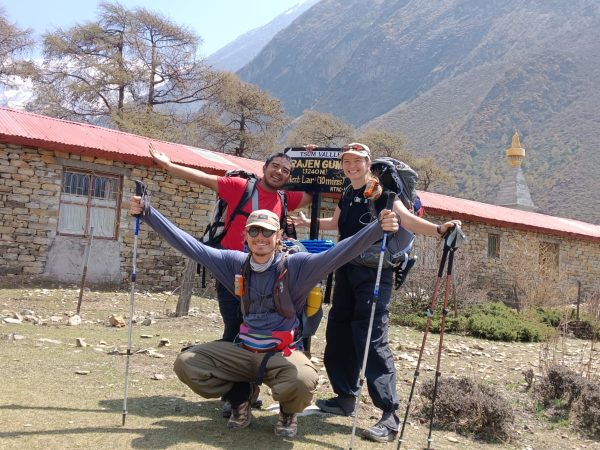
Different from the other crowded trails are the mainstream routes like the Everest and Annapurna; you will share these paths with local yaks, caravans, monks and very few other tourists just like you who prefer solitude or less-crowded trails.
Experience of authenticity
Eating the local staple cuisine, prepared locally, and sipping the Tibetan buttered tea while sitting right by the clay fire hearths, would be one of the most grounded and down-to-earth experiences you will ever have in your lifetime.
How Difficult Is The Tsum Valley with Ganesh Himal Trek
Speaking of the difficulty, the Tsum Valley with Ganesh Himal Trek is a moderate to strenuous grade trekking trip, which means you’ll need to be in good health and condition overall and specifically doesn’t require technical climbing skills, but it does require good cardio conditioning for the ups and downs to walk well.
Expect to walk for around 5-7 hours daily, covering 10 km to 15 km on the ground. Following the transition from subtropical forest to the thin alpine air, you will reach elevations of around 3,700 meters at Mu Gompa and over 4,000m near Ganesh Himal Basecamp.
But because this is a strictly regulated off-the-beaten-path restricted area, the infrastructure gets far more rustic than Nepal’s commercial trekking hubs. Which means you will be staying in a local tea house, with home service in the monasteries where a flexible mindset is as important as physical fitness.
In conclusion, what I want to say is that if you prepare for 4 to 6 weeks of dedicated cardio and leg strengthening training and comfortably break in your hiking boots beforehand of the trek, an entirely achievable and deeply rewarding adventure for any normal hiker who craves the true wilderness and unique experience of solitude and nature.
Tsum Valley with Ganesh Himal Trek best time.
Let’s talk about what the best time is for the trip.
Autumn: September to November (Peak season & Best visibility).
This is the all-time best. The best time to undertake this trek.
Speaking of the weather, the monsoon rains completely wash the air clean; as a result, the sky and views turn crystal clear. Daytime temperatures are also highly comfortable for the trek. It is around 10°C to 20°C in the lower valleys, though the nights might drop significantly below the freezing point, as it is at a high altitude. As you approach the Upper Tsum and Ganesh Basecamp.
Since the trails are dry, stable and safe from landslides, and it is also a festive time in Nepal, you might get the opportunity to experience and be part of the local cultural festivals.
Spring (March to May)
Spring is the season when everything wakes up.
The season brings greenery back and the surroundings back to life. With temperatures warmer than autumn and the day sunlit, the lower elevations can feel quite warm while the higher elevations remain crisp and cool.
The flora is what acts as the primary draw of the season, as the forest leading up to the Tsum Valley gets filled with the rhododendrons of multiple shades from red, pink to white.
On the other hand, snow from the winter is still active, and the water on the river is roaring with life.
Winter ( December to February)
During this season, the trail is incredibly clear and empty, as it is the offseason and the flow is low, or the trails are almost empty. Meanwhile, the temperatures drop drastically below -10 Celsius at night. The majority of local houses are closed as the operators descend to the lower elevations to skip the cold of the high altitude, making the accommodations unreliable or even if available, they are limited in facilities.
Monsoon (June to August)
The majority of the companies avoid this seaso due to the weather as it is a season. That leads to muddy trails, rampant leeches, and high risk of landslides on the route leading to Lokpa.
Besides that, the thick clouds completely cover and obscure the views of the highlights like peaks and glaciers and whatever is here, limiting the activities too.
Food and water during the trek
In cities it is not, it is not much of a subject to worry about eating or drinking. There is a wide range of foods and cuisines available.
Throughout the city, but on the trail with rising elevations, food options get limited, nd during the trip it is much more about the nutrition. Then the taste.
Trekkers can often get both options: vegetarian and non-vegetarian food based on their preferences. As for drinking water, you may buy an adequate amount in the city before heading for the trip.
But you are advised to bring your personal water bottle and tumblers during the trip and also have. Water purifying tablets and Steripen just for safety, as plastic water bottles are now typically not allowed as per the new regulations due to the concern of environmental safety.
And one more thing, personally. I like to tell you. Always manage your garbage. During the trip. Do not deter the region, as it is a very cold region and trash does not Decompose rather Just piles up, creating a serious environmental hazard.
Accommodation provision during the trek.
For your accommodation, you’ll be facilitated with a star-category hotel of your selection in places like Thamel in Kathmandu and Pokhara, where luxury is available.
As for the services on the trail, you’ll be staying in a decent and well-maintained teahouse with good quality grade basic amenities available for you. Dining facilities and restrooms will be communal on the trail, particularly on the higher elevations.
The accommodations are usually twin sharing, meaning you will have to share the room with other hikers. But oftentimes you can have a single room as well. You’ll need to inform us in advance for that, so that we can go through the process of arrangements before you arrive.
Required permits and regulations.
Let’s talk about the required paperwork that are required for this trip.
Since the destination borders Tibet, you cannot trek solo or without a registered guide; you must have a group of at least two trekkers and secure three permits.
The Tsum Valley Restricted Permit (RAP)
- Autumn (September to November): $40 USD per person for the first two weeks, $7/day after.
- Spring/winter (December to August): $30 US per person for the first week. $7/day after.
Manaslu Conservation Area Project (MCAP) Permit
Approx. $30 USD (NPR 3000)
TIMS card (Trekkers’ Information Management System):
Approx.$20 USD.
Travel insurance
Oh yeah, this is the most important part of the trip.
No insurance, no trip.
Because insurance is the safety net of the trip, which helps you deal with the emergencies and conditions that are unfortunate during the trip or after the trip to help you cover the cost incurred during those situations of emergency, trying to go without proper insurance during the trip is basically risking safety and health.
Also, do not forget to include the emergency helicopter evacuation rescue clause during your insurance, as this is the only way or the last resort for you to come out safely from the region during a health hazard or any calamity situation, since roadways are basically non-existent or wheelers in here.
So get good insurance. Don’t compromise on it since your life and death depend on it.
Where do you start the “Tsum Valley trek with Ganesh Himal”?
The trip can be started either from Pokhara or Kathmandu, right from the capital city, depending on your choice and time management. If you land in the capital first, then you can also take a flight to Pokhara if you want to start from there.
Speaking of the distance by road, the distance between Kathmandu and Soti Khola, where the trek begins, it’s around 125 kilometers in length and might take somewhere around 4-6 hours of total duration depending on the traffic and road condition or differ on the type of vehicles you’re riding on as small vehicles like microbus takes comparatively less time and vehicles like cars take even less time.
And as for starting from Pokhara, the distance is somewhere around 152 kilometres and might take around 6-8 hours, which is almost ⅓ of the day.
Some trekkers even prefer to start from Jagat too as it’s one of those points for starting the Manasu Circuit trek.
So we suggest that any travellers seeking options and travel advice on this portion of the trip to commence from the Capital city, and since Kathmandu is closer to Soti Khola, we like to recommend you start from Kathmandu.
Visa procedures & paperwork for Nepal
For many nationals travelling to Nepal, they often have on-arrival visa provision, but it’s better for them tcheckck before conforming he travel a; policies might differ with changing times.
Many nations often have the embassy and consulate of Nepal in their country to go through this process.
The cost of a visa is listed below:
- USD 30 for 15 days
- USD 50 for 30 days
- USD 125 for 90 days.
Guidance and logistics.
For the guidance, you will need a guide trained and licensed under the regulation of the Nepalese government.
The guides are well-trained and fluent in communication in multiple languages like English, Japanese, Korean and Thai, along with guides who are particularly trained for certain regions in order to communicate in the local languages for translation purposes.
As for the logistics, for every two trekkers, one porter is available, and one Porter can carry around 20kg of Logistics. You don’t need to carry all your backpacks and stuff during the trip; you can leav theme. Anything that’s additional and extra in your hotel room or in the Agency office during the trip.
Alternate Routes For Tsum Valley with Ganesh Himal Trek
The classic route (Via Gumbang Lungdang and Ganesh Base Camp).
The Tsum Valley with Ganesh Himal Trek has more than one route to undertake the trek, one of them being this classic route.
This popular variation of the trek branches off at Dumje on the return leg to head directly towards the rugged base camp of the Ganesh range.
As for the route, it goes:
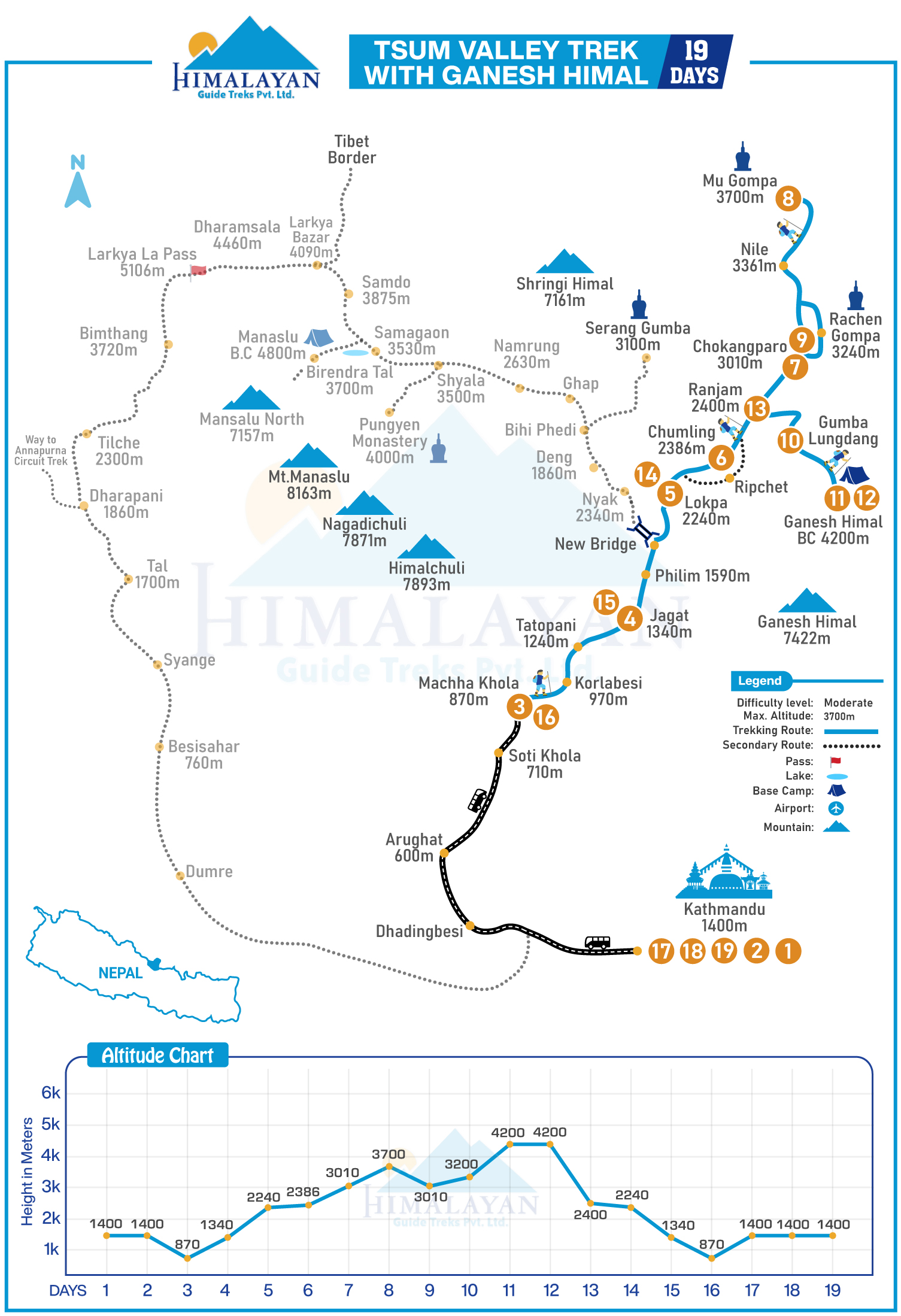
Kathmandu-Machha Khola–Jagat-Mu Gompa-Dumje-Gumba Lungdang-Ganesh Himal Base Camp-Lokpa-Machha Khola-Kathmandu
The reason to choose this classic route is that it is a most balanced and complete itinerary as it allows you to explore the spiritually dense northern Tsum Valley first, getting deep into the true wilderness of the base of Ganesh Himal I, II & IV, utilising local teahouses and monasteries on the route.
Tsum Valley + Manaslu Circuit (via Larkya La Pass)
I suggest this trip to you only if you have more time and you are willing to do an adventurous trip to high altitude.
Instead of backtracking all the way down from the Lokpa, you can reconnect to the main circuit and push westward to complete the entire Circuit of Manaslu.
The route:
Kathmandu- Machha Khola-Lokpa- Tsum valley & Ganesh Himal base camp-Lokpa-Deng-Namrung-Samagon-Dharamsala-Larkya La Pass (5,106m)-Bhimtang-Dharapani-Kathmandu.
So, as mentioned before, this is a route. You can choose if you only have extra time or a longer duration to stay here, as this takes around 20 to 23 days. You will have time to spend your vacation in the complete silence of nature’s isolation.
The views of Ganesh Himal and the high-altitude thrill of crossing one of the most famous passes in the Himalayas, all while staying in the established mountain lodges, will be one of the ultimate gifts for you.
This shortened “Lower Tsum & Ganesh View”
We talked about the longer end. Now it’s time for the shorter one.
If you are shorter on your time and want to avoid all those high peaks and entire durations of acclimatizations and adaptations, that takes some of your time trip then you also have an option to entirely skip the deep trek of the Mu Gompa and Ganesh Himal Base Camp that focuses on shorter routes on trails instead of attraction loops and save three to five days of the trip and keeps the itinerary around 10 to 12 days total.
It provides beautiful panoramas of the mountains and ranges from lower and safer elevations without much strain on the body and the requirement to get to high altitude.
The route: Kathmandu-Machha Khola-Lokpa-Chumling-Chhokang Paro-Gumba Lungdang-Philim-Machha Khola.
Useful tips.
Carry enough cash in multiple denominations for easier transactions on the trail, as online transactions are almost unreliable due to the weather and altitude issues with the Internet.
Segregate budgets for each day, from personal and petty expenses to several others.
Carry a high-capacity power bank of at least 20,000 mAh or more and a solar power charger if possible. Charging is limited above 2000m and requires a small fee in teahouses.
Network connections and availability
For Communications and data acquisition, you can buy SIM cards from the local telecommunication institutions in Kathmandu using your passport copy. There are two major network providers: NTC (Nepal Telecom) and Ncell.
As for the speed of the Internet, it’s good and decent in the city and lower elevations, but as the elevation rises, it gets limited or may be a bit scratchy.
With the rising elevations, the Internet is good for WhatsApp, email and occasional social media push, but might not be as expected for streaming like Netflix and YouTube due to the elevation status.
Important notes.
The strict two-person rule: If you are a solo traveller, you still have to pay for a ghost permit, a second permit (buying a second permit under the agency’s placeholder to legally enter the restricted zone).
The no-kill zone: As mentioned, the valley is designated as a Shagya (non-sacrificing protected area). Do not pack or ask for meat products out of respect for the local culture.
Transport logistics: The drive from Kathmandu to the trailhead (Machha Khola) is an adventurous, bumpy 8 to 9-hour ride. Upgrading from a public bus to private 4×4 jeeps saves a massive amount of energy before the hike starts.
Elevation and possible health issues.
You have to travel beyond the elevations where your human body responds normally; to be specific, beyond where there’s a very high possibility of individual sickness, particularly if he was someone from a coastal area. And due to those reasons, there is really a high possibility in terms of elevation sickness.
Symptoms like:
- High altitude cerebral Edema (HACE)
- High altitude pulmonary Edema (HAPE)
- Nausea
- Drowsiness
- Fatigue
- Palpitations and even fainting are some of the commonly witnessed scenarios among the people suffering from altitude sickness, which can go south anytime.
Guidelines
- To avoid those situations or to deal with them, trekkers need to follow certain rules like:
- Proper rest and exercise.
- Hydrating well
- Knowing the limits & avoiding strain
- Stop as soon as the symptoms start to show up, and gently descend.
- Don’t rush down as it exhausts the body more.
- Have medicine (Diamox) with you and take it as per the instructions of the physician.
Heli rescue.
Make sure your travel insurance covers emergency helicopter evacuation up to 5,500m as there are no hospitals or roads once you cross Jagat, and Helicopter evacuation is the only option. Moreover. Your insurance must also cover the cost of search and rescue operations, which is part of emergency helicopter evacuation.
In case you experience severe altitude sickness or trauma, ensure your provider handles the payment via direct billing with the Kathmandu helicopter operators, which will help you reduce the cost of thousands of dollars in upfront payment personally during a medical emergency.
Outline Itinerary
Day 01: Arrive at Kathmandu Airport and transfer to the hotel.
Day 02: Kathmandu Valley sightseeing tour and trek permit/document preparation.
Day 03: Drive from Kathmandu to Machha Khola (870m) – 7-8 hours.
Day 04: Trek from Machha Khola to Jagat (1,340m) – 6-7 hours.
Day 05: Trek from Jagat to Lokpa (2,240m) – 6-7 hours.
Day 06: Trek from Lokpa to Chumling (2,386m, Lower Tsum) – 5-6 hours.
Day 07: Trek from Chumling to Chhokangparo (3,010m, Upper Tsum) – 5-6 hours.
Day 08: Trek from Chhokangparo to Nile (3,361m) and continue to Mu Gompa (3,700m) – 6-7 hours.
Day 09: Explore Mu Gompa and return to Chhokangparo (3,010m) – 5-6 hours.
Day 10: Trek from Chhokangparo to Gumba Lungdang (3,200m) – 6-7 hours.
Day 11: Trek from Gumba Lungdang to Ganesh Himal Base Camp (Lower Base Camp, 3,850m) – 5-6 hours.
Day 12: Exploration day at Ganesh Himal Base Camp.
Day 13: Trek from Ganesh Himal Base Camp to Ranjam (2,400m) – 6 hours.Day 14: Trek from Ranjam to Lokpa (2,240m) – 6-7 hours.
Day 15: Trek from Lokpa to Jagat (1,350m) – 6-7 hours.
Day 16: Trek from Jagat to Machha Khola – 6-7 hours.
Day 17: Drive from Machha Khola to Kathmandu – 7-8 hours.
Day 18: Free day in Kathmandu for rest, sightseeing, or shopping.
Day 19: Transfer to the international airport for your departure flight back home.