Overview The Manaslu Circuit Trek is one of Nepal’s most spectacular high-altitude adventures, circling the world’s eighth-highest mountain, Mount Manaslu (8,163m). This remarkable journey takes you through the remote valleys […]
Duration: 15 Days
Best Time: Spring and Autumn
Trip Grade:
Start from Kathmandu and End to Kathmandu
Min 2 to Max 10 Pax in a group
Meals: Breakfast, Lunch, and Dinner
Accommodation: Tea House
Highlights
Spectacular Mountain Views: Close-up vistas of Manaslu, Ganesh Himal, Himchuli, Ngadi Chuli, and numerous other
La Pass Crossing: Conquer this challenging 5,106m pass with stunning 360-degree Himalayan panoramas
Cultural Immersion: Experience authentic Tibetan Buddhist culture in remote mountain villages
Diverse Landscapes: Journey from subtropical lowlands through alpine forests to arctic glacial zones
Ancient Monasteries: Visit sacred Buddhist monasteries and observe traditional ceremonies
Wildlife & Nature: Trek through pristine forests rich with rhododendron, magnolia, oak, and pine
Off-the-Beaten-Path: Enjoy a less-crowded alternative to popular Himalayan circuits
Natural Hot Springs: Relax in therapeutic hot springs at Tatopani village
Traditional Villages: Explore Sama Gaon, Lo Gaon, and other settlements with centuries-old heritage
Integration with Annapurna Circuit: Connect with the famous Annapurna trail at Dharapani
Overview
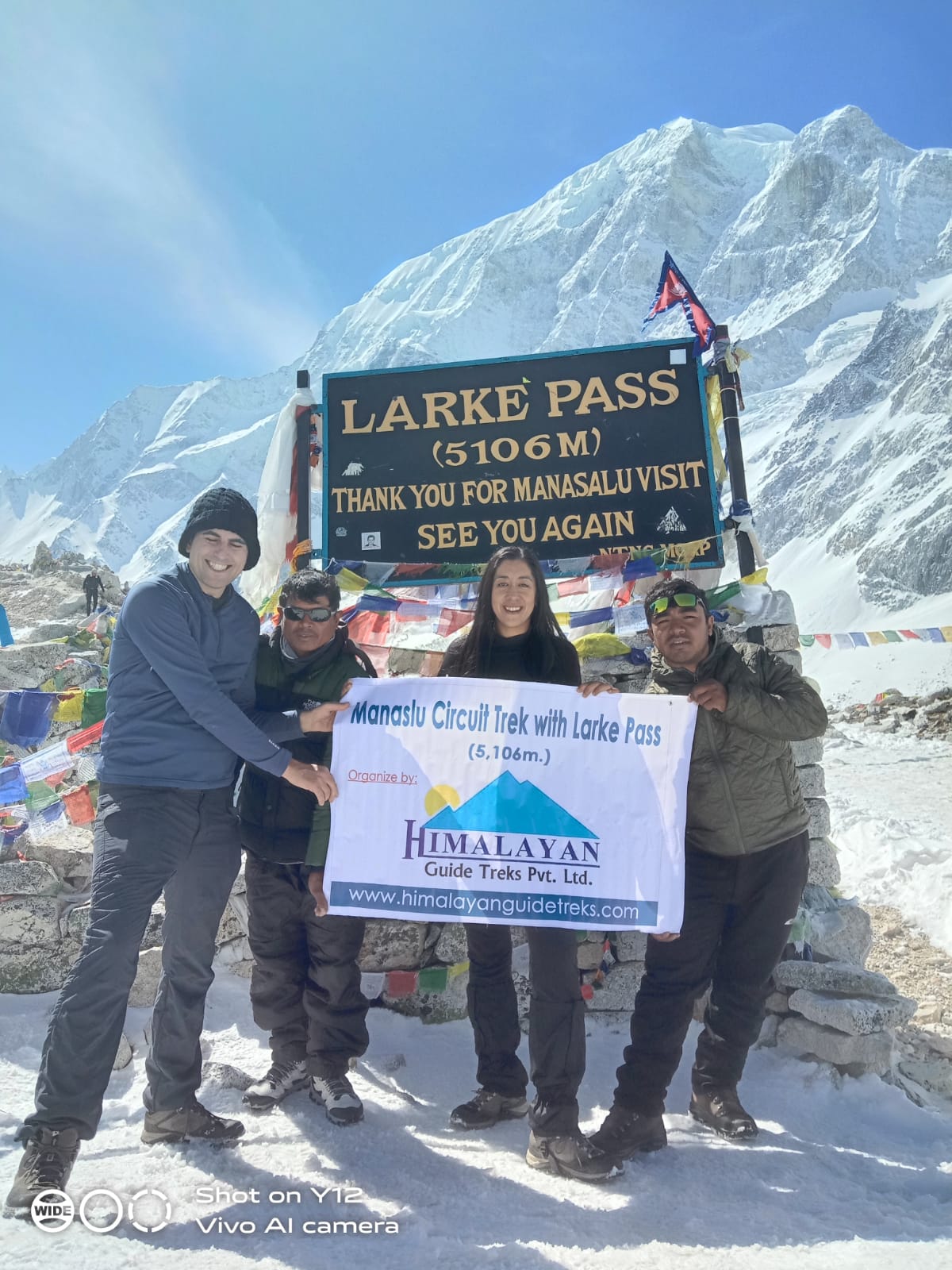
The Manaslu Circuit Trek is one of Nepal’s most spectacular high-altitude adventures, circling the world’s eighth-highest mountain, Mount Manaslu (8,163m). This remarkable journey takes you through the remote valleys of the Gorkha district, crossing the dramatic Larkya La Pass at 5,106 meters and immersing you in the authentic culture of Tibetan-influenced communities.
Unlike the more crowded trails in the Everest and Annapurna regions, Manaslu offers an untouched wilderness experience. You’ll traverse ancient trans-Himalayan trade routes, walk through lush rhododendron forests, explore traditional Buddhist villages, and witness breathtaking panoramas of snow-capped peaks. This trek perfectly blends natural beauty, cultural richness, and adventure.
Himalayan Guide Treks Pvt. Ltd., we specialize in creating safe, memorable, and responsible trekking experiences. Our expert local guides know every trail, village, and mountain view intimately, ensuring your journey is both enriching and secure.
Trek Difficulty Level
Grade: Moderate to Challenging The Manaslu Circuit Trek demands good physical fitness and mental determination. The difficulty stems from:
High altitude reaching 5,106m at Larkya La Pass
Long trekking days (5-8 hours)
Steep ascents and descents
Remote locations with basic facilities
Variable weather conditions
However, with proper acclimatization, gradual altitude gain, and experienced guidance from Himalayan Guide Treks, most fit trekkers complete this journey successfully. We maintain comfortable pacing and include rest days to help your body adjust.
Spring (March to May): Ideal conditions with blooming rhododendrons, clear skies, and moderate temperatures. Daytime warmth makes trekking pleasant, though higher elevations remain cold.
Autumn (September to November): The most popular season featuring crystal-clear mountain views, stable weather, and comfortable temperatures. Post-monsoon freshness enhances visibility.
Winter (December to February): Possible but extremely cold, especially at high passes. Snow may block Larkya La Pass. Only for experienced winter trekkers.
Summer/Monsoon (June to August): Not recommended due to heavy rainfall, leeches, trail blockages, and obscured mountain views.
3. Annapurna Conservation Area Permit (ACAP): NPR 3,000 per person (for Dharapani onwards)
Important: This is a restricted area trek requiring a minimum of two trekkers and a registered guide. Solo trekking is not permitted.
Himalayan Guide Treks handles all permit arrangements efficiently, saving you time and ensuring compliance with regulations.
Accommodation & Meals
Accommodation: Tea houses and mountain lodges throughout the route. Rooms are basic with twin beds, blankets, and shared bathrooms. At higher elevations, facilities become simpler. Expect communal dining areas with heating stoves where trekkers gather each evening.
Lunch & Dinner: Dal bhat (traditional Nepali meal), noodles, soups, momos, pasta, rice dishes
Hot beverages: Tea, coffee, hot chocolate
We recommend dal bhat for sustained energy—many lodges offer unlimited refills. Menu variety decreases at higher altitudes. Himalayan Guide Treks ensures you dine at quality lodges with hygienic food preparation.
Transportation
Kathmandu to Soti Khola: Private jeep or bus (6-7 hours) through scenic countryside, following rivers and passing traditional villages. Road conditions vary—expect some rough sections.
Besisahar to Kathmandu: Return journey by private vehicle (8-9 hours) along smoother roads. Our comfortable private vehicles ensure safer, more flexible travel compared to public buses. Drivers are experienced with mountain roads.
Gradual ascent: We climb slowly, allowing natural adjustment
Rest day at Sama Gaon (3,530m): Essential acclimatization before high passes
“Climb high, sleep low” principle: Side trips help adjustment
Hydration emphasis: Drink 3-4 liters of water daily
Monitoring: Our guides watch for altitude sickness symptoms
Early symptoms include headache, nausea, and fatigue. Inform your guide immediately if experiencing discomfort. Descent is the best remedy for severe cases.
High elevations (above 4,000m): Cold days, freezing nights
Essential Packing List:
Clothing: Layering system (base, insulation, waterproof), down jacket, trekking pants, thermal underwear, warm hat, sun hat, gloves Footwear: Broken-in trekking boots, camp shoes, warm socks Equipment: Quality sleeping bag (-15°C rated), headlamp, trekking poles, sunglasses, water bottles Personal: Sunscreen (SPF 50+), lip balm, first-aid kit, toiletries, medications, water purification tablets Documents: Passport, permits, insurance details, emergency contacts Himalayan Guide Treks provides detailed packing lists during trek preparation. Excess luggage can be stored safely in Kathmandu.
Guide & Porter Support
Expert Local Guides: Our certified guides possess extensive mountain knowledge, first-aid training, and years of experience. They share cultural insights, ensure safety, and navigate trails expertly.
Porter Assistance: Porters carry main luggage (up to 15kg per trekker), allowing you to trek comfortably with just a daypack. We treat porters ethically, providing proper equipment, insurance, and fair wages.
Small Group Philosophy: We maintain intimate group sizes for personalized attention and flexible pacing. Your wellbeing remains our priority throughout the journey.
Leave No Trace: Pack out all waste, minimize environmental impact
Local economy support: Employ local guides/porters, use community lodges
Cultural respect: Observe Buddhist customs, seek permission for photography
Wildlife protection: Maintain distance from animals, stay on marked trails
Plastic reduction: Carry reusable water bottles, avoid single-use plastics
Energy conservation: Minimize hot shower usage, respect lodge resources
Your responsible approach preserves this pristine region for future generations.
Why Choose Himalayan Guide Treks Pvt. Ltd.
Local Expertise: As Nepalis born in the Himalayas, we offer authentic insights outsiders cannot match. Safety Excellence: Our certified guides undergo rigorous training. We never compromise on safety protocols. Personalized Service: Small groups receive individual attention. Flexible itineraries accommodate your pace and interests. Ethical Operations: Fair wages, proper equipment, and insurance for all staff. We support local communities meaningfully. Proven Track Record: Hundreds of satisfied trekkers have completed successful Manaslu journeys with us. Comprehensive Support: From permit processing to emergency response, we handle every detail professionally. Transparent Pricing: No hidden costs. Clear communication about inclusions and exclusions. Cultural Connection: Experience genuine Nepali hospitality beyond standard tourism.
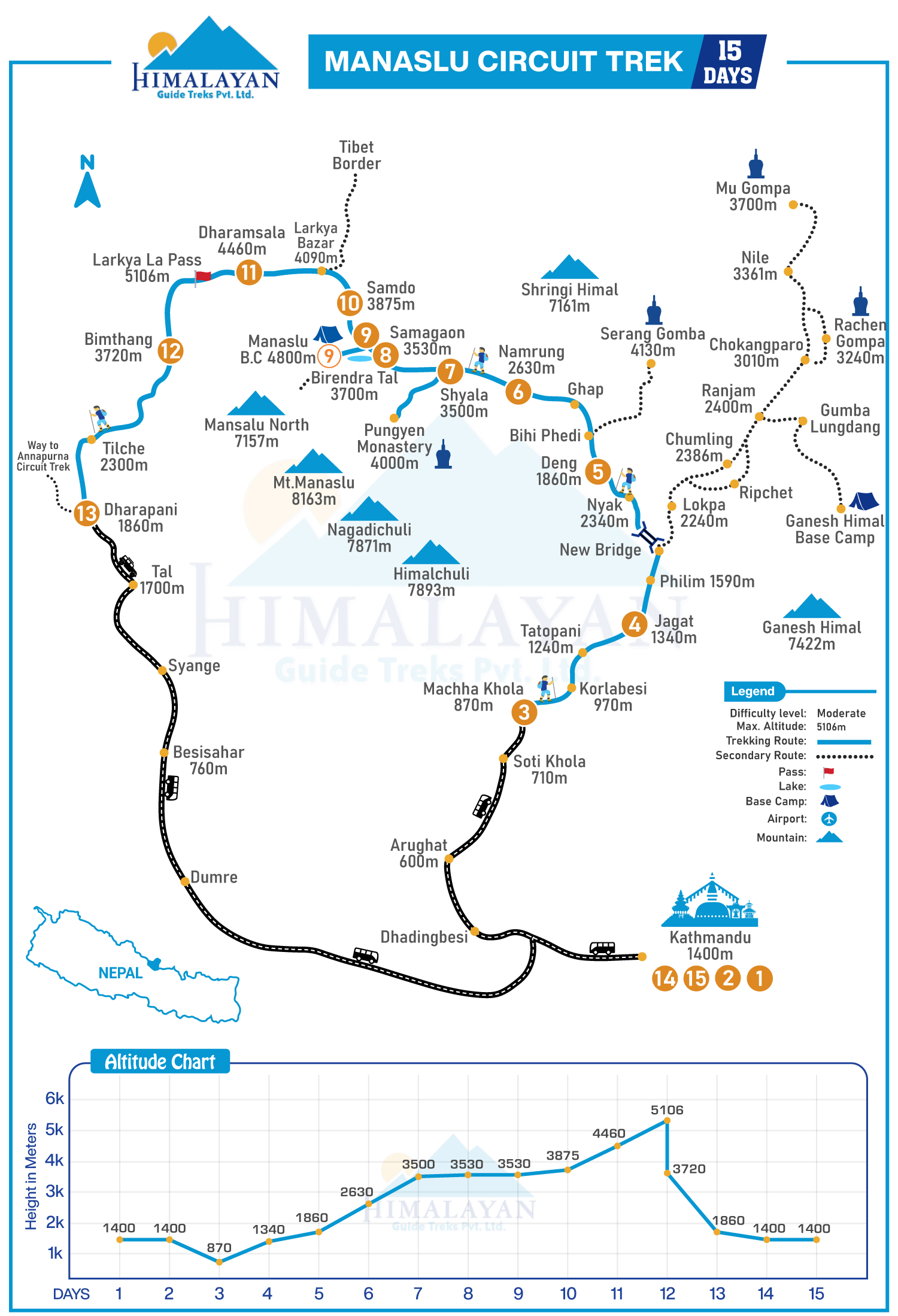
Outline Itinerary (15 Days)
Day
Activity
Details
Day 1
Arrival in Kathmandu
Airport pickup and hotel transfer
Day 2
Sightseeing Tour
Explore Kathmandu Valley
Day 3
Trek to Machha Khola
930m – حوالي 6 hours
Day 4
Trek to Jagat
1,410m – 6 hours
Day 5
Trek to Dyang
1,800m – 6 hours
Day 6
Trek to Namrung
2,600m – 4 hours
Day 7
Trek to Shyala
3,500m – 6 hours
Day 8
Trek to Sama Gaon
3,530m – 5 hours
Day 9
Acclimatization Day
Rest and explore Sama Gaon
Day 10
Trek to Samdo
3,860m – 5 hours
Day 11
Trek to Dharamsala (Larkya Phedi)
4,470m – 4 hours
Day 12
Cross Larkya La Pass & Trek to Bimthang
5,106m → 3,720m – 8 hours
Day 13
Trek to Dharapani
1,860m – 7 hours
Day 14
Drive to Kathmandu via Besisahar
8–9 hours
Day 15
Departure
International departure
Alternative 14-Day Itinerary: Combine days or skip the acclimatization day (recommended only for well-acclimatized trekkers). Alternative 12-Day Express Itinerary: Available for fit, experienced trekkers with prior high-altitude experience. Contact us for this faster-paced option.
Best Alternatives to the Manaslu Circuit Trek
Annapurna Circuit Trek is the best alternative, offering diverse scenery and a well-developed trail with a classic Himalayan experience.
Everest Three High Passes Trek is a tough, high-altitude adventure with stunning Everest region views.
Upper Mustang Trek offers a dry, desert-like landscape and is great during monsoon.
Itinerary
If you want tailor-made trip or want to personalize this itinerary, just feel free to contact us. We are always there to help you to make your holiday plan. Contact us
Day 01
Arrival in Kathmandu- pickup and transfer to hotel
When you land at Tribhuwan International Airport in Kathmandu, one of our delegates with a signboard with your name on it will be waiting to pick you up and following all the process of check-in to the country, you’ll be driven towards your hotel.
Once you get into your hotel, you’ll have time for yourself to wind down, freshen up and relax before in the evening you will meet your crew member.
Day 02
Sightseeing in Kathmandu Valley
The next day is the program for sightseeing. After an early morning breakfast, your guide will be waiting for you outside the lobby with a car on standby for you to take a city tour of different sites and places.
From ancient temples and palaces full of unique arts and crafts along with ancient architecture of the country, historical structures like Hanuman Dhoka Durbar Square, Swyambhunath, Pashuaptinath (the largest open cremation ground) and many more and along with that also some local delicacies, you’ll be on a sightseeing trip for the whole day, the day before your trek officially begins.
Day 03
Drive from Kathmandu to Machha Khola (870m)
We start our day 1 with a drive from Kathmandu to a place known as Machha Khola. The trip will start early; it’s a steady drive of around 8-10 hours, usually. The roads turn into winding highways, and if you look out your window, you’ll get to see terraced fields and river valleys. The road is a long one, a trip of 8-10 hours, a part of the adventure yet to come.
As the destination gets closer, the air starts to get a bit warmer and more humid. As for your visual of rural Nepal, the settlements around the river become your first glimpse. The suspension bridges and murmuring sound of waterfalls mark the start of the trek.
Day 04
Trek from Machha Khola to Jagat (1,340m)
Now the real walking begins. The trail hugs the Budhi Gandaki River and constantly keeps shifting between rocky paths, forest sections, and small villages.
You‘ll pass places like Khoralbesi and Tatopani (the natural hot spring), where you can feel the landscapes slowly tightening into a deep river gorge.
Jagat is a small village made of stone houses, almost like a checkpoint where permits are officially verified.
The architecture starts to change here, hinting at Tibetan influence.
Day 05
Jagat to Deng (1,860m)
This is where the trek begins to feel more remote. The village becomes narrower, cliffs rise higher, and the river becomes louder and Wilder.
You will walk through the forest of bamboo and rhododendron, crossing suspension bridges that swing swiftly with the wind. Small settlements like Salleri and Philim add cultural mixture to the journey.
The village of Deng is a quiet place which almost feels lidden and makes you feel like you have stepped into another deeper world.
Day 06
Deng to Namrung (2,630m)
It’s already day 4, and the trail has started to gain attitude more noticeably. Villages become more distinctly Tibetan in culture and artistic design.
Stone houses, Mani walls and prayer flags begin to appear more and more as the landscapes keep unfolding, and you will notice fewer forests and more open views of distant ridges.
Namrung is one of those villages where the mountains suddenly start to show themselves; you'll get to witness the first glimpse of snow peaks if the weather is clear. And keep yourself fit and stronger with exercise and proper rest, as tomorrow the elevation rises further to 3,000m.
Day 07
Namrung to Shyala (3,500m)
The view when we set out will be a beautiful one. Good morning, sun bathes the valley in golden hue, and the crisp air invigorates our spirits.
The trail winds through lush forests and terraced fields where we pass friendly locals tending to their crops, while the distant roar of the river enhances the serene atmosphere. After several hours of hiking, we will reach a viewpoint that showcases the majestic Himalayan peaks and their snow-capped mountain summits glistening in the sunlight.
Continuing our ascent, we encounter grazing yaks that add to the charm of the landscape. Finally, Shyala emerges as a tranquil village, nestled amidst the towering mountains. We find warmth in the hospitality of the locals and settled in there for the night, enjoying the companionship of the fellow trekkers. As the sun sets, the sky transforms into a breathtaking palette of colours, nd we gather around a fire, sharing stories and reflecting on the day's adventure in this peaceful mountain haven.
Day 08
Trek from Shyala to Samagaun (3,530m)
This will be one of the most scenic walks of the entire trek.
You pass through trails that almost feel unreal, as if you have come into the dawn of time, surrounded by mountains in almost every direction.
Mountain peaks like Manaslu, Himalchuli, and Gadichuli dominate the skyline like a natural amphitheatre.
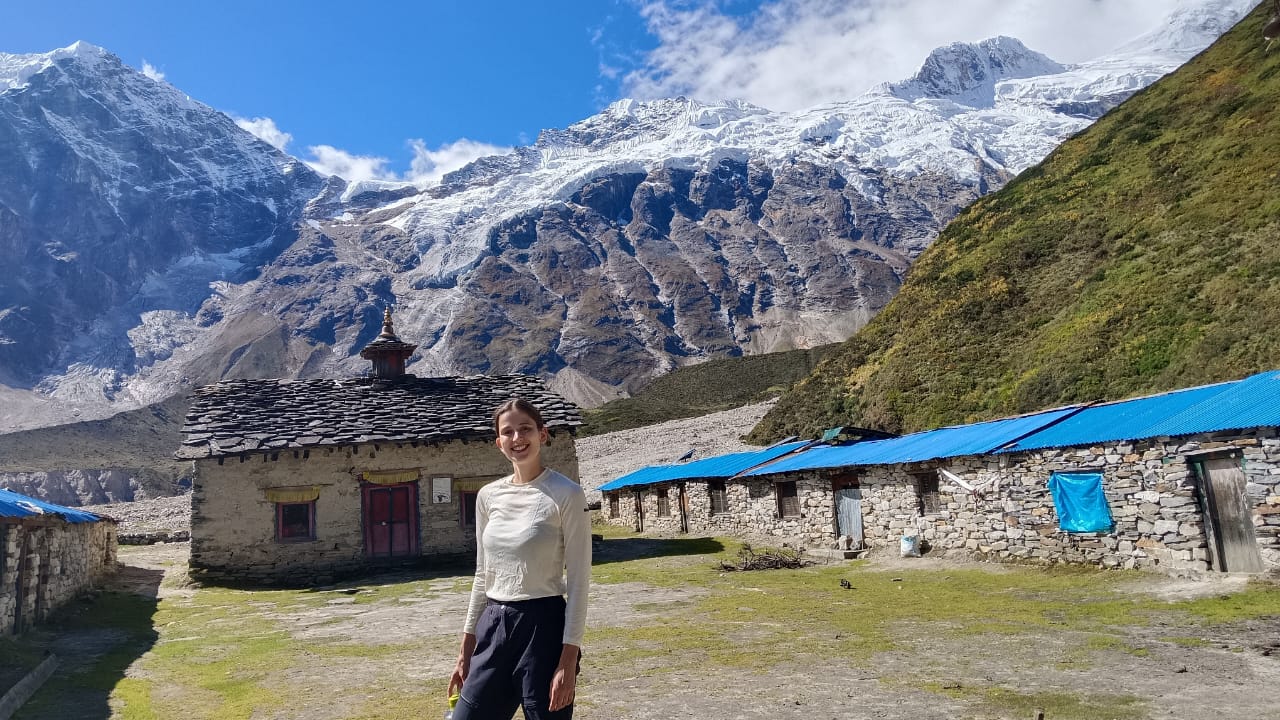
Samagaun is a major Settlement and a key acclimatisation point. It feels like a hidden Himalayan village with strong Tibetan roots, stone houses, and open yak pastures.
Day 09
Acclimatisation Day in Samagaun (3,530m)
It is often referred to and marked as the acclimatisation day, but it's better and smarter to move around, walk sometimes, and maintain the blood flow as walking around and getting up to the highest point of the vicinity if possible,e as it helps the body to adapt to the altitude you rise the next day.
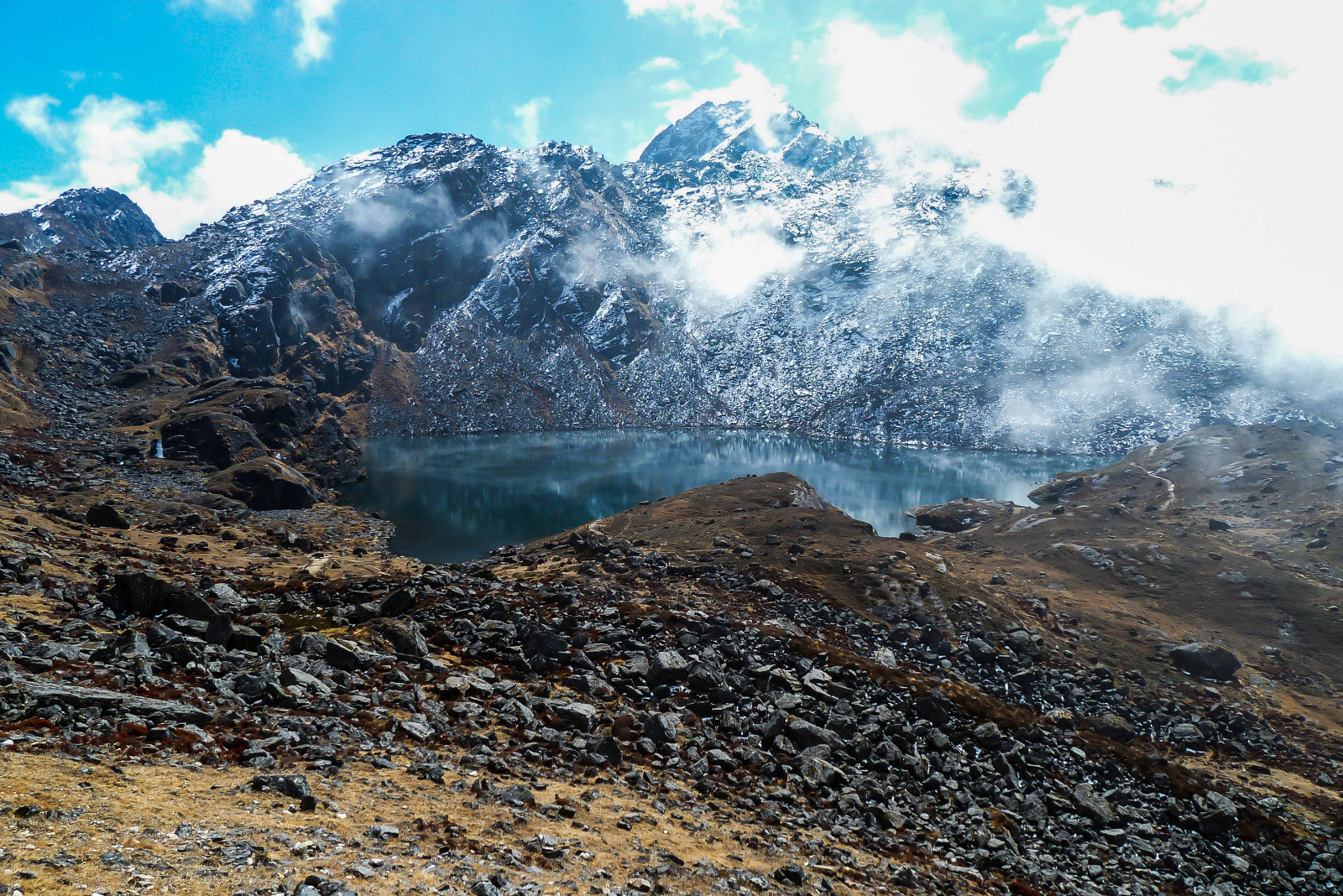
Most rekkers prefer to hike to Manaslu Base Camp, which is a long and demanding climb or Birendra Tal (lake), which is a calmer glacier lake you can pay a visit to.
The idea here is simple. Let your body adjust while your mind absorbs the scale of the Himalayas and prepares you for the trip the next day. Without much physical and mental exertion.
Samagaun is also where many people start feeling the high altitude reality. The slowest steps, the deeper breeze and the colder nights.
Day 10
Samagaun to Samdo (3,860m)
Yesterday might have been a longer day, even with the acclimatisation, as you had to walk to the highest point of the day to acclimatise. But today, the trail shortens, and instead the altitude increases steadily.
You will walk through dry Alpine landscapes with fewer trees and more wind-exposed regions. As you keep moving further and exploring ahead, you will start to notice the Tibetan border influence getting significant.
Samdo is one of the last permanent settlements before the pass. It feels isolated, almost frozen in time,e with the wide valleys and yak herders.
Day 11
Samdo to Dharmasala/ Larkya Phedi ( 4460m)
Let's talk about the 10th day. We will be further today; this will be a short but critical ascent.
As per the thrill of Ascension, it is stark, minimal and dramatic. You won't get to see the forest anymore because it is way beyond the typical elevation where the oxygen starts to thin. All you get to see is Stones, White sands, and feel the wind and high-altitude silence.
The wind is chilling, and in the silence, with something that you will truly feel what solitude is.
Dharmasala, also known as Larkya Phed, isn't just a village in the traditional sense? It is more like a basic shelter zone that prepares trekkers for the high pass crossing.
Spending overnight here feels different because the Air is lighter, the nights are cold and chilly, and the sensation of anticipation for the coming day is very high.
Day 12
From Dharmasala, Cross Larkya La Pass (5,106m) to Bimthang (3,720m)
This right here is the hardest and most rewarding day of the trek.
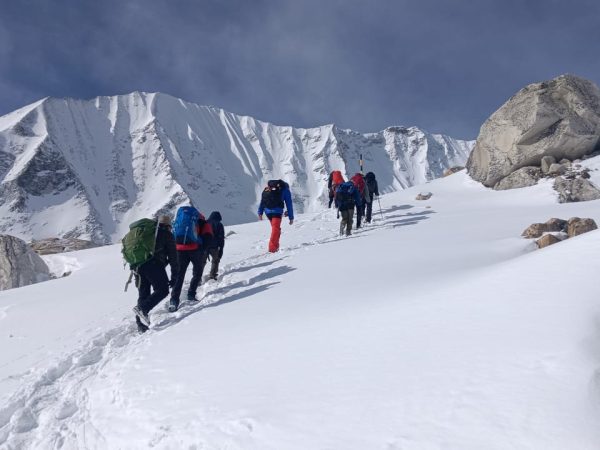
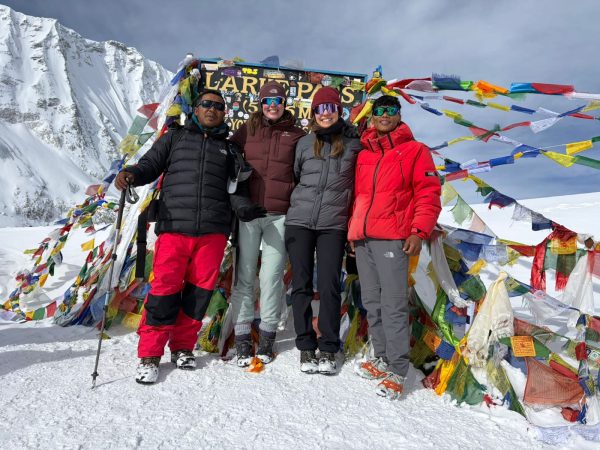
You will start very early, usually before sunrise. The climb is long, cold and mentally demanding. The trail gradually becomes covered with snow depending on the season. At the top of the Larkya La Pass, everything opens up.
And when it opens up, you will get to see the massive Himalayan panoramas, glaciers and endless ridgelines. It is not just a viewpoint; it is a full emotional release.
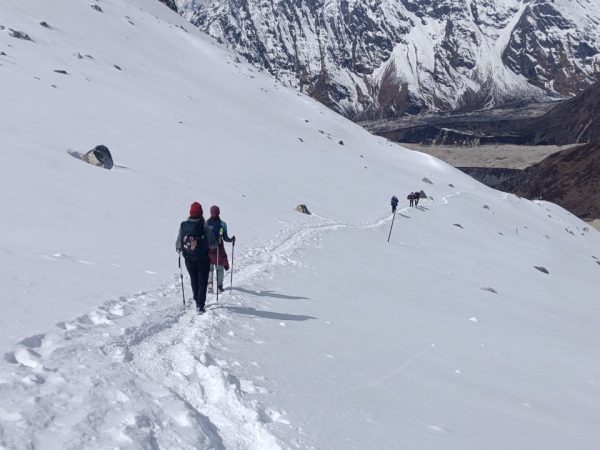
Following the pass, the descent to Bimthang is long and tiring, but the landscape shifts again. And this time, it shifts into greener and Alpine valleys full of a thick atmosphere where your body will start to surge from the oxygen and feel fresh again.
Day 13
Bimthang to Dharapani (1,860m)
The trail gradually connects with the Annapurna circuit route, and the landscapes become much more populated and accessible.
We’ll be on trek from Bimthang to Dharapani.
The warmth of the sun on our backs and the cool breeze remind us of the incredible journey we have had. It's bittersweet knowing this adventure is coming to an end, but we carry with us unforgettable memories of stunning landscapes and companionship shared along the way. Each step brings us closer to our final destination, filled with gratitude for the experiences that we have gathered trekking together. Dharapani will be our stop for the day.
Day 14
Drive back to Kathmandu via Besishar (1,860m)
So, my friend,d we have completed a long two-week journey going through ups and downs, snowy cliffs, gorges, by the side of rivers, waterfalls, and not to forget the cultures of the people we met.
And today we will be driving back to Kathmandu. It will be a long but reflective journey back after days in silence, mountains and effort. Kathmandu fish loud again, but something in your perception has shifted. Distance efforts and scale feel different now.
Day 15
International departure
It's been a two-week-long trip. We have been through enough ups and downs, rugged reaches, paths and trails. We have felt the warmth of family and closeness as friends, shared stories with trust and created a bond over those 14 days. And now it's time to say goodbye. Today you will be heading for your international departure.
A ride will be at the gate in front of the reception to help you smoothly drive towards the airport for your flight.
Trip Map
Inclusions
What's included
Airport transfers - pickup and drop off
Meals on full board (Breakfast, lunch and dinner) during trekking period.
2 nights 3 star hotel in Kathmandu
An experienced Government-licensed guide.
Food, drinks, accommodation, insurance, salary, equipment, transportation, local tax for guides and porters.
Kathmandu to Machhakhola by private jeep.
Besisahar to Kathmandu by private car.
All transfer to Bus station by private vehicle
All necessary permits and special paperwork
All government taxes and our service charges.
Farewell Dinner before departure.
Himalayan Guide Treks T-shirt
What's not included
International airfare and visa fees
Accommodation and meals in Kathmandu.
Beverages including tea, coffee, soft drinks, beer, and mineral water.
Personal trekking gear and shopping expenses.
Amenities such as hot showers, battery charging, boiled water, and Wi-Fi.
Travel insurance covering emergency rescue.
Tips for staff.
Frequently Asked Questions
Q1: Can beginners do the Manaslu Circuit?
challenging, fit beginners with determination can complete this trek. Previous multi-day hiking experience helps significantly. Our guides provide excellent support, though altitude and terrain demand respect.
Q2: How much does the Manaslu Circuit Trek cost?
Costs typically range USD 1,200-1,800 per person depending on group size, services, and season. Contact Himalayan Guide Treks for customized quotations.
Q3: Is Wi-Fi available during the trek?
Limited Wi-Fi exists at some lodges (charged separately). Connection quality decreases at higher elevations. Embrace digital detox and mountain immersion.
Q4: What about charging electronic devices?
Lodges offer charging facilities (USD 2-5 per hour). Bring power banks for backup. Solar chargers work well in good weather.
Q5: Can I trek solo in Manaslu?
No. Regulations require minimum two trekkers with a registered guide. This restriction ensures safety in this remote region.
Q6: What happens if I cannot cross Larkya La Pass due to weather?
Heavy snowfall occasionally closes the pass. Alternative routes or waiting periods may be necessary. Travel insurance should cover such contingencies.
Q7: Are ATMs available on the trek?
No ATMs exist beyond Kathmandu. Carry sufficient Nepali cash for personal expenses (snacks, beverages, charging, tips). Budget NPR 3,000-5,000 daily.
Absolutely. Himalayan Guide Treks offers flexible itineraries from 12-15 days, accommodating additional rest days, side trips, or pace adjustments based on your preferences and fitness.
Q10: What emergency medical facilities exist?
Basic health posts operate in larger villages. Serious emergencies require helicopter evacuation to Kathmandu hospitals—another reason comprehensive insurance is essential.
Q11: How fit should I be?
Train with cardiovascular exercises, hiking with weighted backpacks, and stair climbing for 2-3 months before departure. Good fitness makes the journey more enjoyable.
Q12: What makes Manaslu special compared to Annapurna or Everest?
Manaslu offers authenticity without overwhelming crowds, pristine nature, genuine cultural encounters, and dramatic landscapes rivaling more famous circuits—all while maintaining a sense of remote adventure.