Introduction Hear me out, and let’s be honest: most people, almost all the time, talk about either Everest or the Annapurna Circuit trek, and you know why? ’cause that’s all […]
Duration: 12 Days
Best Time:
Trip Grade: moderate
Start from Kathmandu and End to Kathmandu
Min 2 to Max 15 Pax in a group
Meals: Breakfast, Lunch,and Dinner
Accommodation: Tea House or Lodge
Introduction
Hear me out, and let’s be honest: most people, almost all the time, talk about either Everest or the Annapurna Circuit trek, and you know why? ’cause that’s all they know.
And honestly it’s not even their mistake as these are the globally famous routes of mainstream treks in Nepal and only a certain group of people know Mardi Himal Trek as the alternative to Annapurna or Everest.
But today we’ll have some words about the Short Manaslu Circuit Trek,
If you’re looking for a short but thrilling trek then the Short Manaslu Circuit Trek can be very reasonable trekking for you. It’s shorter to manage the schedule, gives you the thrill of high-altitude and is less-crowded.
Despite the tag of short trek it’s actually demanding. This isn’t some walk in the park thing, it’s raw, high-altitude and tests you in the best way possible.
From cultural to natural fabric of reality around you it’s one of the honest treks in Nepal. It’s not just a checklist. It’s a harsh-himalaya that doesn’t care about your instagram feed, it’s unforgiving and this is where you find them
Trip highlights
The Larkya La Pass (5,106m)
This right here is simply an undeniable jewel. It’s one of the longest passes in Nepal and reaching the top feels like a physical victory. You won’t just be looking at mountains. You’ll be standing in the middle of them from the summit. You get a 360 degree punch in the face of peaks like Himlung Himal, Cheo Himal and massive Annapurna II.
The prayer flags at the top aren’t just for so they are screaming in the wind and so will you internally when you see the descent.
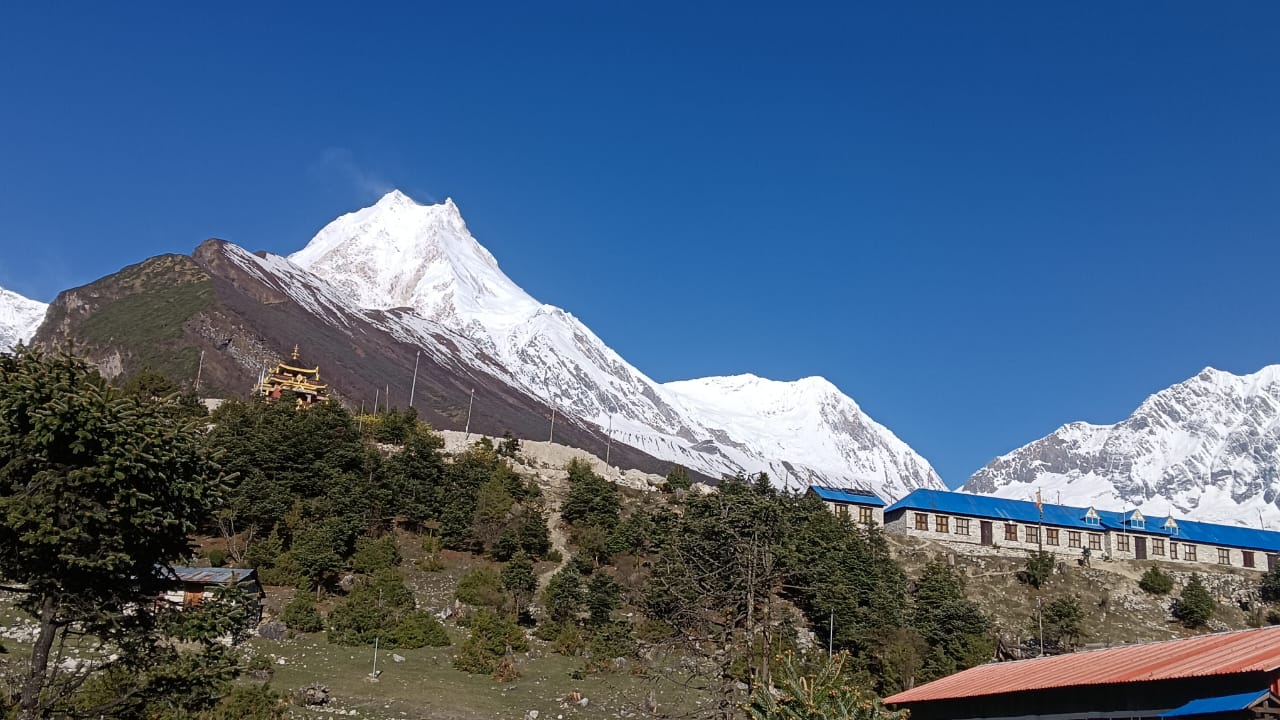
Mount Manaslu (8,163m)
You don’t just see Manaslu , you live in its shadow for days.
Also known as the “Mountain of the Spirit,” Its twin peaks dominate the skyline. In places like Lho and Samagaon, the mountain feels close enough to touch.
Watching the first lights hit the summit while you are shivering with a cup of ginger tea is a core memory in the making. The proximity of mountains might even emotionally overwhelm you.
Birendera Lake and the Glaciers.
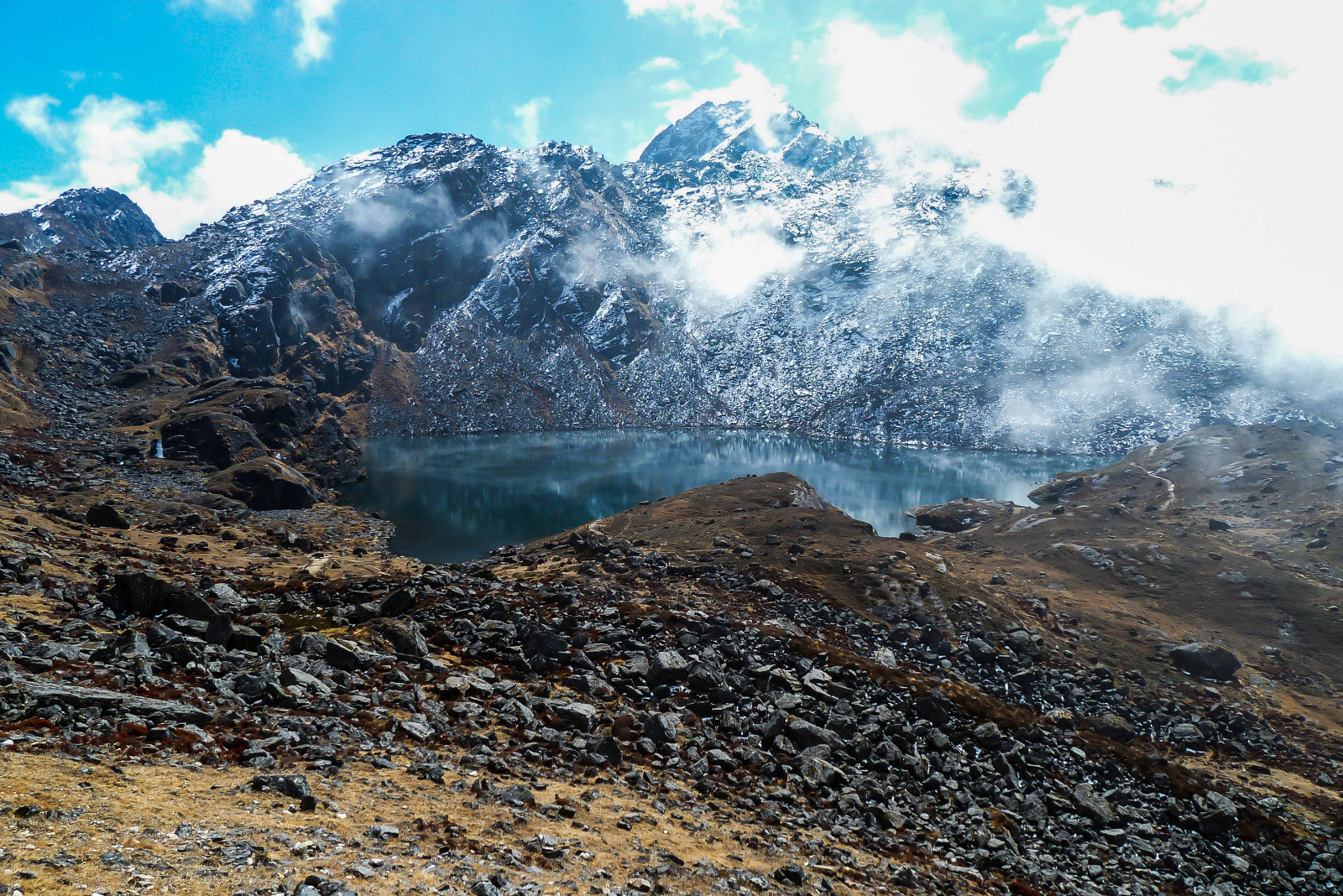
So this is more about the acclimatization day in Samagaon, when and where you will hike up to the Birendra Lake. It’s a beautiful place and a beautiful lake. A glacial lake full of water with turquoise appearance as if it has been photoshopped into the landscape.
You can sit on the edge and listen to the Pungyen glacier groan and crack, it’s a haunting, beautiful reminder that the landscape you’re walking on is alive and moving.
Best time to go
There are two major times to visit or undertake the Short Manaslu Circuit Trek.
March to May : This is one of the best seasons because the Rhododendrons are blooming, the weather is warming up and crisp, the trail is good and the weather is just fine.
Unlike the winter season, you don’t even have to think twice before putting on the outfit. You can put on light layers, trousers in case of windy or best even trek wearing shorts. It is a complete freedom for comfortability.
The visuals are just beautiful, full of colorful rhododendrons and greenery surrounding you.
September to November : It is the period of post monsoon. This is when you get even better visuals with those crisp high-definition mountain views as you see in the photos. The sky will be cloud-free, clear blue giving you a different feeling, an optimistic vibe for the trip.
Not just a normal trip. It is much more than that. It is a spiritual and psychological resetting along with the healing that your body will feel physically.
Manaslu Circuit isn’t easy in any way. It’s classified as a strenuous grade of trek and requirements are as follows:
You should be physically able to walk 6-8 hours a day on steep uneven terrain which is why as mentioned before it’s better if you engage yourself on leg- strengthening training, cardiovascular endurance exercise and breathing techniques.
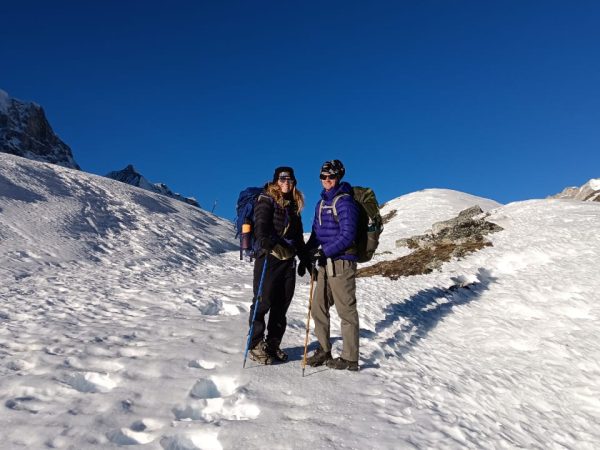
Crossing the “Larkya La Pass”: It is the most arduous part of the trek and is relentless in a way as the trip goes for 10-12 hours starting before the breaking of dawn, and since it’s dark at the time of start it’s also freezing cold with howling winds. So you’re advised to put on proper insulating layers to be safe from cold.
And compared to other trekking regions it’s much riskier in the Manaslu region due to the remoteness and availability of fewer facilities and escape routes.
Basically you’ll be on your feet for at least one third of your day, meaning you’ll be walking for at least 8 hours if less, then it’ll be a minimum of 6 hours depending on the ups and downs.
Some of the day will take considerable hours like day 9, crossing the Larkya La Pass which begins even before dawn breaks i.e around 4 am at best and then goes on for at least 10-hours through scree of rocks and deep snows.
It starts from jungle, subtropical weather full of sweating which happens in general time and leeches possibility in monsoon and comes to an end in alpine high-glacial moraine which feels freezing thin air.
Do’s and Don’ts
Let’s talk about do’s and don’ts and the cultural norms of the region.
Do
Always walk on the left (Clockwise) as you pass the Mai walls and Chortens.
Ask first: Always ask for permission before taking photos of locals or inside the monasteries.
Pack proper layers: The temperature can drop from 20 degrees Celsius in the valleys to -15 degrees Celsius at the pass.
Bring cash: Atm’s don’t exist after you leave the Lowlands. Bring enough rupees for snacks for snacks, wifi and showers.
Dont’s
Don’t rush: Follow the rule of climbing high and sleeping low. Rushing to the pass without acclimatization is the core cause of AMS.
Don’t drink tap water: It’s not like the tap water is unhealthy or unsafe, but for someone outsider like you the tap water might not sit well with your physiology even if clean and safe to drink to which is why it suggested that you use purification tablets or filter before drinking it or drink boiled water.
The aim is to reduce the plastic waste hence it is discouraged for you to buy plastic bottles.
Do not trek alone: Even with the 2026 Solo Trekker Rule, a licensed guide is still mandatory by the law.
You are in the vicinity of a restricted region, not just legally but it is also a very culturally protected area with its proximity to Tibet. It is suggested to wear appropriate clothes while in locality or around the monastery.
Permits and Paperworks
We often call it a “Red Tape” for the permits and papers since the trip is to the restricted region, which also means the government will have its eye on you or anyone visiting there due to border sensitivity and security reasons.
You’ll need to have following papers and permits to officially and legally step into the zone: Restricted Area Permit: The charge for the first week during Sept-Nov will be $100 or as for Dec-Aug will cost around $75.
MCAP & ACAP: These are the conservation area permits for Manaslu and Annapurna each costing around $30 each.
The rules: Even a few months ago as per the old regulation it was mandatory for trekkers to issue permits of two trekkers even when only one was traveling and a company of government certified licensed guide was mandatory.
But as of 2026 the regulations have been lenient as permits even for one trekker can be issued but still for the safety reasons of the trekker in the restricted regions the licensed-guide is mandatorily assigned.
Fooding and lodging.
Let’s talk about food and accommodation.
You will probably be staying in tea houses, which are basic mountain lodges. Rooms are usually twin-sharing with thin wooden walls. In 2026, many of them have solar power, but expect communal toilets, squat style as you get higher.
As for the food, the staple Dal bhat, lentil soup, rice, veg curry and comes with free refills.
Variety: In the lower elevations you will find. Variations on food light. Past that, momos and even pizzas higher up (Dharmasala), the menu shrinks to soups, noodles and potatoes as goods and products are harder to supply due to the uneven terrain.
Cost: Meals cost more as you go higher because everything is carried by meals or porters. Budget roughly $30 to $40 per day for all meals and water.
Transportation and logistics
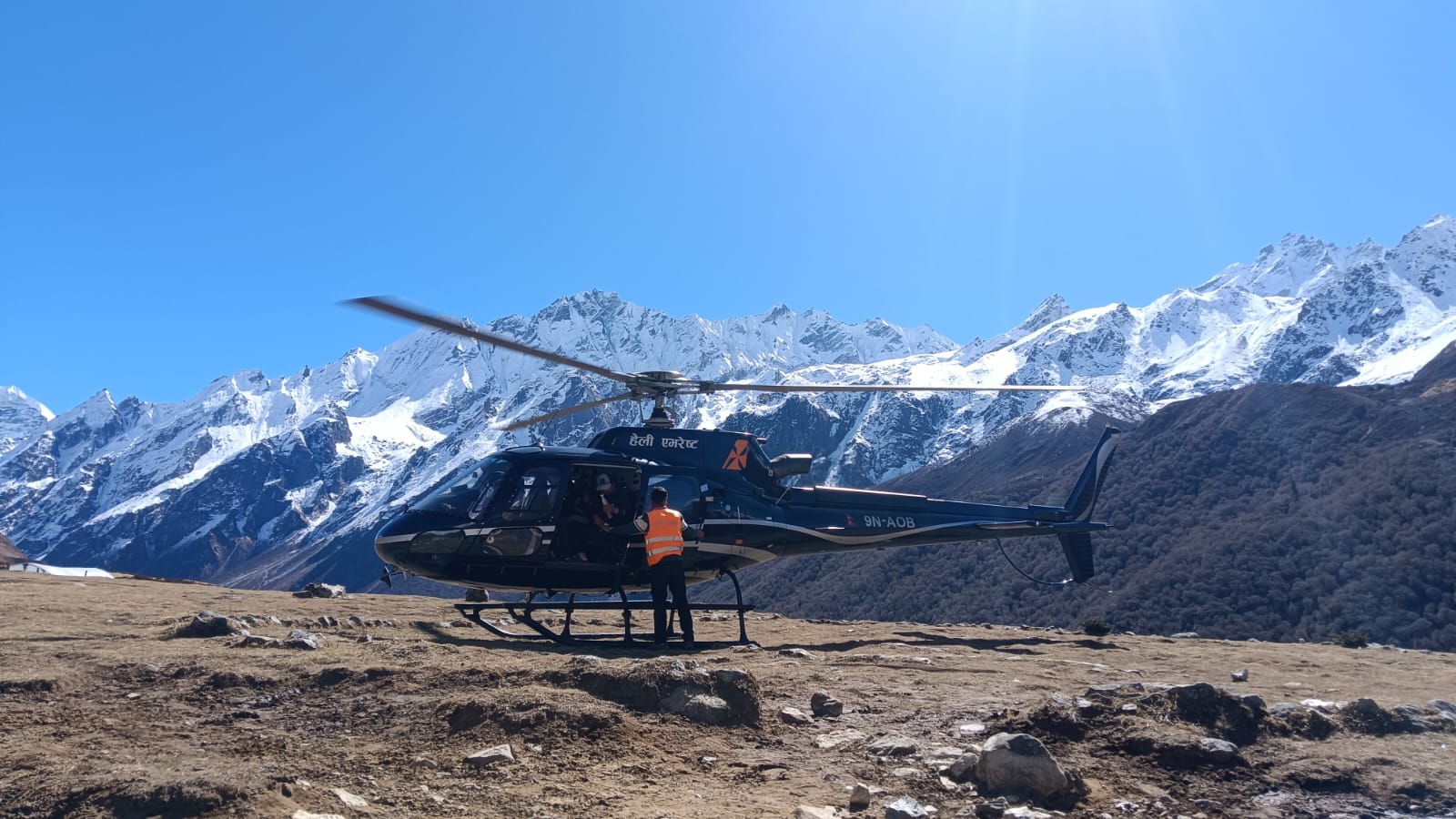
The rail is rugged, on and off so it’s necessary to know what the mode of transportation and logistics is going to be, and for your information there is no mode of commercial air travel except for the helicopter for emergency evacuation.
Local bus (Kathmandu to trailhead)
From Kathmandu to till trailhead i.e Machha Khola we’ll be on a local bus ride which is the most common form of transportation with reasonable cost. Besides cost, if you prefer a shared space and interaction with locals and want to deepen the bond with culture, then a shared form of local transportation like a public bus is a great way. The trip by bus might take from 8-10 hours depending on the traffic on the highway.
Private jeep
So if you want to save time, prioritize personal space and consistent ride then this is the best option for you, as this also saves your time considerably riding by 2-3 hours giving you extra time on the destination.
The return trip (Dharapani to Kathmandu)
This part of the trip is broken down into two sections.
The first of the portion is from Dharapani to Kathmandu and is usually recommended to take a jeep on a shared basis as it’s faster, safer and more comfortable and takes less time.
The other half of this trip takes form Besisahar, where you can switch to a Microbus or private car to return to Kathmandu in 5-6 hours. It’ll take less time for you to get back to the valley on a small vehicle.
The cultural time capsule
Once you pass a Jagat, you enter a region heavily influenced by Tibetan culture.
The Mani Walls : You’ll pass massive walls made of hand carved stones, full of enchantments Inscribed on it. And a subtle tip for you, always walk to the left of those walls.
Ancient Gompas : Monasteries like Ribung Gompa in Lho are centuries old and still active. You will hear the low hum of monks chanting and smell the heavy scent of juniper incense. It is not a museum, it is their life which is a fascinating experience to witness in itself
Wildlife and the Wild Factor.
Because this area is in a conservation zone much quieter than Everest, you actually have a shot seeing wildlife. So keep your eyes wide open if you want to witness some rare wildlife which could be a once in a lifetime opportunity for many people.
The blue sheep (Bharal) : It is a mountain sheep that defies gravity and physics and is usually seen perched on impossible cliffs near Samdo.
Himalayan monal : Himalayan Monal, locally known as Danphe is the national bird of Nepal with unique distinction consisting of multicolor feathers and is a very beautiful sight to have.
Yaks : These are the muscles of the mountains. You can call them either train, ship or engine of the mountains as they are the major resources for the goods supplied to the mountains and the impossible geography where wheels don’t roll.
Whenever you see them coming, always lean to the wall side as most of the trails in the mountains are high above the riverside or the gorge which makes it dangerous to stand on the edge of the trail while encountering herds of these animals.
Safety, security and Travel insurance
Travelling to mountains, especially trekking there without proper insurance is a big risk and something that’s not recommended on multiple levels.
You’ll be high above in mountains on an elevation of several thousand meters where situations can derail and go south any seconds and become threat to safety and security hence requiring emergency extraction at any moment to get to safety which is why before you get there you’re mandatorily required to acquire insurance policy that covers from general treatment to emergency helicopter evacuation or else without the insurance the rescue usually draws a lot from pocket.
Following are the points to be considered while acquiring insurance
High altitude: The policy must cover upto 6,000m of heli-extraction operation as many of the providers limit it to 3,000m.
The mention of “Helicopter evacuation” in policy: This is the only of you getting out and making it alive if the situation get out of hand and controlled. So ensure that the policy explicitly mentions the clause of heli rescue.
Altitude risks and solutions
We’ll be way higher on the elevation scale from where general signs of AMS starts as the thinning of the atmosphere begins. There are several potential risks involved with the ascension. Hence the following are the guidelines for safety to deal with the problems and issues of AMS which can turn life-threatening if not dealt well with.
As soon as the signs like Fatigue, breathlessness, Dizziness, Nausea, vomiting and excessive sweating and potentially fainting starts do not get further and stop where you are. Take some time for rest, hydrate well and descend gradually.
Always start trekking by eating something, never trek in an empty stomach as it strains the body.
In case of severity you’ll have to be airlifted by helicopter for rescue as recommended since there is no other way of rescue possible on such terrain which is why it’s mandatory and not a choice to have evacuation clause in your insurance.
Can beginners do this trek?
Only if you are very and meet all the physical as well as psychological requirements and have somewhat prior trekking experience or else the trip might turn out to be very exhausting and challenging for you. You’ll need 2-3 months of cardio and leg-strength training before the trek and a company of certified guides with proper training who can monitor your symptoms at both surface and deep level.
If you’re a beginner, do not rush and never ever skip acclimatization in Samagaon as it might prove fatal to you.
Note: If you want to enjoy the Manaslu Circuit Trek at a relaxed and comfortable pace, you can choose our 15-day Manaslu Circuit Trek package. It is the perfect option for a long and enjoyable trekking experience.
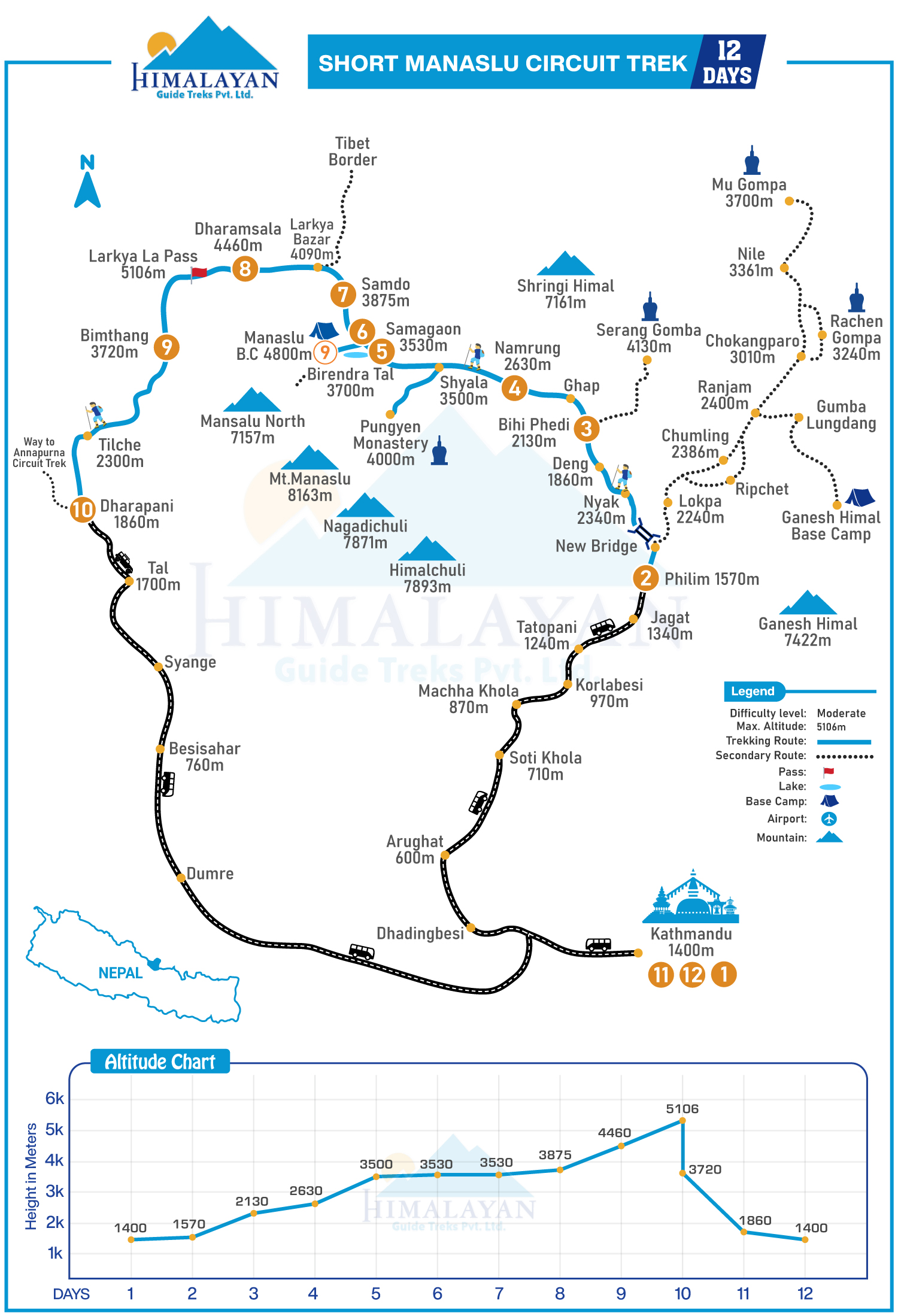
Outline Itinerary
Day
Itinerary
Altitude
01
Arrival in Kathmandu and transfer to hotel
1,400m
02
Drive from Kathmandu to Philim
1,570m
03
Trek from Philim to Bihi
2,130m
04
Trek from Bihi to Namrung
2,630m
05
Trek from Namrung to Samagaon
3,500m
06
Acclimatization day – Hike to Pungyen Gompa or Birendra Tal
3,500m
07
Trek from Samagaon to Samdo
3,860m
08
Trek from Samdo to Dharmasala (Larkya Phedi)
4,430m
09
Trek from Dharmasala to Bhimtang via Larkya Pass
5,106m (Pass)
10
Trek from Bhimtang to Dharapani
1,965m
11
Drive from Dharapani to Besisahar and onward to Kathmandu
1,400m
12
Final Departure
—
Itinerary
If you want tailor-made trip or want to personalize this itinerary, just feel free to contact us. We are always there to help you to make your holiday plan. Contact us
Day 01
Arrival at Kathmandu and transfer to hotel (1,400m)
Once you land at the Tribhuvan International Airport our delegate will receive you and help with the transfer process towards the hotel through the weave of the traffic which can be chaotic depending on the hours of the day, but our transfer will be smooth.
When you get to the hotel and complete all the stuffs and process all like check in, you can use the time to relax or maybe grab a meal in Thamel, before the night hits you’ll have meeting with your designated crew members and do the transactions whatever there is like maybe need for shopping of gear as per your need and preferences, depending on the hour of the day you’ll have rest of the time for yourself.
Day 02
The Long road from Kathmandu to Philim (1,570m)
Today your trip officially begins, you'll be on a road trip of around 8–9 hours on a jeep which might vary according to the flow of traffic.
The road will be a blend of smooth pitch to jagged and bumpy transition of tracks as the trip gradually unfolds, so sit tight as the road follows the lead of the Budhi Gandaki River.
Your trip is the one that has officially commenced, but the trek is yet to come as you’ll be on wheels till this time.
The views from the windows of your ride will be a one worthy of your time of life, your destination is the village of phlim which is a Gurung Village which has so much to offer you.
Day 03
Philim to Bihi (2,130m)
This right here my friend is your first day of real trekking as you step your foot and break your boot on the soil.
As for the trails it is mostly narrow, and it cuts through deep gorges. The trip comprises multiple suspension bridges, and by the way the suspension bridges are also highlighted in themselves as they are in between largely open spaces making it a thrilling scenario.
And the other most important thing you should take note of is the muscle and power of the mountains. The mules are the power-housed engines that often help carry your food and supplies to places where wheels are almost worthless.
And the most significant note to keep in mind is, mules are always large in numbers when they pass by so it’s suggested for you to always stay on the lane that touches walls of the trail because it is safer.
Maintain a steady pace throughout the trip as fast-pace might cause you to gas out on the uneven terrain and just like that with a steady pace you’ll get across the bamboo process and small settlements until you step your foot into Bihi.
Day 04
Bihi to Namrung (2,130m)
We start early, not just this day but every day as the early morning start helps with fresh air to make the movement a bit energized and efficient when the cold and fresh breeze touches the face.
As for the trail it gradually shifts from lush jungle to highlands of Tibet.
The trip will take you through Ghap and then through a forest of fir and rhododendron.
The ascension of the Namrung will feel like a bit of a pull, but the reward is absolutely worth every step of exhaustion as the first glimpse following the climb will be views of big snow peaks.
The village has a cool and calm atmosphere, with the ancient presence of Mai walls (Prayers stones) everywhere.
Day 05
Namrung to Samagaon (3,500m)
By this day your 45% of the trip gets covered.
This will be one of the days that will be very special. The traverse through Lho will be a highlight as it has an incredible monastery and a sight of Mount Manaslu famously visible from there.
But I suggest you not to halt just there but push further to Shyala as it is much quieter than the main stops and offers a 360 degree view of peaks like Himal Chuli and Peak 29.
Day 06
Rest day/ hike to Pungyen Gompa or Birendra Tal
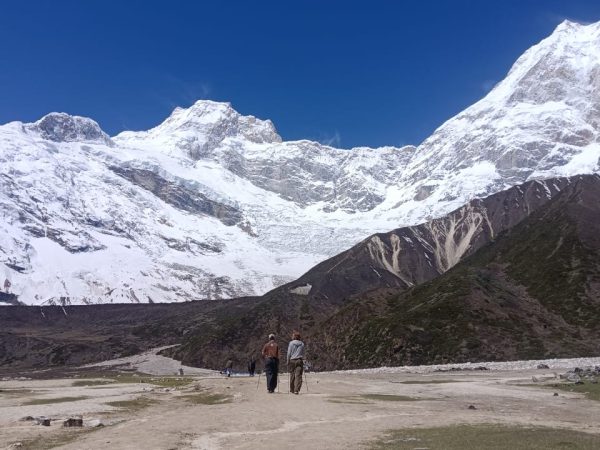
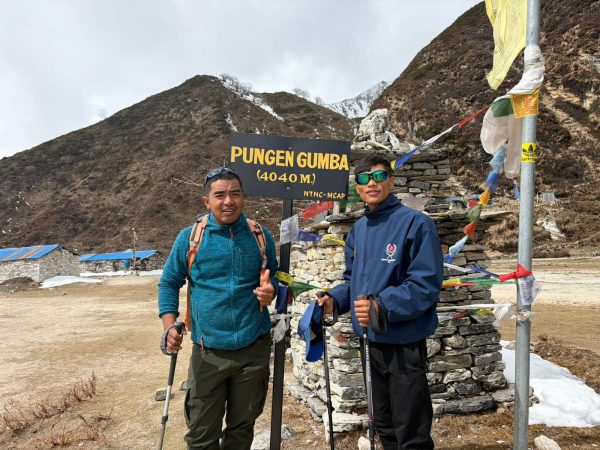
Leave your pack at the teahouse for today's program with the porter and head towards Pungyen Gompa with your guide, it is a side valley that routes you to the east face of Manaslu.
It’s a quiet, spiritual, and great workout for your body at a higher elevation.
The Pungyen Gompa is a grassy plateau with an ancient monastery that sits right under the massive stature of Mount Manaslu.
The surroundings will get a bit breathtaking literally as the air is way thinner than the normal elevation and since we have risen in elevation we’ll also use this day for adjustment of body just like mentioned above.
There is also an alternative event to close the day which could be after our descent to Gompa as we direct our steps towards Samagaon.
It’ll be just 45-minutes of walk from the village to the actually jaw-dropping Birendra Tal (Lake), after this main highlight of the day we’ll be heading towards the main destination of the day i.e. Samagaon, the capital of the region, where we'll be staying overnight.
Day 07
Samagaon to Samdo (3,860m)
It’s been a week of our trek by this day and since you’re on a roll this will be a shorter walking day to help your body adapt to the elevation.
Till we reach the destination of the day, Samdo, a small village with settlement of Tibetan refugees in proximity to the Tibetan border, we'll be on foot with steady pace till we reach there.
And when we reach there, even if tired or exhausted, after the rest we’ll use the better part of the remaining hours walking a bit to a higher point before getting back as we have risen in altitude.
Day 08
Samdo to Dharmasala (4,430m)
Today moving forward from Samdo we’ll be going to Dharmasala also known as Larkya Phedi, a place a bit higher than Samdo.
You’ll notice the air being slightly cooler and oxygen level thinner which is why on this point it’ll be an acclimatization as per the designation of itinerary.
We’ll be leaving the last village behind and keep our steps forward on the trail, as the steps keep approaching we’ll get to have a glance of Larkya Glacier and the Larkya Peak.
As you ascend you'll notice you’ve entered the alpine zone and the vegetation has thinned out. Within the light of the day we’ll start setting up our camp and get some well-needed shut-eye.
And as per the necessity of our body and designation of the itinerary we’ll rest on this high altitude by staying overnight as it helps us adjust to the thin oxygen atmosphere and ease to ascend further.
Day 09
Dharmasala to Bhimtang via Larkya Pass (5,106m)
We’ll be heading towards Bhimtang, our next destination, but first we’ll be going through Larkya Pass. This is the most demanding day of the trek as we’re supposed to reach the elevation of 5,106m which is way higher and beyond the normal atmospheric pressure level which is why it feels heavy on lungs and cardio as the elevation rises.
The trek usually starts at pre-dawn as it’s a long trip from somewhere around 8–10 hours. Upon reaching the summit every effort and exhaustion that is felt on ascent will feel worth it. The top is decorated by prayer flags and panorama of mountain peaks like Himlung and Cheo Himal from around.
We’ll be starting our descent after a certain time, and it will be a descent steep one towards the valley of Bhimtang and you need to be more cautious.
Overall the climb is icy and slow and since we’ll be starting it pre-dawn headlamps are kind of basic requirement for starting hours.
And one important note is you should throughout the trip keep up with exercises like squats and stretching as the climbs and descents exert pressure on knees.
Day 10
Bhimtang to Dharapani (1,965m)
This day will be a mix of thrill, adventure and strain on the body, particularly on knees as we’ll be getting down considerably losing the elevation of around 3,141m.
The good thing is your body will feel re-energized as the elevation lowers and oxygen becomes abundant but in the process of getting down the strain on knees and backs along with other joints of the body might feel heavy.
As for the trail, it’s a highlight in itself just like any other day. The trail gets warmer, greener and is a decoration piece of rhododendron and pine forest along with its scent addition to the typical wooden bridges over the river. We’ll be following the lead of Dudh Khola on the way down until we arrive at Dharapani, where our day closes surrounded by mountains.
Day 11
Dharapani to Besisahar and Kathmandu
So, today it’ll be a dual trip. First from Dharapani to Besisahar and afterwards to Kathmandu.
The trip starts from a road in a jeep via a route full of ups and downs and ruggedness of mountain road and gradually transforms to a better track leading to the capital.
Just like mentioned earlier, the trip initially for the first half will be a bumpy one alongside track of Marshyangdi river which can be spine-chilling experience for many people or first timers, but once you hit the Prithvi Highway the road will be modern asphalt and gives you time to get some well-needed shuteye.
Since it’s a dual trip it’s gonna be a long day, it might take somewhere around 8–10 hours as you head back to the capital valley.
Day 12
Departure
The trip is officially over.
Before you prepare to head back and have a final breakfast, you can have a walk around in the streets of Thamel, perhaps enjoying some street delicacies if you'd like or maybe some last minute souvenir shopping.
As for your convenience a private vehicle will be assigned for your smooth transfer to Tribhuvan International Airport 3 hours before the flight as per the regulations.
Trip Map
Inclusions
What's included
Airport transfers - pickup and drop off
Meals on full board (Breakfast, lunch and dinner) during trekking period.
2 nights 3 star hotel in Kathmandu
An experienced Government-licensed guide.
Food, drinks, accommodation, insurance, salary, equipment, transportation, local tax for guides and porters.
Kathmandu–Philimand, Dharapani–Kathmandu return by private car.
All transfer to Bus station by private vehicle
All necessary permits and special paperwork
All government taxes and our service charges.
Farewell Dinner before departure.
Himalayan Guide Treks T-shirt
What's not included
International airfare and visa fees
Accommodation and meals in Kathmandu.
Beverages including tea, coffee, soft drinks, beer, and mineral water.
Personal trekking gear and shopping expenses.
Amenities such as hot showers, battery charging, boiled water, and Wi-Fi.