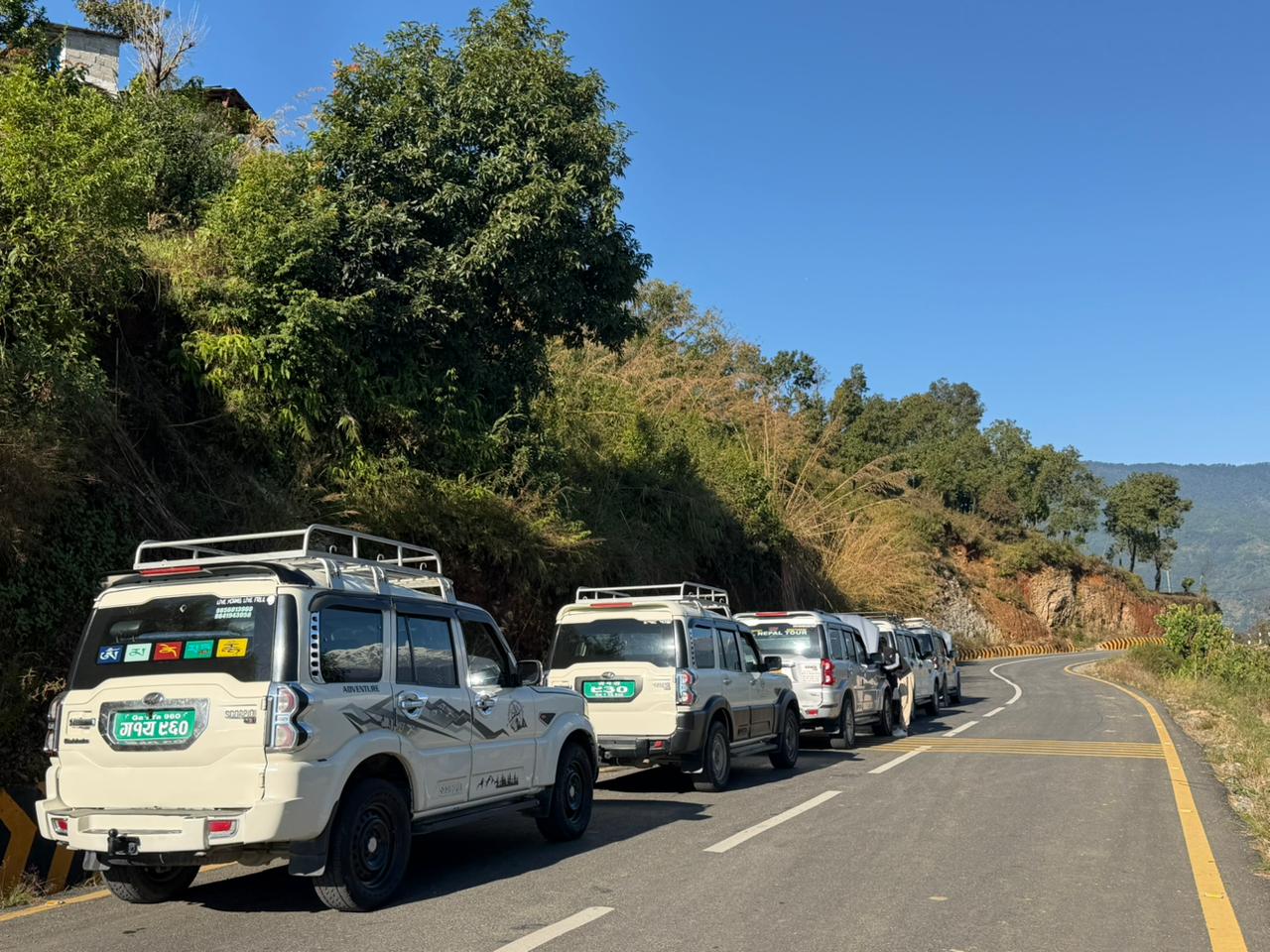
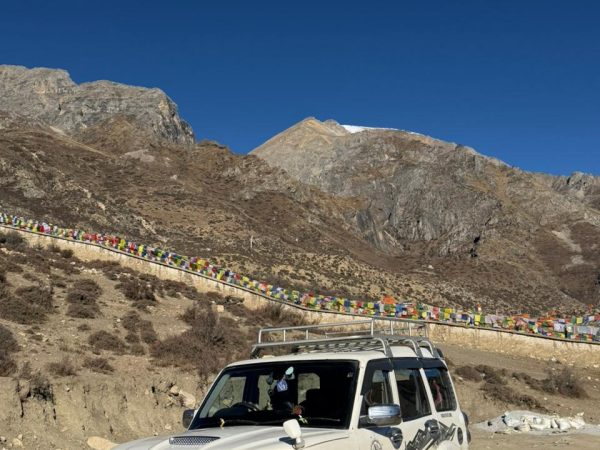
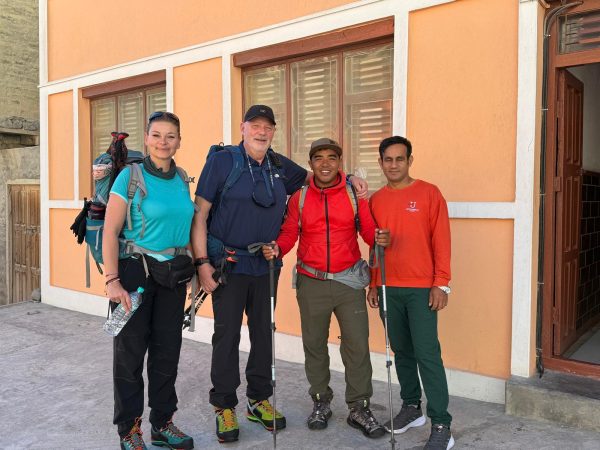
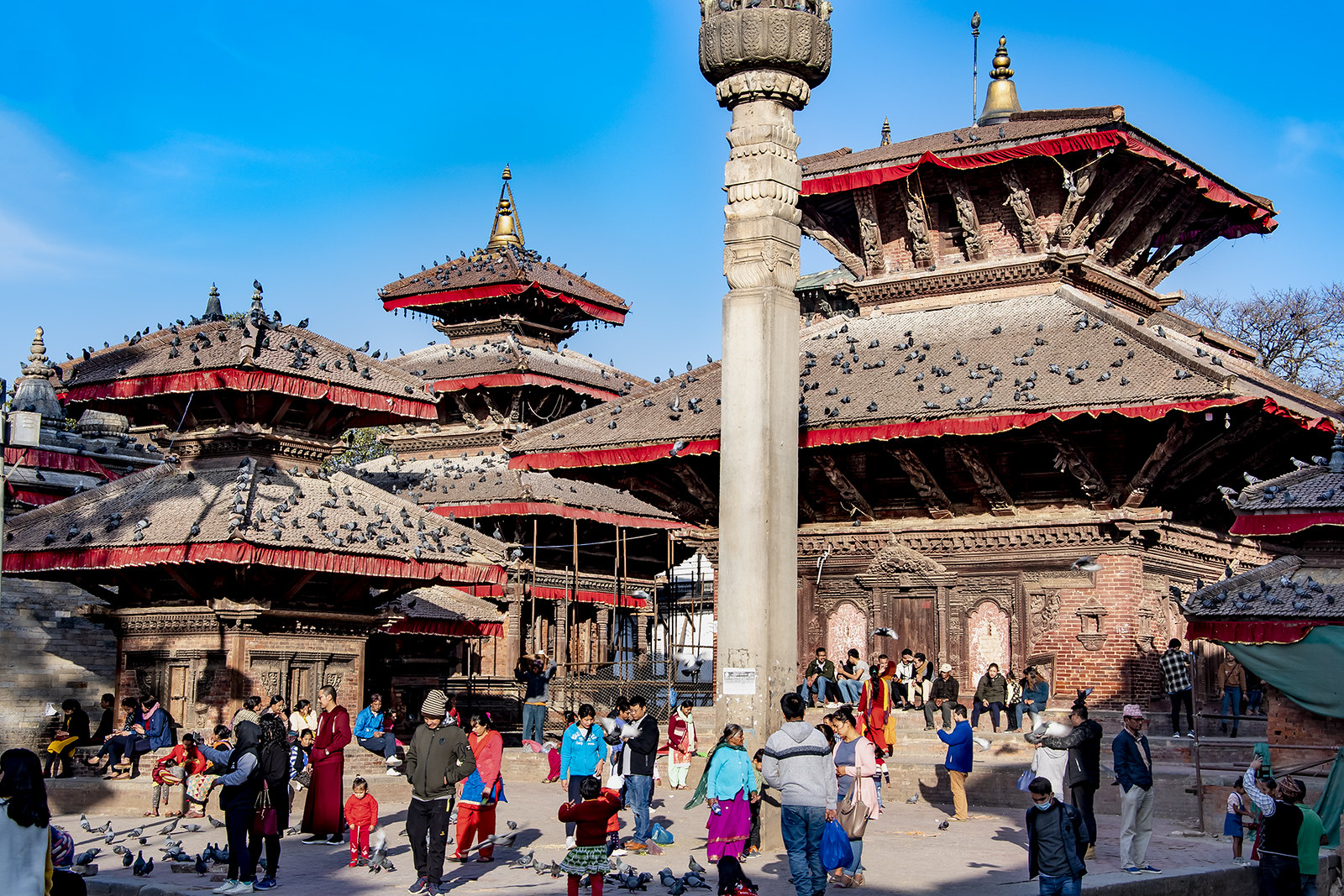
Overview This 12-day tour provides a comprehensive overland jeep tour of Upper Mustang, taking you deep into the heart of this ancient kingdom. Starting typically from Kathmandu or Pokhara, it […]
Duration: 12 Days
Best Time: Spring and Autumn
Trip Grade:
Start from Kathmandu and End to Kathmandu
Min 2 to Max 10 Pax in a group
Meals: Breakfast, Lunch, and Dinner
Accommodation: Tea House
Highlights
Scenic drives: Travels to the world's deepest gorge, quickly, some dramatic changes in
landscapes from lush greenery to barren colourful desert.
Lo Manthang exploration: Spend ample time exploring the ancient world city, including the
royal palace, Thubchen Gompa, Jampa Lakhang and Chode Gompa.
Sky caves and Ancient settlements: Dedicate a full day to visiting fascinating multi-storey sky
caves (like Johng Caves in Chhoser) and ancient village ruins, offering a profound glimpse into
past civilisations.
Cultural immersion: interact more deeply with friendly Loba people, observe their unique
Tibetan Buddhist tradition, and experience their hospitality.
Muktinath Temple: Visit the secret pilgrimage site for both Hindus and Buddhists, known for its
eternal flame, and 108 water spouts.
Marpha village: Explore the charming Apple Orchard village, famous for its apples, apple
Brandy and traditional whitewashed houses.
Panoramic Himalayan views: Enjoy breathtaking, beautiful vistas of the Dhaulagiri,
Annapurna, Nilgiri, and Tilicho peaks along with other Himalayan giants.
Flexibility: The longer duration allows for more flexibility, shorter driving days and more
opportunities for short walks and photography.
Overview
This 12-day tour provides a comprehensive overland jeep tour of Upper Mustang, taking you deep into the heart of this ancient kingdom. Starting typically from Kathmandu or Pokhara, it allows for a more relaxed pace, more in-depth cultural exploration, and better acclimatisation to the high altitude. The journey traverses dramatic landscapes, from deep gorges to arid desert plateaus, culminating in the unique heritage and breathtaking scenery of Upper Mustang, making it an ideal choice for those seeking an unforgettable and culturally rich holiday in Nepal.
In Upper Mustang, participants will discover ancient monasteries and important cultural sites, which are integral to the Tibetan Buddhist heritage of the region. Each stop reveals stories from the past, with local guides sharing insights into the traditions and customs that have endured for centuries. Visitors can also explore the remote villages, where the daily life of the Mustang people unfolds against the backdrop of the stunning landscapes. This cultural immersion, combined with the off-road adventure of a jeep tour, creates a truly memorable experience for travellers who are passionate about discovering new places and learning about ways of life.
The Jeep tour is designed with acclimatisation in mind, ensuring travellers the time needed to adjust their trip to the higher altitude of the Upper Mustang. Wait strategically at stops along the route. People enjoy stunning views while allowing their bodies to adapt. From traversing a rugged landscape to welcoming locals, this itinerary offers a perfect seven-day Comprehensive overland jeep tour of Upper Mustang, taking you deep into the heart of this ancient Kingdom. Starting typically from Kathmandu or Pokhara, it allows for a more relaxed pace, more in-depth cultural exploration, and better acclimatisation to the high altitude. This is dramatic. Landscapes from deep gorges to arid desert plateaus culminate in the historic walled city of Lo Manthang. This Jeep tour attracts adventurers looking to experience the unique heritage and breathtaking scenery of Upper Mustang, making it an ideal choice for those seeking an unforgettable and culturally enriching holiday in Nepal.
A journey through Upper Mustang is not just an adventure; it’s a chance to create lasting memories while connecting to one of Nepal’s most fascinating areas with a mix of relaxation and exploration. Those interested in photography will find countless opportunities to capture the vistas and cultural heritage of this region.
Best time for the Jeep Tour
Spring (March to May) and Autumn (September to November) offer the best weather, withclear skies along with the blossom of a wide range of vibrant created by flora.
Summer (June to August) is also viable as the Upper Mustang is in a rain shadow, receivingless mountain rain. However, the approach roads outside the area can still be affected by themonsoon.
Winter (December to February) is generally too cold and snowy for comfortable travel.
While the Upper Mustang trek is rated as moderate, good physical preparation significantly enhances your enjoyment and reduces the risk of altitude-related issues. And even though it is a jeep tour, maintaining fitness is recommended for your physical and overall health.
Start early: Begin your training programme at least four to six weeks (ideally 2 to 3 months) before your departure date.
Cardiovascular Fitness: Focus on exercises that improve your stamina and lung capacity.
Activities: Brisk walking, jogging, cycling, swimming, hiking, or using an elliptical machine.
Frequency: Aim for three to four sessions per week, gradually increasing duration and intensity.
Strength training: Build strength, particularly in your legs, core and shoulders. This helps with ascents, descents and carrying a day pack.
Exercises: squats, lunges, step-ups (Especially with a weighted backpack), planks, Push-ups.
Hiking practice: The best preparation is hiking.
Terrain: If possible, practice over varied terrain, including hills or stairs, to simulate mountain trails.
Pack weight: Gradually increase the weight of your pack during the training hikes to mimic trekking with gear.
Long walks: Include at least one long walk, 4-6 hours per week, in the months leading up to your trek.
Flexibility and balance: Incorporate stretching, yoga or Pilates to improve flexibility and balance, crucial for navigating uneven trails.
Listen to your body: Don’t overtrain, allow for rest days.
Consult your doctor: Before embarking on a high-altitude trek, it is highly recommended to consult your doctor, especially if you have any pre-existing medical conditions. Discuss high altitude sickness medication options, like Diamox, if considering them.
Responsible tourism / cultural sensitivity guidelines.
Travelling to Upper Mustang offers a unique cultural immersion. Practising responsible tourism helps preserve its pristine environment and rich heritage.
Respect local culture and traditions:
Dress modestly: Especially when visiting monasteries, temples and villages, shoulders and knees should be covered.
Ask for permission: Always ask before taking photos of local people, particularly children who are monks. A namaste and a gesture often go a long way.
Remove shoes: When entering monasteries are private homes, always remove your shoes.
Walk clockwise: Always walk clockwise (to the right) around chortens (stupas), Mani Walls, monasteries, and other religious sites.
Don’t point: Avoid pointing the finger. Use an open hand instead.
Avoid public displays of affection: Be mindful of local customs regarding public displays of affection.
Environmental responsibility
Leave no trace: Pack out everything you pack in. Do not leave any litter on the trail or in villages.
Reduce Plastic Waste: Carrier reusable water bottles and water purification tablets or filters instead of buying single-use plastic bottles.
Conserve resources: Water and electricity are precious resources in this arid region and use them sparingly.
Stay on trails: Do not stray from marked trails to protect the fragile ecosystem.
Support the local economy.
Buy local: Purchase local crafts and goods directly from the artisans or small shops.
Use local services: Your trek directly supports the local guides, porters, houses and transportation providers.
Interact respectfully
Learn basic phrases: A few Nepali words like (Namaste, and Dhanyawad- thank you) will be greatly appreciated.
Engage with curiosity: Show genuine interest in local life and ask questions respectfully.
No unsolicited gifts: Avoid giving candy or money to children, as it encourages begging. If you wish to donate it, do so through local schools or established organizations.
About the Region / History (brief)
Step back in time to the ancient Kingdom of Lo, A land steeped in history and spiritual significance.
Upper Mustang, nestled in the rain shadow of the Annapurna and Dhaulagiri ranges, was historically part of the Ngari region of Tibet. First century, it remained self self-governing Kingdom with its king, also known as the “King of Lo”. The capital of Lo Manthang was a walled city, a vibrant centre of trade and a stronghold of Tibetan Buddhism.
Due to its strategic location on this salt trade route between Tibet and India, Mustang flourished, developing a unique culture, architecture and spiritual practices largely untouched by the outside world. It maintained a distinct identity even after its integration into Nepal in the 18th century, with its monarch continuing to hold a ceremonial role until 2008.
Declared a restricted area by the Nepali government until 1992, Upper Mustang has preserved its pristine Tibetan Buddhist culture, traditional way of life and incredible medieval landscapes. The region’s arid high desert environment with its dramatic eroded cliffs, multi-hued canyons and ancient sky caves tells the story of millennia of geological and human history. Trekking through Upper Mustang is not just a journey through stunning scenery, but a profound encounter with living history and resilient culture, often referred to as the “Last Forbidden Kingdom.”
Safety & Security Information
Altitude sickness
Altitude sickness is a sly monster and can strike anyone out of nowhere. It usually occurs when travellers ascend too quickly or without properly acclimatising and is common once the traveller exceeds 2,500 m / 8000 ft. This usually occurs due to the thinning of the atmosphere with the rise in elevation, as the body lacks oxygen in the blood. Below are some of the signs, symptoms, and preventive/treatments:
Signs of altitude sickness
Dizziness
Nausea
Vomiting
Excessive sweating
Palpitations
Drowsiness
Fatigue
Weakness
Loss of consciousness
Preventive/treatment
The best way to prevent it is by gradual and steady ascending
Warm up by doing exercises and staying fit
Hydrate well
Cover the highest possible altitude on the day of acclimatisation
Avoid intoxications (alcohol, drugs)
To treat altitude sickness, a decline in elevation
Rest well
Have medication advised by doctors
Stay warm
Consume enough warm liquids
Inform your guide or anyone around you as soon as you feel the symptoms
Electricity and water
During the Upper Mustang trek, access to water and electricity might vary depending on the specific point on the trail. Electricity is available in some villages, primarily in the form of solar power or small hydroelectric plants. Most teahouses offer charging facilities for electronic devices in the form of solar and hydroelectric plants.
A key point to remember about power supply is that despite its availability, the power might sometimes be inconsistent due to harsh weather, and there might even be a small charge for powering your devices. In some far-distant regions, power might not even be available, so it is very much recommended that you take a power bank with you. While electricity might incur added costs to recharge mobile phones and other electronic devices. As for water, it is available in different forms like streams and rivers, and many teahouses along the trail also provide boiled water for trekkers. However, it’s advisable for you and every foreign trekker they carry a water bottle with you as your body is not well-adapted to the new water. If you want, you can also carry water purification tablets to ensure the safety of water, especially in remote regions.
Sometimes, on the trail, mineral water bottles might not be available right away, ay with the only choice for local tap water, and to make it suitable for your guts, it is recommended that you rather have some purification tablets.
Communication at Upper Mustang
During the trip, you’ll get access to internet services here in Kathmandu without any hassle, but while on the route or in the teahouse or lodge, you might have to bear an extra charge. With the rising elevation of the trip, the internet gets out of reach, leaving only the phone as a choice.
Talks with fellow teammates will be at least once a day to ensure safety and get the update, but keep in mind that mobile signals might not be available to have many or long talks.
You can also buy a SIM card that costs just $1 from any local communication service operator or mobile phone service centres, for which you might need to provide the following:
1 passport-sized photo and a copy of your passport.
As for the data buying process, the manual comes along with the package of SIM cards.
Travel process, safety guidelines and insurance
Passport and visa
As for the passport and visa, you can get an on-arrival visa at the TIA, and Indian nationals do not require any sort of visa but rather a valid identification document to get to Nepal. As for the nationals needing to have a visa, a visa application is needed with at least six months of validity, a passport-sized photo and visa charges. Citizens of SAARC nations will be granted free visas. Since it’s government-based regulatory work, the policy might change even without advanced notice. So, to be updated, you can visit the site for visa information, CLICK HERE:
All travellers must have travel insurance as situations like natural causes such as landslides, avalanches, altitude sickness and many other unforeseen circumstances might strike out of the blue.
In case of emergencies, an airlift might be needed, which will be covered by your insurance and should be enough to do so.
Extra trip info.
Currencies
($1=130 NPR)
Foreign currencies are not directly valid in Nepal, so you can exchange them in your hotel or at any currency exchange centre. Besides Nepalese currencies, only Indian currencies are valid.
Trip grade, medical fitness, Safety Tips, Health requirement
The Langtang Valley trek is a moderately challenging trek that demands a proficient level of physical fitness and health. To ensure a safe and enjoyable experience, trekkers should consider the medical fitness and health requirements mentioned below:
Medical check-up:
A thorough medical checkup is recommended before embarking on the trek. Individuals with pre-existing health conditions, particularly heart or respiratory issues, should consult health care professionals.
Hydration and nutrition:
Staying hydrated is essential, especially at higher elevations. Trekkers should drink plenty of water and consume a balanced diet rich in carbohydrates, proteins and healthy fats to maintain energy levels.
First aid kit:
Carry a personal first aid kit that includes medications for altitude sickness, pain relief, and any other personal prescriptions.
Mental preparation:
Trekking can be mentally challenging, just as physically preparing yourself for a long day of walking and potential weather changes. A positive mindset and determination are key to overcoming obstacles.
Travel insurance:
It is advisable to have travel insurance that covers tracking activities and emergency evacuation in case of health issues. By adhering to these medical fitness and health requirements, travellers can enhance their experience in the breathtaking Langtang Valley while ensuring their safety and well-being.
Itinerary
If you want tailor-made trip or want to personalize this itinerary, just feel free to contact us. We are always there to help you to make your holiday plan. Contact us
Day 01
Arrival at Tribhuvan International Airport
Upon your arrival in Kathmandu, at Tribhuvan International Airport, you’ll be received by one of our delegates and will be guided to your hotel on a ride, where upon reaching, you can check into your designated room and unwind and get fresh air. Following the refreshment, you can get a SIM card from a general store and acquire data to maintain connectivity while outside of hotel premises and get around to observe local lives while being connected to your people.
You can also try some street delicacies, you can also get around local heritages since Kathmandu is known as the valley of temples, and you can get to see and witness temples and architecture at every nook and corner and alley of the valley. Following the exploration, at the end of the day, you can get to your hotel and enjoy the meal.
Day 02
Heritage sightseeing & permit preparation
On this day, you’ll be free to enjoy time in and around the major attractions of the valley, i.e the world heritage sites like Pashupatinath temple, known for its largest open cremation ground and biggest Hindu temple in the world with hundreds of shivlings, visited by millions of people from around the world every year from around the world.
Apart from that, you can also get to visit Bouddhanath, located just a few kilometres away from Pashupatinath, known for its peaceful and serene atmosphere with chortens, a calming effect with visuals of Tibetan culture and influence even in its delicacies and flavours. The next leg of the world heritage site trip will be Swayambhunath, a world heritage site built on reverence for lord Buddha, several structures related to him and numerous statues, famous for its serene and calm environment, also known as Monkey Temple. It is a must-visit place. You’ll have to walk hundreds of stone steps to get to the top where upon reaching you can get to witness the view of Ktm valley and enjoy the serenity if the vicinity, you can see monkeys alround due to which you’ll need to be extra cautious as they are notorious for snatching stuffs when people get too close. And finally, the Kathmandu / Basantapur Durbar square, known for its ancient architecture and structural engineering, is a marvel and a sight to visit with temples built on Shikhar/Pinnacle style roof, it is a central and very famous hub for visitors where you can unwind and witness ancient architecture which will make you feel like as if you have come back in time. And most importantly, by the end of your day, your permit will be issued for the trip. On this day, you’ll be free to enjoy time in and around the major attractions of the valley, i.e the world heritage sites like Pashupatinath temple, known for its largest open cremation ground and biggest Hindu temple in the world with hundreds of shivlings, visited by millions of people from around the world every year from around the world. Apart from that, you can also get to visit Bouddhanath, located just a few kilometres away from Pashupatinath, known for its peaceful and serene atmosphere with chortens, a calming effect with visuals of Tibetan culture and influence even in its delicacies and flavours.
The next leg of the world heritage site trip will be Swayambhunath, a world heritage site built on reverence for lord Buddha, several structures related to him and numerous statues, famous for its serene and calm environment, also known as Monkey Temple. It is a must-visit place. You’ll have to walk hundreds of stone steps to get to the top where upon reaching you can get to witness the view of Ktm valley and enjoy the serenity if the vicinity, you can see monkeys alround due to which you’ll need to be extra cautious as they are notorious for snatching stuffs when people get too close.
And finally, the Kathmandu / Basantapur Durbar square, known for its ancient architecture and structural engineering, is a marvel and a sight to visit with temples built on Shikhar/Pinnacle style roof, it is a central and very famous hub for visitors where you can unwind and witness ancient architecture which will make you feel like as if you have come back in time. And most importantly, by the end of your day, your permit will be issued for the trip.
Day 03
Kathmandu to Pokhara
Today, after breakfast, you’ll head to Pokhara, a very famous place in Nepal for all kinds of tourists, known for its beautiful lakes and natural wonders. You’ll start your trip by getting into a bus and will be on a highway on the winding paths that cut through the hills full of lush, dense forests the wind and breezes whistle through the woods.
In between the trip, you can have breaks during which you can taste the local fish and delicacies at the hotel, of lunch and freshen up. The trip will be around 6-7 hours. Upon reaching Pokhara, you’ll be met with the wonder of the heavenly environment of the place, no less than heaven, which will leave no stone unturned to amuse you.
Day 04
Drive from Pokhara to Beni, Tatopani
Your journey typically begins with an early morning start from Kathmandu, driving towards Pokhara on the scenic Prithivi Highway. From Pokhara, the road continues west towards Beni, the starting point of the rough off-road section. The drive passes through picturesque villages and rivers. Beyond Beni, the road becomes more adventurous, following the Kali-Gandaki River through an immersive gorge.
Depending on the starting point and road conditions, you will aim to reach Beni or Tatopani for the overnight stay. Tatopani is known for its natural Hot Springs, offering you a relaxing deep soak after a long drive.
Day 05
Drive from Beni/ Tatopani to Kagbeni via Muktinath
Today, the drive continues further north along the Kali Gandaki. The landscape gradually changes from large to more arid as you ascend. You'll pass through villages like Ghasa, Known for its strong winds and the charming Thakali village of Marpha, famous products, apple orchards and local Brandy.
Muktinath is one of the most revered sites by Buddhist and Hindu followers, which will be the via point of our trip, famous for its 108 water spouts where pilgrims go through to wash themselves with the belief of cleansing the soul with blessings of the lord. You’ll also pass through Thakali villages, a community of Nepal known for their vibrant cultural and traditional outfit and their cuisine, known nationwide for its taste and delicacy.
After passing through Jomsom, the district’s headquarters of Mustang, you’ll finally reach Kagbeni, an ancient gateway to Upper Mustang, marked by a police checkpoint where your special permits will be verified. Explore its medieval alleys and ancient monasteries before settling into your lodge.
Day 06
Drive from Kagbeni to Ghami
After completing permit formalities, you will officially enter the restricted upper Mustang region. The landscape transforms dramatically into a surreal, barren desert. It has striking multi-coloured rock formations and deep canyons. The Jeep navigates challenging dirt roads, ascending through villages like Chhusang and Chele. You will cross high passes such as Chele La and Syangboche (Around 3,800 m). Along the way, observe ancient chortens, Mani walls and traditional houses. The day's destination will be Ghami or Tsarang, both significant villages with ancient monasteries and unique architecture offer a glimpse into Upper Mustang's cultural heart.
Day 07
Drive from Ghami/ to Lo Manthang & Exploration.
Today is the culmination of her journey as you drive to Lo Manthang, the ancient walled capital of Upper Mustang. The drive is relatively shorter but equally scenic, passing through the mystical Sarang Village if you stay in Ghami. You will cross another pass, Lo La (Around 3,950 metres), from where you will get your first majestic view of the walled city of Lo Manthang, nestled in the vast open landscapes. Upon arrival, check into your lodge and begin your initial exploration of the fascinating city, wandering through its narrow streets and feeling the ancient aura.
Day 08
Explore Lo Manthang and Chhoser Caves
This day is dedicated to an in-depth exploration of Lo Manthang and its significant surroundings. Within the Walled City, you will visit an imposing royal palace, the ancient Thubchen Gompa, the serene Jampa Lhakang (God Home), and the vibrant Chode Gompa. Each monastery boasts incredible murals, statues and historical significance. In the afternoon, you will take a short Jeep ride north towards Chhoser. Here you will explore the incredible Jhong Cave, A multi-storey cave complex believed to have housed ancient settlements. You might also visit the Nyiphu and Garphu monasteries, carved into Cliff faces, offering truly unique insights into the region's spiritual history.
Day 09
Drive from Lo Manthang to Marpha
We’ll begin with the excitement of leaving the ancient city of Lo Manthang and heading towards Marpha. This journey offers stunning views of rugged landscapes characterised by towering mountains and deep valleys. As we tried, the crisp mountain air fills your lungs and the vibrant colours of the terrain captivate your senses. Along the way, we may encounter local villagers and yaks, adding to the charm of the trek. Arriving in Marpha, known for its Apple orchards and charming stone houses, feels like a rewarding and adventurous day. The quaint atmosphere invites exploration and relaxation as we soak in the beauty of the serene village.
Day 10
Drive from Marpha to Pokhara
On day 10, embark on a captivating drive from the picturesque village of Marpha to the lively city of Pokhara. As we navigate the winding roads, the breathtaking landscapes of the Annapurna range unfold before us, with terraced fields and charming local villages dotting the routes. The Crisp Mountain Air will be invigorating, and the sight of the colourful prayer flags dancing gently in the breeze will be a spiritual touch to our journey. As we approach Pokhara, the serene Phewa Lake emerges shimmering beautifully against the backdrop of lush hills, signalling the end of a memorable right, steeped in natural and cultural wonders.
Day 11
Drive or fly from Pokhara to Kathmandu.
On the final day. You will either take a scenic flight, a quick 25-minute journey or a comfortable tourist bus or private car, approximately 6 to 7 hours from Pokhara back to Kathmandu. This right offers stunning aerial views of the Himalayas. Well, the drive allows you to enjoy the countryside one last time. Upon arrival in Kathmandu, you can choose to transfer to the airport for your onward international flight or extend your stay to explore the capital city's cultural heritage.
Day 12
Farewell/Departure
On the final day of your journey, we will focus on departure in farewells. Participants will have the opportunity to reflect on their experiences, share memories, and exchange contact information before parting ways. We will also provide essential information regarding transportation arrangements to ensure a smooth transition home. It's a chance to celebrate the connections made during the trip and to look forward to future adventures.
Inclusions
What's included
Permits: All necessary trekking permits, including the Upper Mustang restricted area
permit (RAP) and the Annapurna Conservation Area Project (ACAP) permit.
Expert trekking Team: A highly experienced licensed English-speaking trekking guide
and porters (1 porter for every two trekkers, carrying a maximum weight of 15 to 20 kg)
to ensure a safe and enjoyable journey.
Accommodation: All nights of accommodation as per the itinerary:
○ Standard hotel twin-sharing basis.
○ Clean and comfortable Tea-houses/lodge accommodation during the trek (Twin
sharing basis with common bathroom in most places)
Meals: Full board meals (Breakfast, lunch and dinner) during the entire trekking period in
Upper Mustang. Meals in Kathmandu and Pokhara (breakfast only).
Transportation:
○ All necessary ground transportation is as per the itinerary. (e.g., Kathmandu to
Pokhara, Pokhara to Kagbeni, Jomsom to Pokhara, Pokhara to Kathmandu by
comfortable tourist bus or private vehicles)
○ Internal flights ( Pokhara-Jomsom-Pokhara ) if the itinerary includes flying to
Jomsom.
First aid and safety: A comprehensive first aid kit carried by your guide along with basic
medical supplies, emergency assistance and coordination in case of a medical
emergency (Note: rescue costs are excluded)
Trekking essentials: Applicable government taxes, service charges, official expenses,
staff wages, insurance and equipment for your crew.
What's not included
International flights: Airfare to and from Kathmandu, Nepal.
Nepal visa fee: Obtainable upon arrival at Kathmandu Tribhuvan International Airport.
Travel and rescue insurance: Mandatory comprehensive travel insurance that covers
emergency medical treatment and high-altitude helicopter rescue.
Personal expenses: Snacks, beverages, alcoholic and non-alcoholic. Hot showers, laundry services, charging electronic devices, Wi-Fi access fees and any other personal expenses.
Meals in Kathmandu and Pokhara (except breakfast): Lunch and dinner in Kathmandu and Pokhara.
Tips: Customary
Optional activities: Any activities not explicitly mentioned in the itinerary. (e.g., Horse riding in Lo Manthang. Specific monastery entrance fees are not covered by permits.)
Extra nights: Accommodation costs for any extra nights in Kathmandu or Pokhara due to early arrival date, late departure or itinerary changes beyond the tour operator's control (e.g., flight delays/cancellations).
Unforeseen expenses: Costs arising from flight delays or cancellations, natural disasters, political disturbances or other events beyond the operator's control.
Tips/Gratuities: Recommended tips for your guide, porters, and trekking crew (customary and political disturbances, or other events beyond the operator's control.
Frequently Asked Questions
1. Is the Jeep Tour comfortable?
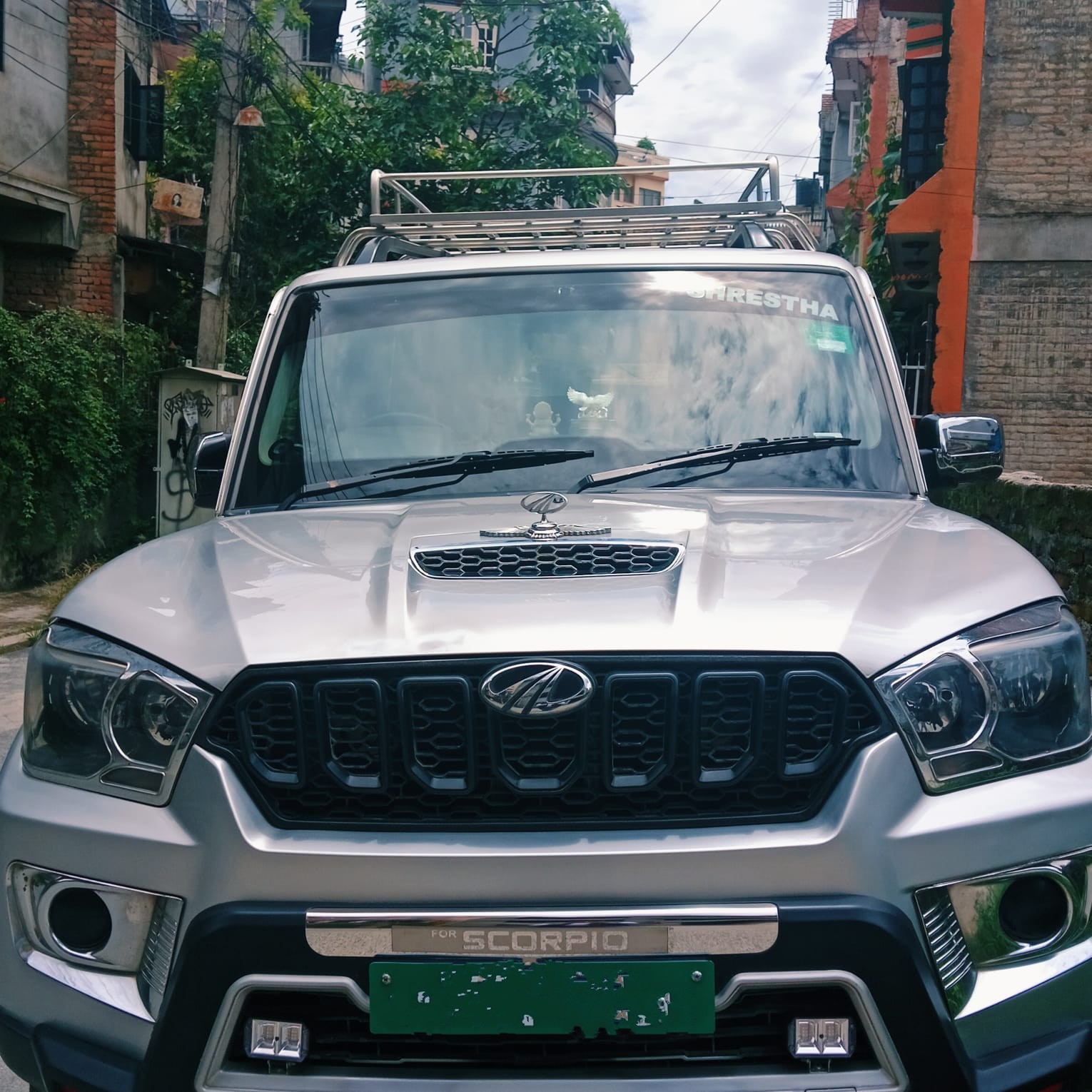
While it's good for 4WD, the roads in Upper Mustang are mostly rough gravel and dirt tracks.
Expect a bumpy but adventurous ride. The comfort level is basic, and improves, especially in
upper Mustang, and they provide a warm bed and meals.
2. What are the group size requirements for permits?
A minimum of two foreign nationals are required to obtain the Upper Mustang restricted area
permit. Solo travel is not allowed.
3. Can I join a group tour, or do I need a private jeep?
Both options are available; you can join a fixed departure group tour, which can be more
cost-effective, or arrange a private Jeep tour with a customised itinerary.
4. Is it safe to travel by Jeep on these roads?
Reputable tour operators use experienced drivers and well-maintained 4WD jeeps. While the
roads can be challenging, safety is a priority. Road conditions can vary, especially during the
monsoon, so trust your operators to have judgment.
5. What kind of foods will be available?
Teahouses' menus as generally limited but offer stable Nepali and Tibetan dishes like Dal Bhat,
momo, thukpa, Fried noodles, and basic continental options. Vegetarian options are widely
available.
6. What about communication and connectivity?
Mobile data coverage is sparse in Upper Mustang. Some lodges might offer Wi-Fi, often
satellite, for a fee, but it can be slow and unreliable. It's an excellent opportunity to disconnect
and immerse yourself.
7. Is it possible to customise the itinerary?
Yes, most trekking agencies are flexible and can customise the itinerary to your preferences,
adding extra days for acclimatisation, additional exploration or extending your stay in specific
locations.
8. What is the altitude like, and how can I prevent Altitude sickness?
You will be staying at elevations between 2700 metres and 3800 metres, with drives up to 4,200
metres. To prevent altitude sickness, stay hydrated slowly, avoid alcohol and inform your guide if
you feel any symptoms. The seven-night, eight-day itinerary allows for more gradual
acclimatisation than shorter trips.
9. Is there any cultural etiquette to be aware of?
Yes, respect for local customers. Always walk clockwise around Chortens, Mani Walls and
monasteries. Ask for permission before taking photos of people dressed modestly, especially
when visiting religious sites.