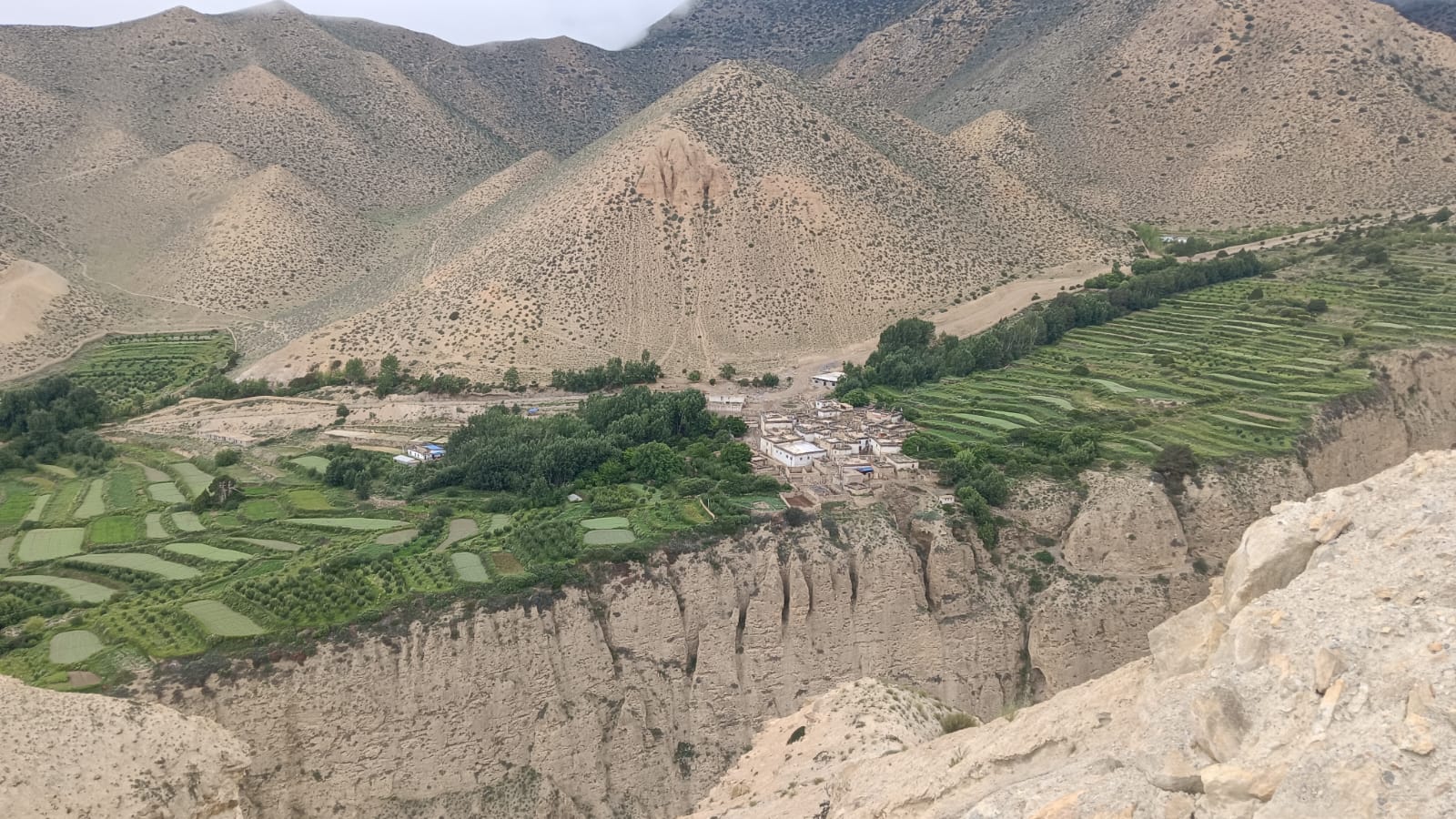
What is the best time for the Upper Mustang Trek? The region beyond mountains, the rain shadow region and the place where you can trek even when the whole nation is drenched in the rain of the monsoon.
This is a blog about the best time to visit the “Forbidden Kingdom” of Nepal.
Upper Mustang, a place unique in every aspect, from culture to gastronomy, a place “Beyond the Mountains” that feels like a different world due to its evolution of cultural uniqueness for survival.
This is a trek that every trekker should have in their checklist and bucket list who wants to visit Nepal, then only they’ll get to know more than mountains, the evolution of culture and life in a place where every gasp of breath feels like a reward to be earned.
Where the weather is unpredictable, where pleasant morning weather can turn windy and harsh at any moment and from hot to bone-chilling cold in a few minutes.
This right here today is more than just a travel blog; it’s a story of a civilisation that originated, evolved to adapt and survive.
This is the story of the Upper Mustang region.
But before the season, why not talk about the highlights, something you have yet to see on the Upper Mustang Trek?
Highlights
Jomsom: The Gateway of Upper Mustang
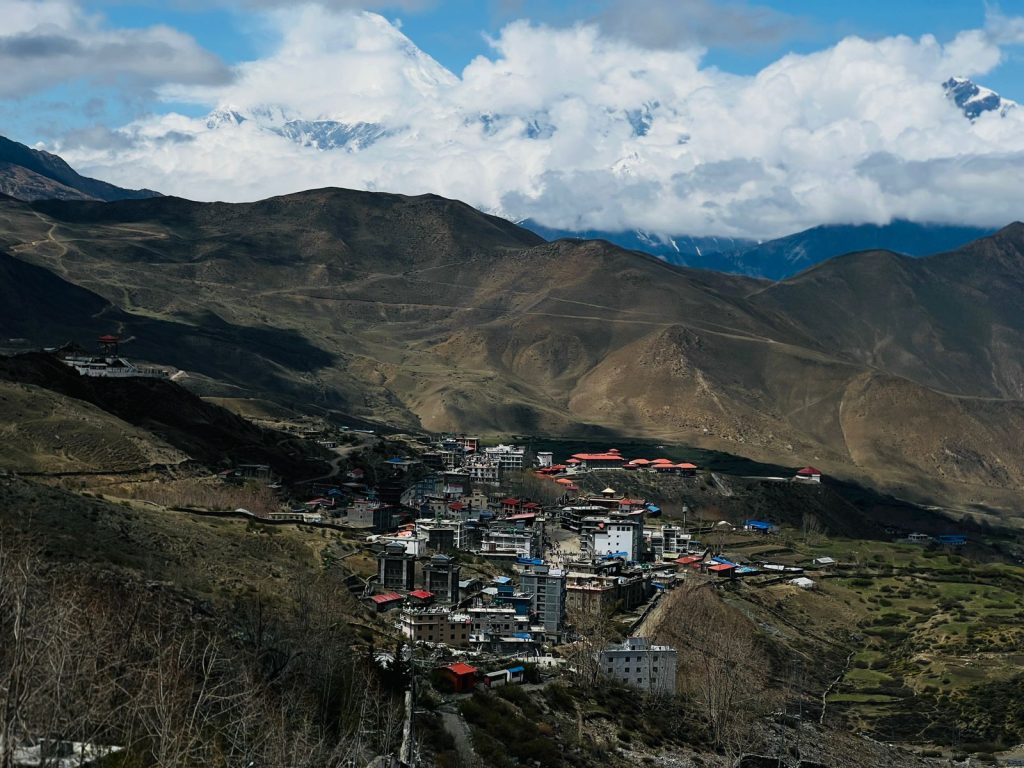
Let’s start with the very gateway of the Upper Mustang Trek, Jomsom.
It’s the very starting point of the trek, where you usually get to by flight, which is an adventure in itself by the w. If you’ve usually had flights above the ocean only and not in between and above the mountains, it can be a kinda scary, thrilling and unique feeling at the same time, as it’s the windiest town in Nepal.
As for Jomsom, it’s a small hub of the Thakali community people and a pro tip for you if you’re flying, do it early cause the afternoon winds in Jomsom are no joke, which during the wind even gets the plane grounded.
Kagbeni
This place gives people a movie kinda thrill and vibes, and even a feeling of travelling back in time as the region’s residents are mainly.
Made from mud-brick along with the alleys, with the addition of the Buddhist chortens.
The Kali-Gandaki and Jhong rivers are kinda its junction below where it is sitting, and this is the point where your Restricted Area Permits are checked.
Once you’re beyond the yellow sign, your foot is officially in the “Forbidden Kingdom” meaning you’re now on for the Upper Mustang Trek.
The Kali Gandaki River Gorge
Besides this riverbed, you’ll be walking for a long time, and by the way, this is technically the deepest gorge in the world with two different snowy giants, Dhaulagiri and Annapurna, standing guard side-by-side.
If you keep yourself aware of the vicinity, then you might get a chance to catch a glimpse of the Saligrams, the ancient black stones with
Fossils a million years old trapped inside them, which are geological history in themselves, and they are unique, beautiful and rare.
You can keep it as a memento, but be aware not to have it in large quantities, as the regulation of Nepean forbids the transportation.
Lo Manthang: The Walled City of Upper Mustang
It’s an ancient, unique settlement where people used clay and stones to build walls for protection. Getting up to the Lo Manthang is itself a feeling of climax of the Upper Mustang Trek, but reaching the white-walls feels more accomplished.
Inside those white walls, life revolves around the Place and massive monastery of Jampa Lakhang, quiet, sacred and with an incredible sense of isolation as if it has cut out the outer world of worldly pleasure.
Chhoser Cave and Monasteries
The highlight in here doesn’t stop at one; when you finish adoring one, another is waiting for you. This is a region of hidden civilisation and a forbidden kingdom, meaning there might be numerous unexplored artefacts, caves and more to dig into parts of civilisation.
Just like that, the “Chhoser Cave” is one of them.
You’ll need a sort of jeep ride or maybe a horse ride from Lo Mnathang to get to the cave of Shila Jhong, a five-story apartment-like structure carved out of the cliff directly that comprises multiple compartments. These compartment structures of the cave were built with the purpose of staying safe from invaders centuries ago.
Luri Gompa
It’s another beautiful structure of architecture representing the culture and heritage of a community and region during the Upper Mustang Trek.
The Luri Gompa is in the Eastern part of the Mustang district. It’s a Gompa, but it looks like more of a “Cave Cathedral”.
Alongside the Gompa, the best and finest example of the Himalayan art and architecture is these Murals in existence, which are still in the best-preserved form.
It’s kinda like a detour, but it’s nonetheless one of the most spiritual points of the trail.
Muktinath Temple
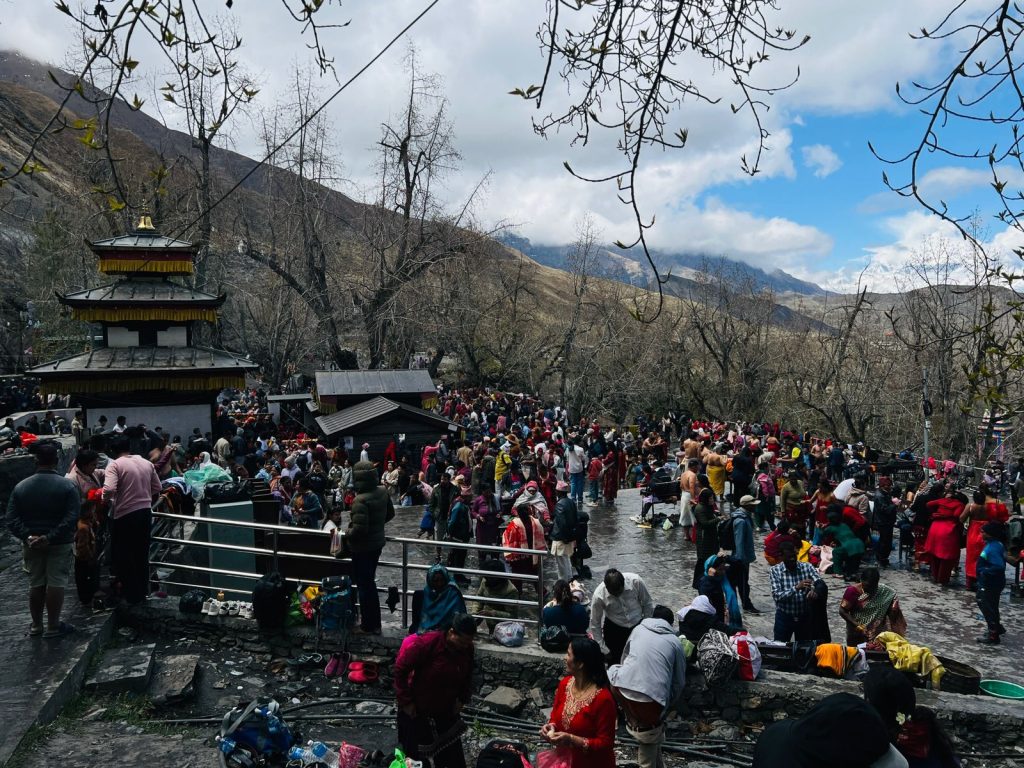
And obviously, something that can’t be forgotten is the “Muktinath Temple”, one of the highest altitude shrines in the world.
A sacred spot for followers of both Hinduism and Buddhism, famous for its icy, chilling water from the mountain coming out in 108 spouts and an eternal flame in the vicinity, with a belief that the rinsing from the 108 spouts cleanses the soul and sins of a lifetime.
Upper Mustang: Weather and Temperature
So whenever and wherever you plan to visit any corner of the world, the first and foremost thing is to look for access and customs in there, but alongside that, the weather and time to visit are other most important parts to be concerned about, because if you are not well familiar with and knowledgeable about the weather situation in foreign land than the trip can go south any moment.
While other major and renowned trails like Annapurna and Everest regions get slick and slippery often unsafe for the trekking and climbing activities with rain and several issues from it acting as roadblock for the trek but the Upper Mustang region being a rainshadow area the rainfall and it’s related issues are minimal concern but stil there several points you need to remember and take into consideration before you undertake it and know about the seasons and weather for the best time to do the Upper Mustang Trek. So, let’s begin.
Spring (March-May)
This season of Spring is considered one of the prime and peak seasons for a reason. The winter snow had just melted from the passage, and the skies were incredibly sharp and crisp, offering a deep, high altitude blue sky only you can see in the Himalayas. This is also when the. The Tiji festival takes place in Lo Manthang. It is a three-day spiritual spectacle of masked dances with ancient rituals that bring the whole forbidden kingdom to life.
The temperature of the weather around this time is pretty descent around 15-20°C to -2°C to 4°C making it one of perfect time.
It’s one of the peak seasons on the trail, so expect to share the teahouses with plenty of fellow trekkers.
Summer/Monsoon (June to August)
This is something special and unique about this region. You know why?
Because it’s not just summer. It’s about to rain. While the whole other region gets filled with clouds in the sky and rain on the trails and leeches on the green grass of the grounds of trekking trails, this region stays dry, free of rain, dirt, mud, slippery roads and leeches as it is a rain shadow area.
The peaks above 8000 meters block the clouds on the boundary line, keeping the region completely dry, so it makes this destination perfect even in the monsoon season and also for you to adjust your schedule if you have time only to travel to Nepal during this season, which gives you a perfect opportunity to enjoy even in the monsoon season.
If you want some warmth on the mountain than summer is for you as the routes can be seen grasping the green, bringing tie tranquility backa bitt when you drop a bit of elevation. The temperature during this time is pretty warm as it’s warmest time of the year ranging between 20-23°C which is average high and around 8-11°C which is average low.
The only downside you might have is the flight delays, potentially or the muddy roadblocks on your way from Pokhara to Jomsom or else everything is just fine, cherry on top.
Autumn (September-November)
This season is kinda like a golden hour of the seasons in a poetic and also in a literal way, as the trees shed leaves and they scatter everywhere, creating a brown layer of leaves on the ground, even if the trees are bare.
The sky is clear, temperatures are just fine, which makes it good for you to be comfortable in your choice of outfit and move around easily.
The mountain ranges and peaks are crystal clear and crisp, making it a beautiful and perfect time for photographers. The sun is warm for cold drinks but still cool enough for you to sip on a warm coffee.
The temperature even in broad daylight only spikes up to 10°C (50°F) in high-altitude places like Lo Manthan, generally, whereas around lower elevation places like Kagbeni, the temperature rises sit higher around ranges of 15- 20°C, which makes it warmer compared to Lo Manthang.
So even though your trip of Upper Mustang Trek remains unaffected by monsoon and is best during almost all of the time, Autumn being one of the best times to visit Nepal, you can undertake the Upper Mustang Trek as your endgame of the trip while enjoying the nationwide trip as a via point to Upper Mustang.
Winter (December-February)
While trekking in winter (December-February) is extremely rare in Himalayas as the temperatures are very chilly and biting as the temperature in these high altitude drop even lower to -20°C and also the local migrate to lower levels to escape cold locking their houses and teahouses which makes it like a ghost town and also another reason to avoid this season if possible is due the heavy snow mass blocking the high passes.
As for the “Forbidden Kingdom”, the winter is beautiful, frozen silence, and despite the label of the rainshadow area, it still snows due to the high altitude, even when the air is blocked by two 8,000m giants from both sides. Because the air is bone dry, the snow is more like a powdery form, the trails will be slippery, but the night sky will be as sharp as diamonds.
Upper Mustang Trek: A perfect escape
So what usually happens is the majority of people around the world who plan on travelling to the Himalayan nation of Nepal and willing to see the mountain from upclose views and feel the culture of mountains often don’t get time from their day to day worklife and have to be very picky on time and spot and sometime their holiday endup during the off-seasons in Nepal leaving them only the seasons with trail full of rain-washed, low visibility, slippery and unsafe trails to walk.
In such a case, the Upper Mustang Trek becomes a perfect escape trip to step foot onto.
Being a rain-shadow region, the Upper Mustang trek region barely receives rain even in the off-season, with trails dry and intact for walking, and the absence of rainy clouds makes the visibility and weather clear even when the air is chill.
As for the teahouses and accommodations, unlike the famous routes, this region does not close shops and teahouses in the off-season like the mainstream routes and is also less crowded, which means you will have most of the teahouses by yourselves.
Whether you’re travelling by yourself with just the company of a guide or be it small circle of your friends or family, this place can be one of the perfect escapes for you.
So, keeping all those factors into consideration, this package of Upper Mustang Trek is a perfect destination for those people who want to escape from the mainstream routes and enjoy some peaceful and less-crowded trails in solitude and deep nature.
Challenges for the Upper Mustang Trek
Challenges during the trek come in different forms. From climatic, linguistic, cultural shocks to personal habits and many more.
But the major challenges here are the comfort; if you are someone who seeks, needs and moves around comfort on an everyday basis in life, then the Upper Mustang Trek might be a tough challenge for you.
From accommodation availability to amenities, if you didn’t prepare yourself well in every aspect, then even basic work feels like a challenge in every step.
Get yourself durable boots, trekking poles, thick gloves, snow goggles and a muffler to protect yourself from harsh weather.
Since teahouses are usually closed and only a few of the operate in winter, the environment inside the teahouses might be very chilly and unwelcoming. As a result, you need to stuff some warm clothes for better layering to be safe from the cold.
As for other services, amenities like Wi-Fi, hot showers, and sometimes even basic amenities are hard to find as the water supply pipes get easily clogged from water, leading to a water crisis, and the telephone services, along with the internet,s might also get out of order due to power outage from harsh winds of winter.
So it’s necessary to have a company of well-knowledged and experienced local guides if you want to travel.
The Tiji festival: Grand celebration in Upper Mustang
The three-day Tiji festival, a festival of hope for peace and a new world, through which acts and performances demonstrating the act of the legendary deity saving the region of Mustang from malevolent creatures are shown.
The time around this period of Upper Mustang Trek too is very crisp, and vistas are visually striking too.
Monks from the locality, too, are seen performing rituals and classical dances in ceremonial masks and colourful costumes representing the legend and culture,e where several hundred people are seen trekking for several days to get just to participate in the rituals.
Trekkers who have participated in the Tijij festival have often described the act as an unforgettable experience of life.
Tips to Remember
The afternoon wind
When you’re in Mustang, the wind starts to howl around midday and goes on till the sun goes down, so it’s better if you start your trekking around 7 am, which will give you a significant portion of time to get to your next destination before the winds start to send chills down your bones and act like a wind tunnel.
The “Left-side” Norm
Mani walls and Chortens are the highlight in here, and not just a highlight of the Upper Mustang Trek, they are of significant cultural value and carry traditions with them, which is a subject to be honoured and respected, which is why you should know certain norms around them.
For instance, walk past the Mani walls keeping them to your right whenever you encounter them, and the same goes for prayer wheels, spin them in the clockwise direction and use your right hand to spin them- never the left.
Stay well-hydrated.
You are in a zone where the air is bone dry, and it’s thin. You lose moisture even just by breathing and dehydration is the fastest way to trigger altitude sickness during the Upper Mustang Trek. Try to bring three to four litres of water every day and also avoid the plastic bottles as much as possible, as they are an environmental nightmare and bring a usable water bottle with Steri-PEN or purification tablets.
Cash is king
When in capital things go well and smoothly with transactions with the help of the internet, but at high altitudes, the factor breaches the online transaction, no atm points for cash withdrawals, so you need to keep in mind the fact that cash controls everything from petty expenses to big budget expenses.
So make sure you withdraw enough cash when you’re in major cities like Kathmandu or Pokhara, as it helps on the trail during you Upper Mustang Trek.
Protect your skin and lungs.
Even if not like a regular hot sand dusty desert, Mustang is dry with chilly sand surrounding and almost no moisture, which can make your face and throat dry and itch,y along with eyes stripping your skin of the moisture.
So remember to protect yourself using the right gear, measures and essentials.
It’s cold and windy on a day, but the scorching sun is still there, and it’s brutal, so remember to take a high-SPF sunscreen because it’s not just gonna be dry air but hot sunrays too, oo even if it feels cloudy.
The “Original Passport” Requirement
The core element of your trip, “passport”, is the most essential document, and it’s needed for all sorts of paperwork, from SIM card purchase to permit issuance. You’ll need the original one; Xerox won’t back the work. So, before you think of directly starting the trek from the point of trek start, plan your one full business day in Kathmandu before you embark on the trek.
Layering is vital
Usually, what happens is, when people go on a trip even with readiness and preparation of everything they tend to do minor faults and mistakes while walking.
The weather up in the high altitude during the Upper Mustang Trek is obviously colder so to avoid people seem usually wear very thick clothes to escape the wind and with increasing workout of the body and from the generated heat the of the body due to lack of circulation starts to sweat profoundly causing fluid loss and affecting body temperatures as the temperature in body starts to drop as the sweat starts to reduce the temperature which in higher altitude is more of a serious health threat.
So using right layering technique can help adjust with the inclination, weather and temperatures.
Use thermal base layers, a well-rated down jacket for the altitude and windproof outer shell
So incase of body temperature fluctuation you can adjust with the layerings accordingly.
Note: Do not forget to safely, pack your personal medication adequately and essentials as weather fluctuations might affect them in high altitude.
Altitude sickness and tips
The trip goes above several thousand meters of sea level, which means the oxygen deplets with every steps and puts pressure on body leading to Acute Mountain Sickness (AMS) or aka Altitude Sickness when exceeded 2,500m generally.
If you’re an experienced trekker you might have advantage to deal with it but as a first time trekker to high-altitude oftentimes many trekkers get into difficulty on the Upper Mustang Trek due to the ruggedness of the trail and harsh nature of the region.
Even if you’re frequent and experienced trekker you might get altitude sickness if you dont’ follow the acclimatisation rule properly and prepare your body and mind well as altitude sickness can attack anyone despite the physical and heath status and even withthe tag of frequent trekker and climber.
I’ve written some signs and measure to deal with Altitude sickness/ Acute Mountian Sickness (AMS):
Signs
- Fatigue
- Drowsines
- Breahtlessness/ heavy breathing
- Disorientation
- Nausea/vomitting
- Nose and gum bleeding
Preventive measures
- Acclimate before ascending
- Hydrate well before starting
- Avoid caffeine and intoxication
- Get enough sleep and exercise
- Workout on cardiovascular endurance
Treatments
- Slow down as soon as you detect signs
- Inform the person near to you
- Stop ascending immediately
- Rest and gradually descend, don’t rush down
- Get oxygen supply
FAQ’s
Some of the important questions travellers often seek to answer are as follows
Can I charge my electronic accessories during the Upper Mustang Trek?
Yes, most teahouses have solar charging, though they usually charge a small fee. NPR 200 to 500.
Is there Internet access in Lo Manthang?
Yes, many lodges now have WI fi, but it’s weather-dependent and can be slow during peak hours.
What should I do if I feel a headache?
Tell your guide or anyone near you immediately if you start to detect any signs of elevation sickness or feel uneasy, drink water and do not ascend any further until symptoms pass.
Are there laundry services on the trek?
Only in Jomsom. In a smaller village, you will be washing your socks in a bucket of cold water
What is the rule of tipping guides and Porter?
Tipping is generally customary in Nepal rather than mandatory, and is considered a humble gesture towards the people who gave you company.
Can I get hot showers on the trail during the Upper Mustang Trek?
Yes, you can, and most of them are powered by solar or gas heaters, which might cost you somewhere around 200-500 NPR extra as a fee.
What kind of currency should I obtain?
Nepalese currency, NPR, is used, and you should allot the budget sufficiently for local transactions as ATM’s in trail are rare outside of Jomsom and hardly any form of digital payment is accepted
What about the drinking water during Upper Mustang Trek?
Taps are available very often, but as an outsider, it’s advised for you not to drink it directly as it might not sit well with your digestive system, so you should buy bottled water, use purifier tablets or fill your personal metal tumblers, as plastic bottles too are best if avoided.
Will I have a reliable phone reception during the trek?
You can get a decent level of reception till the settlement hub or last point before hitting the trail near Jomsom, but it gradually starts to fade or almost becomes nonexistent once you’re on the icy trails.
What type of clothing layers should I pack?
You should pack versatile layers, including a thermal base layer, a warm fleece or down jacket, and a windproof/waterproof outer shell.
Should you take the Upper Mustang Trek trip?
Absolutely, without a shadow of doubt form my personal point of view.
If you want to visit the Hiamlayan nation of Nepal and want to see and immerse yourself into the act of indulging into some of the raw and down to Earth epxerineeand activities while gettign to know the very typical lifestyle and culture in the high regions even in the off-season than this trip right here is made for you.
Conclusion.
Upper Mustang trek is challenging and changing. With the new road and 2026 permit updates, the Forbidden Kingdom is becoming more accessible, but its soul remains intact. The regulations might be changed, but the culture is still the same, and nature still feels refreshing. It is a trick that requires respect, preparation and a bit of dust in your teeth, but the reward is a glimpse into a wall that feels completely untouched by time.