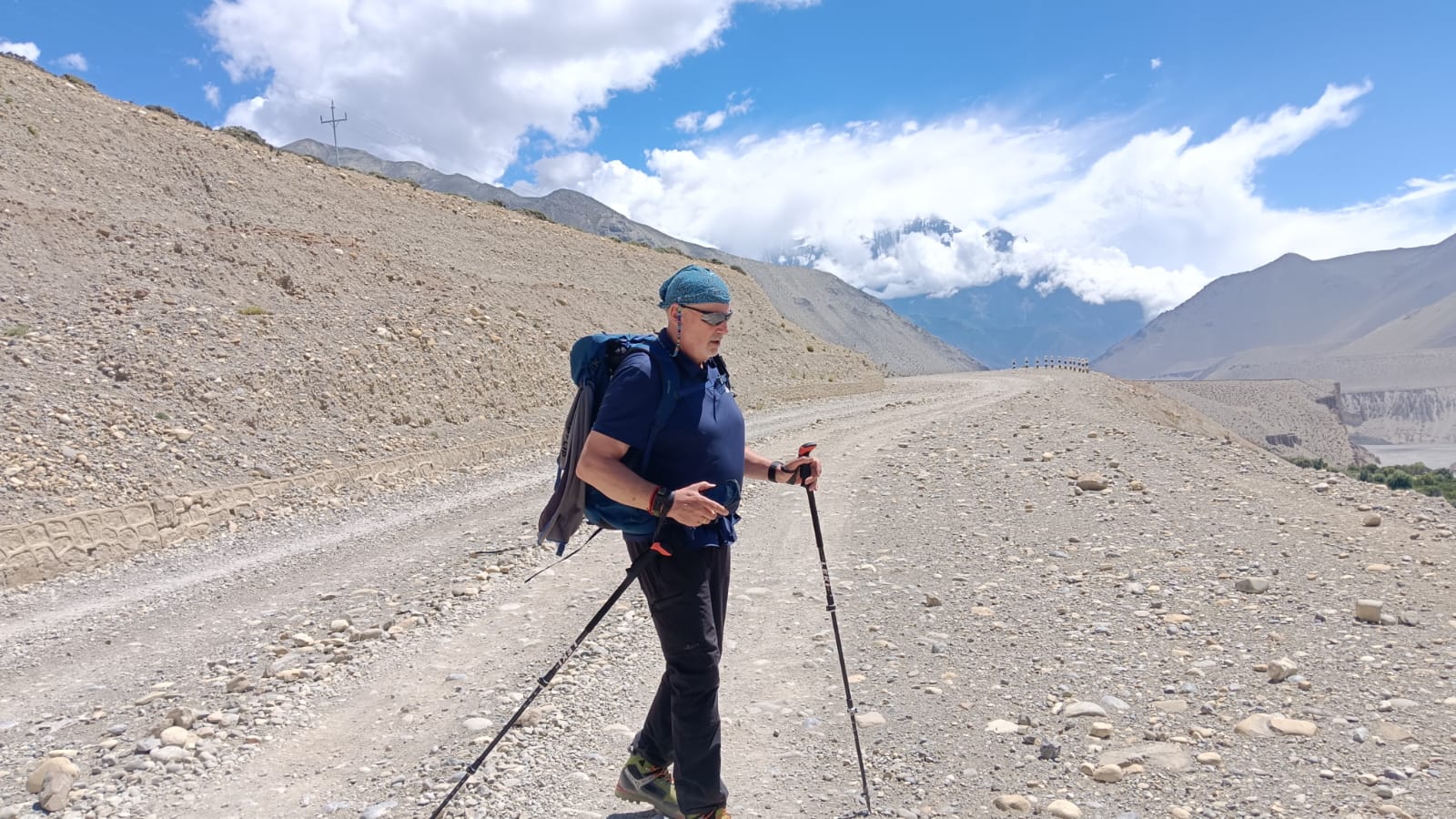
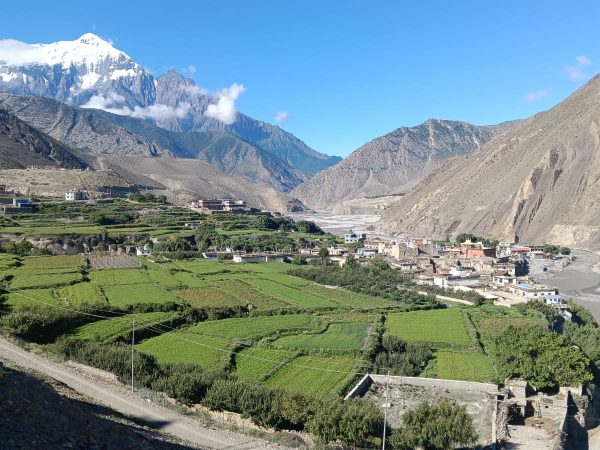
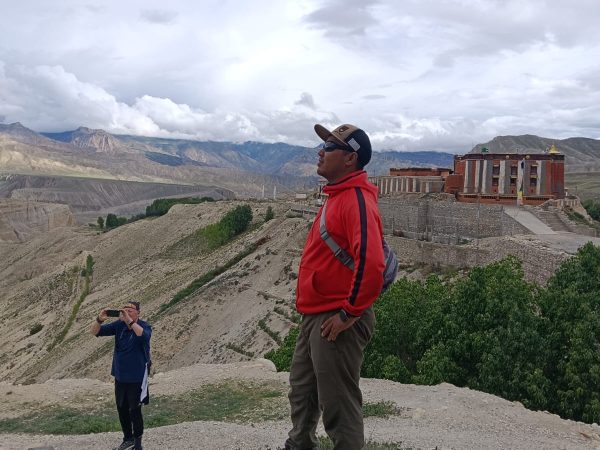
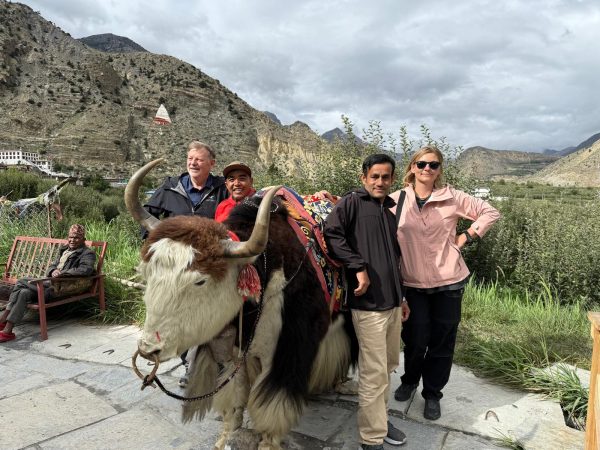
Overview The Upper Mustang Trek is one of Nepal’s most extraordinary high-altitude adventures, taking you into a remote, culturally rich region that was closed to outsiders until 1992. Often called […]
Duration: 17 Days
Best Time: Spring, Summer and Autumn
Trip Grade: moderate
Start from Kathmandu and End to Kathmandu
Min to Max Pax in a group
Tourist Bus/Flights
Meals: Breakfast, Lunch, and Dinner
Accommodation: Tea House
Highlights
Lo Manthang Exploration: Discover the walled medieval capital with its royal palace, ancient monasteries including Thubchen and Jampa Lakhang, and interact with the royal family
Tibetan Buddhist Culture: Experience authentic Tibetan traditions, colorful prayer flags, mani walls, chortens, and spinning prayer wheels throughout charming villages
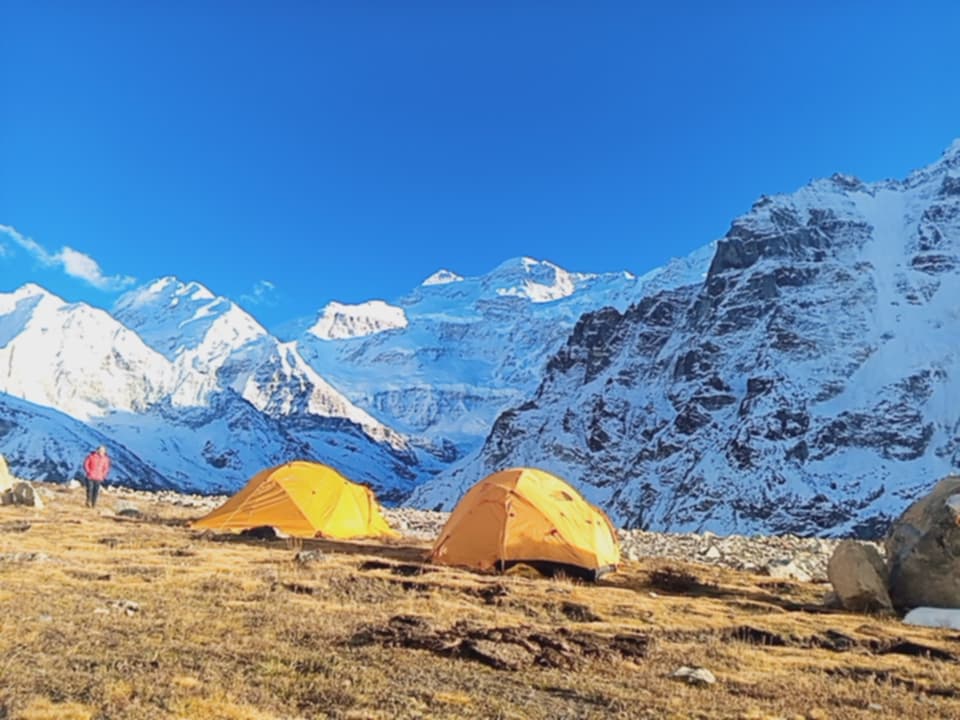
Dramatic Landscapes: Trek through unique desert-like terrain with red, brown, and gray eroded cliffs, deep canyons, and stark natural beauty unlike anywhere else in Nepal
Ancient Sky Caves: Marvel at thousands of man-made caves carved into cliff faces, some dating back 2,000-3,000 years
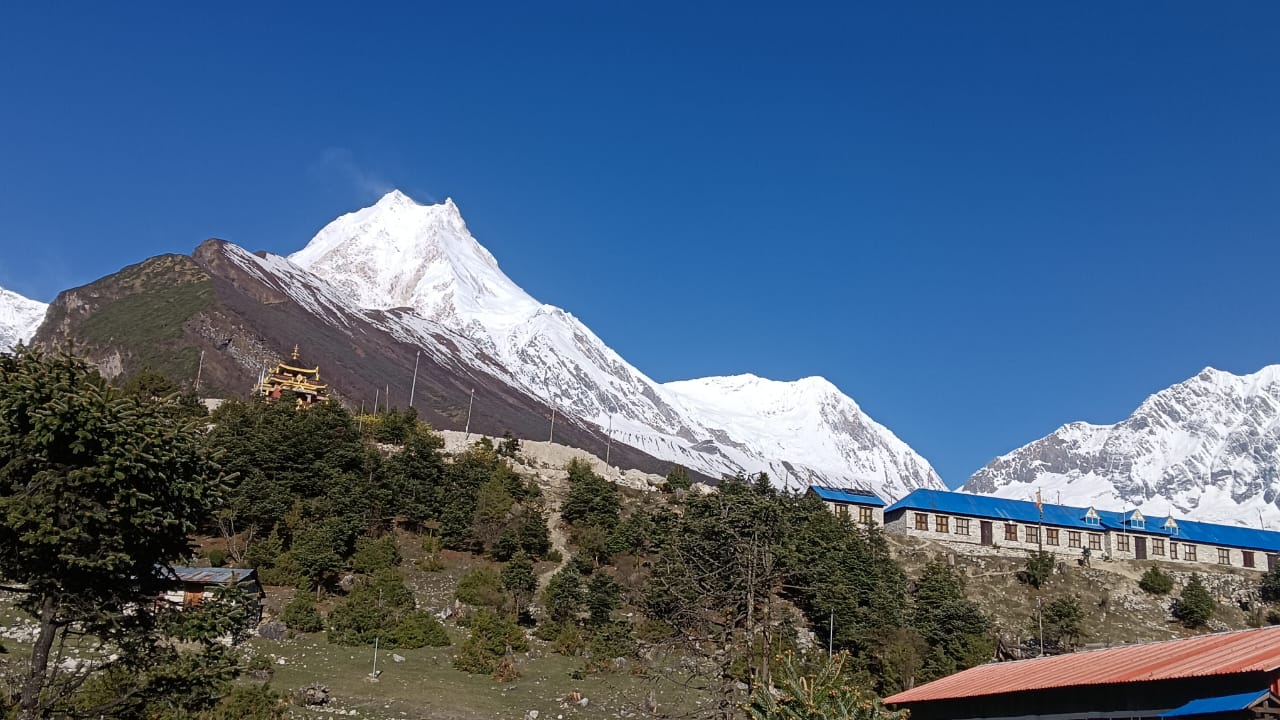
Mountain Panoramas: Enjoy spectacular views of Dhaulagiri (8,167m), Annapurna (8,091m), Nilgiri, and Tukuche Peak
Remote Villages: Visit traditional settlements like Kagbeni, Chele, Ghami, and Tsarang with their distinctive whitewashed houses and barley fields
Rain Shadow Trek: Experience the unique microclimate that makes Upper Mustang trekkable even during monsoon season
Scenic Flights: Short but stunning flights between Pokhara and Jomsom with incredible Himalayan views
Longest Mani Wall: See one of the longest prayer walls in the Himalayas near Ghami
Cultural Preservation: Witness ongoing efforts to preserve ancient manuscripts, murals, and architectural treasures
Overview
The Upper Mustang Trek is one of Nepal’s most extraordinary high-altitude adventures, taking you into a remote, culturally rich region that was closed to outsiders until 1992. Often called the “Last Forbidden Kingdom,” Upper Mustang lies in the rain shadow of the Dhaulagiri and Annapurna ranges in Nepal’s far northwest. This unique trek offers a rare glimpse into ancient Tibetan Buddhist culture, dramatic desert-like landscapes, and the walled city of Lo Manthang, the former capital of the Kingdom of Lo.
Himalayan Guide Treks Pvt. Ltd. specializes in crafting authentic Upper Mustang experiences that combine cultural immersion with breathtaking mountain scenery. Our expert local guides, many of whom have roots in the Mustang region, ensure you experience this remarkable destination safely and meaningfully while respecting its fragile environment and centuries-old traditions.
This 16-17 day journey begins with a scenic flight from Pokhara to Jomsom, then follows ancient trade routes through arid valleys adorned with colorful cliffs, mysterious sky caves, and traditional villages where time seems to stand still. You’ll cross high passes, visit centuries-old monasteries, and witness a way of life that has remained largely unchanged for generations.
Who This Trek Is For
The Upper Mustang Trek is perfect for travelers seeking cultural immersion combined with moderate high-altitude trekking. Ideal candidates include:
Cultural enthusiasts interested in Tibetan Buddhism, ancient traditions, and archaeological sites
Photography lovers drawn to unique landscapes and authentic village life
Experienced trekkers comfortable with 5-6 hours of daily walking at altitude
History buffs fascinated by medieval kingdoms and trade route heritage
Adventure seekers wanting to explore off-the-beaten-path destinations
Monsoon trekkers looking for reliable dry-season alternatives (June-September)
Travelers aged 16-70 with good fitness and a spirit of adventure
While prior trekking experience is beneficial, what matters most is positive attitude, reasonable fitness, and genuine interest in Himalayan culture. Himalayan Guide Treks Pvt. Ltd. accommodates various experience levels with personalized pacing and support.
Trek Difficulty Level
Moderate to Moderately Challenging
Upper Mustang involves sustained walking at high altitude but doesn’t require technical climbing skills.
Key factors:
Daily walking: 4-6 hours on mostly gradual terrain
Highest point: Nyi La Pass at 3,950m (12,959 feet)
Altitude challenges: Thinner air requires acclimatization
Terrain: Mix of flat valley floors, gradual ascents, and some steep sections
Weather: Generally dry but can be windy, especially afternoons
Accommodation: Basic but comfortable teahouse lodges
Preparation recommendations include cardiovascular training, hiking with a daypack 4-6 weeks before departure, and maintaining overall fitness. Mental preparedness for basic facilities and remote conditions is equally important.
Best Time to Trek
Prime Seasons: March to November Upper Mustang’s unique rain-shadow location makes it one of few Nepali treks viable during monsoon:
Spring (March-May): Ideal temperatures, blooming apricot trees, clear skies, and vibrant cultural festivals. Peak season with excellent visibility.
Summer/Monsoon (June-September): While most Nepal treks are wet, Upper Mustang remains dry and accessible. Warmer temperatures, fewer crowds, lush surrounding valleys create stunning contrasts.
Autumn (October-November): Nepal’s classic trekking season offers stable weather, crisp air, and spectacular mountain views. Harvest season adds cultural richness.
Winter (December-February): Possible but challenging due to extreme cold, snow on passes, and closed high-altitude lodges. Best for hardy adventurers only.
Himalayan Guide Treks Pvt. Ltd. operates departures year-round with season-appropriate guidance and equipment recommendations.
Upper Mustang requires special Restricted Area Permits due to its sensitive border location and cultural preservation needs:
Mustang Special Permit Cost: USD $500 per person for 10 days Additional days: USD $50 per day Must be arranged through registered trekking agency Cannot be obtained independently
Annapurna Conservation Area Permit (ACAP) Cost: NPR 3,000 (approximately USD $23) Covers initial approach through Annapurna region
TIMS Card (Trekkers’ Information Management System) Cost: NPR 2,000 (approximately USD $15) Required for organized trekking groups
Himalayan Guide Treks Pvt. Ltd. handles all permit arrangements, ensuring proper documentation and supporting legitimate local governance. Permits must be shown at multiple checkpoints throughout the trek.
Accommodation & Meals
Lodging: Comfortable teahouse lodges with basic amenities. Rooms typically feature twin beds, mattresses, pillows, and blankets. Bathrooms are usually shared, with limited hot water availability (often solar-heated). Lo Manthang offers slightly more developed guesthouses, some with attached bathrooms.
Meals: Three meals daily featuring:
Breakfast: Porridge, eggs, Tibetan bread, pancakes, tea/coffee Lunch: Dal bhat (rice and lentils), noodle soups, fried rice, momos (dumplings) Dinner: Hearty soups, pasta, local specialties, vegetables Hot beverages throughout the day
Food is freshly prepared, with Dal bhat providing unlimited refills—excellent fuel for trekking. Vegetarian and basic dietary preferences are easily accommodated. Himalayan Guide Treks Pvt. Ltd. ensures hygienic food preparation and safe drinking water (boiled or filtered).
Transportation / How to Reach
Kathmandu to Pokhara: Tourist bus (6 hours, comfortable) or domestic flight (30 minutes). We recommend flying to save time and energy. Pokhara to Jomsom: Scenic 20-minute mountain flight offering breathtaking views of Annapurna and Dhaulagiri. Flights operate morning hours due to afternoon winds. Weather can cause delays—we build flexibility into itineraries. Return Journey: Same route in reverse: Jomsom-Pokhara-Kathmandu.
Alternative overland routes exist but require significantly more time. Our standard itinerary uses flights for efficiency, comfort, and spectacular aerial mountain perspectives.
Altitude Profile & Acclimatization
Upper Mustang’s gradual altitude gain provides natural acclimatization:
Jomsom start: 2,715m
Kagbeni: 2,807m
Progressive gain to Samar: 3,290m
Gheling: 3,600m
Highest trekking point (Nyi La Pass): 3,950m
Lo Manthang: 3,780m (rest day for acclimatization)
The built-in rest day at Lo Manthang allows your body to adjust before returning. Himalayan Guide Treks Pvt. Ltd. guides monitor health daily, adjusting pace as needed. We emphasize gradual ascent, proper hydration (3-4 liters daily), and recognizing altitude symptoms early.
Weather & Packing Tips
Weather Patterns: Dry, desert-like climate with cold nights. Daytime temperatures range 15-25°C (spring/autumn), dropping to -5°C to 5°C at night. Strong afternoon winds are common. Minimal rainfall except occasional summer showers.
Essential Packing List:
Layered clothing system (thermal base, fleece mid-layer, windproof jacket)
Warm down jacket for evenings
Trekking pants and shorts
Sun protection: hat, sunglasses, SPF 50+ sunscreen, lip balm
Comfortable broken-in hiking boots
Sleeping bag rated to -10°C (can be rented in Kathmandu)
Daypack (25-30L), trekking poles
Headlamp with extra batteries
Water bottles/hydration system
Basic first aid and personal medications
Camera, power bank, universal adapter
Toiletries, quick-dry towel, wet wipes
Dust mask or buff for windy conditions
Snacks and water purification tablets
Himalayan Guide Treks provides detailed packing lists upon booking, with rental equipment available in Kathmandu.
Guide & Porter Support
Our certified local guides are Upper Mustang specialists with extensive cultural knowledge, first aid training, and fluent English. Many have family connections to the region, offering authentic insights into local traditions, history, and daily life.
What Our Guides Provide:
Navigation and safety management
Cultural interpretation and monastery access
Health monitoring and altitude assessment
Permit arrangements and checkpoint coordination
Photography assistance and storytelling
Flexible pacing matched to group ability
Porter Service: Optional porters carry main luggage (up to 15kg per trekker), allowing you to trek with just a light daypack. We ensure porters receive fair wages, proper equipment, and insurance—part of our ethical employment commitment.
Small group sizes (maximum 12 trekkers) ensure personalized attention. Private treks receive dedicated guide teams.
Medical treatment and emergency evacuation up to 6,000m
Helicopter rescue (common for altitude-related emergencies)
Trip cancellation/interruption
Lost/stolen baggage
Flight delays (relevant for mountain airports)
Verify your policy explicitly covers trekking at altitude in Nepal. Himalayan Guide Treks Pvt. Ltd. requires proof of insurance before departure. In emergencies, we coordinate with insurance providers and evacuation services to ensure rapid response.
Safety Measures & Emergency Support
Your safety is our absolute priority:
Experienced Leadership: Guides trained in wilderness first aid and altitude illness recognition
Communication: Satellite phones and regular checkpoint reporting
Evacuation Plans: Established helicopter rescue protocols with Kathmandu hospitals
Health Monitoring: Daily altitude symptom checks using standardized protocols
Quality Equipment: Well-maintained safety gear and emergency medical kits
Weather Updates: Constant monitoring for safe passage
Local Networks: Strong relationships with village communities for support
We maintain 24/7 emergency contact with our Kathmandu office and international support networks.
Responsible & Sustainable Travel
Himalayan Guide Treks Pvt. Ltd. is committed to preserving Upper Mustang’s fragile environment and culture:
Leave No Trace: Pack out all waste; use designated disposal facilities
Cultural Respect: Dress modestly, ask before photographing people, remove shoes at monasteries
Water Conservation: Minimize washing; use biodegradable soaps away from water sources
Support Local Economy: Purchase from village shops, hire local staff
Heritage Protection: Never touch ancient murals or remove artifacts
Energy Efficiency: Limit charging, shower moderately, conserve lodge resources
Transparent Pricing: Clear cost breakdowns with no hidden fees.
Flexible Departures: Private treks, custom dates, and itinerary modifications available.
24/7 Support: Always reachable during your journey with emergency backup systems.
Outline Itinerary
Day 1: Arrival in Kathmandu (1,400m) – Airport transfer and welcome briefing Day 2: Kathmandu – Cultural sightseeing and trek preparation Day 3: Drive or fly to Pokhara (820m) – 6 hours by road or 30 minutes by air Day 4: Drive or fly Pokhara to Jomsom (2,715m), trek to Kagbeni (2,807m) – 4 hours walking Day 5: Kagbeni to Chele via Chusang (3,050m) – 6 hours Day 6: Chele to Syanboche (3,800) – 6 hours with ridge crossings Day 7: Syanboche to Dhakmar (3820) – 6 hours through scenic valleys Day 8: Dhakmar to Lo Manthang (3,810m) – 5 hours Day 10: Lo Manthang exploration day – Rest, acclimatize, and sightsee Day 11: Lo Manthang to Chrang (3,440m) – 6 hours retracing steps Day 12: Chrang to Syanboche (3,800m) – 5 hours descent Day 13: Syanboche to Chele (3050) – 5 hours Day 14: Chele to Jomsom (2,715m) – 4 hours, afternoon at leisure Day 15: Fly Jomsom to Pokhara, transfer to lakeside hotel Day 16: Return to Kathmandu by road or air Day 17: International departure – Airport transfer
Note: Itinerary can be customized based on your preferences, fitness level, and available time.
Itinerary
If you want tailor-made trip or want to personalize this itinerary, just feel free to contact us. We are always there to help you to make your holiday plan. Contact us
Day 01
Arrival in Kathmandu (1,400m)
On day one, when you land at the airport, our delegate will be there waiting for you with your ride ready to drive you to the hotel.
When you arrive at your hotel, you’ll have time to unwind and freshenup yourself from the weariness of the trip.
In the evening before the dark, you’ll have a brief meeting with your trip members, a moment of introduction,n and to know each other. The meeting won’t be very long, so you’ll have the rest of the evening to enjoy yourself. Maybe explore the surroundings or taste some street delicacies.
Day 02
Cultural sightseeing and Trek preparation
You wake up, freshen up, have breakfast, and your guide will be there waiting for you in the lobby area to join you for the day for the trip in the valley. You’ll be walking around seeing some of the oldest heritage in human history that still stands today.
From Durbar Squares to Temples like Pashupatinath, i.e., the Largest open cremation ground, to stupas like Swyambhunath and Bouddhanath, your day will mostly be spent in localities of the capital.
Try some sweet and sour flavours from local vendors, and try photography in the world heritage sites; it’ll be a vibrant experience.
When the day ends, you’ll have one final moment to check your pack and have any last-minute consultations with your agency and group members.
Day 03
Drive / Fly to Pokhara (820m)
Kick off with breakfast in the hotel and do a last-minute check before you head for Pokhara.
As for Pokhara, you’ll have two options: drive and fly.
Driving will take you around 6 hours from the capital, and flying will take around 30-minutes.
The thing is, when you drive, you will have more time to enjoy the views en route, know the localities and get to see the diction of topography from point to point, but it might make you more tired from the bumps, adding to the weariness from the flight if it hasn’t fully worn off.
Whereas if you take a plane, you’ll reach in just 30 minutes, no hassle, some great aerial views while landing and save time.
The choice is yours.
Day 04
Drive or fly from Pokhara to Jomsom (2,715m), trek to Kagbeni (2,807m)
So just like the day before today, we’ll have the choice to either drive or fly to Jomsom before we trek to Kagbeni; the choice is yours.
The flight offers aerial view ofo several ranges and is just 20 minutes saves you time and from fatigue but the weather needs to be on your favour or else just delays and cancellations, and if you get the drive, the weather can’t top you but it might be rugged in some places, long and bumpy and takes a quarter of the day, which probably might feel physically draining.
When you step into Jomsom, take some time to stretch your legs, hydrate yourself before you march into the 3-hour-long walk alongside the Kaligandaki riverbed heading to Kagebeni, a place that feels out of time, like a time capsule, with a calm atmosphere and Buddhist Landmarks.
The silence will give you a profound sense of spiritual healing and a feeling of well-being.
Day 05
Kagbeni to Chele via Chusang (3,050m)
The trip today will take around 6 hours. The trail we’ll be trekking on will follow the corraidpr of the Kali Gandaki River, famous for Saligrams.
The terrain is full of rocks and scree, with patches somewhere, but that is what ultimately leads us to the village of Chele, which is a highlight in itself, as the place has people living in traditional mudbrick houses.
Somewhere down the road, we’ll face ascents and descents and shifts in geological landscapes. This can be a good chance for those who love photography and are landscape or nature photographers.
So that was the via point, but our destination is Chele, which takes a bit of time and when we reach there, we’ll be settling in a local teahouse, just giving some moment to our feet and body to feel alive and a surge of oxygen.
Day 06
Chele to Sayngboche (3,800m)
So if you have noticed the digits than we have risen in altitude and it’s 750m, and it’s some to keep in notice and check as it’s a vertical gain, cause what happens during Himalayan trekking is with rise in every meters the oxygen depletes in way we don’t even notice until it becomes significantly thinner and by the way it’s a 6 hours of workout for leg muscles to reach the 3,800m which isn’t easy considering hte fact that there will be several steep ridges to pass by.
High passes like Taklam La and Dajori La are some of the noteworthy passes.
Just like i said before the air is thinner so you’ll definitely feel the elevation dong it’s job, you’ll feel the cold sweat drizzling and sometime even gassed out and a dry mouth but once you hit the top and get tot catch the glimpseyou’ll feel every stes of fatigue was worth it so keep sipping water just to keep you mouth and body hydrated and after some more ups and downs through the soil that looks no less than martian you’ll finally be at the destination Sayngboche.
So just take it slow on the highs, regulate the life in your body with water, it’s worth it.
Day 07
Sayngboche to Dhakmar (3,820m)
So on the route, the routine is basically the same. Every day you wake up, freshen up, do your morning chores, have breakfast, pack the rucksack and be on foot again. But every day it’s a new experience on new soil.
And just like that, the destination today will be Dhakmar. Let's talk about how the day will go.
We’ve been ascending, so obviously the altitude rises, we’ll be passing several points like Synagboche La Pass, this point will give a final look of Annapurna nd Nilgiri cause afterwards the landscape will shift to something like a desert.
Another highlight in the bag we have is “The Great Mani Wall”. Mani wall is a stone, not just any regular structure, but a stone inscription with prayers on it, with chants on it, and it is one of the longest and probably the most significant structures in the region.
The next is Crimson Cliffs, imposing, wind-carved rock formations that give off kinda vivid natural red colour, and it looks kinda contrasting as compared to its green backdrop view, but it’s unique.
Day 08
Dhamkar to Lo Manthang (3,810m)
So on this day we’ve almost reached 50% of our trekking trip, and from this point on wards we’ll be on our way down gradually, but on this day we’ll be making some climbs too before stepping downwards.
So, first the day.
We’ll be heading to Lo Manthang, the trail will take us through a religious site, something that gives vibes and a feeling like stepping back into a medieval kingdom.
We’ll be on our way to Mui La (4,170m) which is a quite a rise than when we are on elevation and look around the trail of crimson landscape we just left will be on full display but do not the fact that the air will be crisp and dry and silence might feel too loud but again the sounds from prayer flags fluttering in the wind will keep you on guard.
So the climb was brief, and hence we’ll be going down, and on the way we’ll reach Ghar Gumba (Lo Gekhar), which is the oldest and most active Tibetan Buddhist monastery in the world.
Quiet, kinda like a spiritual sanctuary, with the topping of carved stone and frescoes, makes it more beautiful.
And finally, the day wraps up with a gradual climb over the Marang La, the trail gets flat, and as you turn a corner, the plain comes to view in the distance.
Day 09
Lo Manthang exploration day – Rest, acclimatise, and sightseeing
We rose in elevation yesterday, so it’s obvious that our bodies will feel the change in pressure, and if we climb further without proper adjustment, complications might show up. So we’ll be taking this day as the acclimatisation day.
We’ll kick off the day with breakfast, do some walking around, try to reach the highest point in the area, and take in the sights before returning to the base, so the next day the body can feel less pressure.
Day 10
Lo Manthang to Tsarang (3,440m)
Time to go southwards from the walled capital now. We’ll be tracing our steps back, and when we do, the perspective and point of view change differently.
When you turn back and look, you’ll realise what you accomplished and how far you came overcoming what. The peaks of Nilgiri and the lake of Tilicho now look like some picture sitting still on a frame.
The exit will still feel pretty significant, just like when you were entering with excitement in your chest.
We leave the Kingdom, and down the road, when we look back, it just disappears behind the ridge. The distance that is yet to be covered gives us a way through open spaces and downhill gradient, allowing for a faster and rhythmic pace.
The Tsarang village is what is yet to come, and it opens up like a green thumbprint in the desert. The massive white five-story fortress and Red Gumba are some notewort
Day 11
Tsarang to Syanboche (3,800m)
So we were on a downhill trip, but again a rise in altitude seems confusing, and a rollercoaster isn’t it?
And we’re doing it because the landscape in here is carved by deep river gorges, which doesn’t create a flat path and to go from one village to another, the only way is ups and downs, which is why we’ll be leaving Tsarang and going over the steel bridge over Ghami Khola, bypassing the Mani Walls one more time. The perspective will hit differently as they shine in the morning light.
When we climb, the whistle of the wind again starts to fill the surroundings.
We keep on with our trek after some steady walk, the snowcapes of Dhaulagiri and Nilgiri start getting bigger with a cluster of teahouses in the distance as our glimpse finally catches Syangboche.
The evening might make its presence by the time we arrive at Tsarang, the valley of Dhamkar, into the golden paints of the valley.
Day 12
Syangboche to Chele (3,050m)
Talking about a downhill trip, and this is when you’ll start to feel the minor jolting in your knee joints, which is why it’s essential to do at least light exercise, even for 5-10 minutes or else the muscles and joints will feel too much fatigue, as it’s a 5-hour trip at least.
So we’re leaving behind the Syangboche for Chele, our next destination. Watch the altitude scale cause we’ll be descending 750m.
It’s a good thing regarding the fact that the body will feel more healed by getting better oxygen, but caution needs to be taken as the strain on knees and backs is very high.
So we suggest you use a good quality trekking stick for load and pressure distribution to reduce strain on joints and the back.
We’ll be halting at Samar for a brief moment to freshen up and restore our energy.
The trails, too, are a bit rugged and steep, but it does not feel so hard as the body is accompanied by the thicker atmosphere.
And by the time we’re on Chele, we’re at 3000m of elevation level, and the roar of the Kaligandaki river gets very loud, which is a clear indication that we’re nearing the main valley floor.
Day 13
Chele to Jomsom (2,715m)
Time to trade in the boots for a jeep ride.
The on-foot trip from Chele to Jomsom, it’s a long trip, almost 25 km thought wind-tunnel which is why it’s most of the travellers find it eise to choose a jeep ride instead of the Himalaya’s endurance test as they re already fatigued from the trek and it sounds reasonable to do so, it save time and also leaves some energy to stay active and enjoy hte view during jeep trip, watching views of the the trail you conquered.
As the wheels keep rolling, the scene transforms from desert-like view to greenery, and by the time you hit Jomsom, you ain’t late, rather you’ve got very much spare time in the afternoon to grab something to drink and chill around.
Day 14
Fly Jomsom to Pokhara, transfer to Lakeside hotel
You’ll be flying in the morning hours to Pokhara, and you might still feel like the time in Jomsom was short, but since you arrived with the whole afternoon still bright, you have had your time to enjoy the sights, do some photography and enjoy some taste back in Jomsom.
The flight will be around 30 minutes at max, but it’s great. The bird's-eye view from an aerial perspective gives you a unique experience to look at things nd in less than 40 minutes, the shift in landscape from a desert-like environment in Mustang to the humid and greenery of Pokhara feels refreshing.
Sitting by the lakeside, watching the changing colours of the lake with the setting sun, adn comfort feeling comfort just feels perfect to end an adventure full of highs and lows, ups and downs.
Have a dinner by the side of the lake in a calm and peaceful setting and close the chapter of the trip to Nepal.
Day 15
Return to Kathmandu
So the first thing today, after breakfast, will be a return trip to Kathmandu, either by road or flight,t you’ll have a choice, it’s just the same as day 2 when you were on the trip to Pokhara from Kathmandu, but this time the other way around. The time you have following the arrival, you can use for your choice of activities, like maybe walking around the city or doing some last-minute shopping.
A farewell dinner will be hosted for you before you go.
Day 16
International Departure
It’s time to say goodbye as the trip has concluded. You’ll be driven to the Tribhuwan International Airport for your flight.
Inclusions
What's included
Private pick-up and drop-off at Tribhuwan International Airport,
Mustang Special Permit
Annapurna Conservation Area Permit fee.
Experienced English-speaking guide with porters at a 2:1 ratio.
Kathmandu–Pokhara–Kathmandu by Private Jeep.
Private jeep transfers: Pokhara–Kagbeni and Muktinath–Pokhara.
All meals included during trek:
Staff salaries, equipment, insurance, and all operational costs.
First aid kit provided.
13% government VAT and all official charges included.
Himalayan Guide Treks T-shirt
What's not included
Nepal visa fee
International airfare
Travel and medical insurance (including helicopter evacuation, if required)
Lunch and dinner during hotel stays in Kathmandu and Pokhara
Hot shower and electronic charging fees at guesthouses during the trek
Alcoholic beverages, candies, and other personal snacks
Extra accommodation and meals beyond the planned itinerary
Personal trekking gear and clothing (available for hire)
Tips and any expenses
Frequently Asked Questions
Q1: Do I need previous trekking experience for Upper Mustang?
While not mandatory, prior multi-day hiking experience helps. Good fitness and positive attitude matter most. Our guides adjust pace to group abilities.
Q2: Can Upper Mustang be trekked during monsoon season?
Absolutely! Upper Mustang's rain-shadow location makes it ideal for June-September trekking when other Nepal regions are wet.
Q3: How physically demanding is this trek?
Moderate difficulty with 4-6 hours daily walking at altitude. No technical climbing, but stamina and altitude tolerance are important.
Q4: What about altitude sickness?
Gradual ascent and rest day minimize risks. Guides monitor health daily. Proper hydration, slow pace, and listening to your body are key.
Q5: Are solo travelers welcome?
Yes! We arrange group departures and private treks. Solo travelers often join scheduled groups, with single supplement options available.
Q6: What's the food like in Upper Mustang?
Simple but hearty Nepali and Tibetan cuisine. Dal bhat, noodle dishes, soups, and bread are staples. Vegetarian options plentiful; limited meat variety.
Q7: Can I charge electronics along the trail?
Limited charging available at lodges (often solar-powered) for small fees. Bring power banks and spare batteries.
Q8: How much spending money should I bring?
USD $15-25 daily covers drinks, snacks, charging, hot showers, and tips. Bring small Nepali rupee denominations.
Q9: What happens if flights are delayed?
Mountain weather can delay flights. We build buffer days into itineraries and have contingency plans including helicopter charters if necessary.
Q10: Can I extend my trek to explore more areas?
Absolutely! We customize itineraries to include side trips, extra rest days, or combine with other Annapurna region treks.
Q11: Is Wi-Fi available?
Sporadic and slow Wi-Fi available in some lodges for a fee. Embrace the digital detox opportunity!
Q12: What if I need to cancel?
Review our cancellation policy upon booking. Travel insurance covering trip cancellation is highly recommended.