Overview The Annapurna Base Camp trek stands as one of Nepal’s most spectacular mountain adventures, combining breathtaking Himalayan scenery with rich cultural encounters. This remarkable journey takes you deep into […]
Duration: 7 Days
Best Time: Spring and Autumn
Trip Grade: moderate_strenuous
Start from Kathmandu and End to Kathmandu
Min to Max Pax in a group
Tourist Bus/Flights
Meals: Breakfast, Lunch, and Dinner
Accommodation: Tea House
Highlights
Mountain Panoramas: Witness world-class views of Annapurna I (8,091m), the 10th highest mountain on Earth, along with Annapurna South, Annapurna III, Gangapurna, Machhapuchare (Fishtail), Hiunchuli, and distant views of Manaslu and Lamjung Himal.
Annapurna Sanctuary: Enter the sacred inner sanctum of the Annapurna massif, an incredible natural amphitheater ringed by towering peaks and ancient glaciers.
Cultural Immersion: Experience authentic Gurung village life in communities like Chomrong and Landruk, where traditional customs, stone houses, and warm hospitality create lasting memories.
Diverse Ecosystems: Trek through lush rhododendron forests (spectacular during spring bloom), bamboo groves, alpine meadows, and glacial zones—experiencing multiple climate zones in one journey.
Natural Hot Springs: Relax tired muscles in the natural hot springs at Jhinu Danda, a perfect reward after days of mountain trekking.
Moderate Challenge: Achievable for trekkers with reasonable fitness, making it ideal for those seeking high-altitude adventure without technical climbing.
Overview
The Annapurna Base Camp trek stands as one of Nepal’s most spectacular mountain adventures, combining breathtaking Himalayan scenery with rich cultural encounters. This remarkable journey takes you deep into the heart of the Annapurna Sanctuary, a natural amphitheater surrounded by some of the world’s highest peaks.
Starting from the lakeside city of Pokhara, this trek gradually ascends through diverse landscapes—from subtropical forests filled with rhododendron and magnolia to alpine meadows and finally the glacial wilderness at 4,130 meters. Along the way, you’ll walk through traditional Gurung villages where ancient customs remain vibrant, traverse suspension bridges over roaring rivers, and witness sunrise illuminating the snow-capped giants.
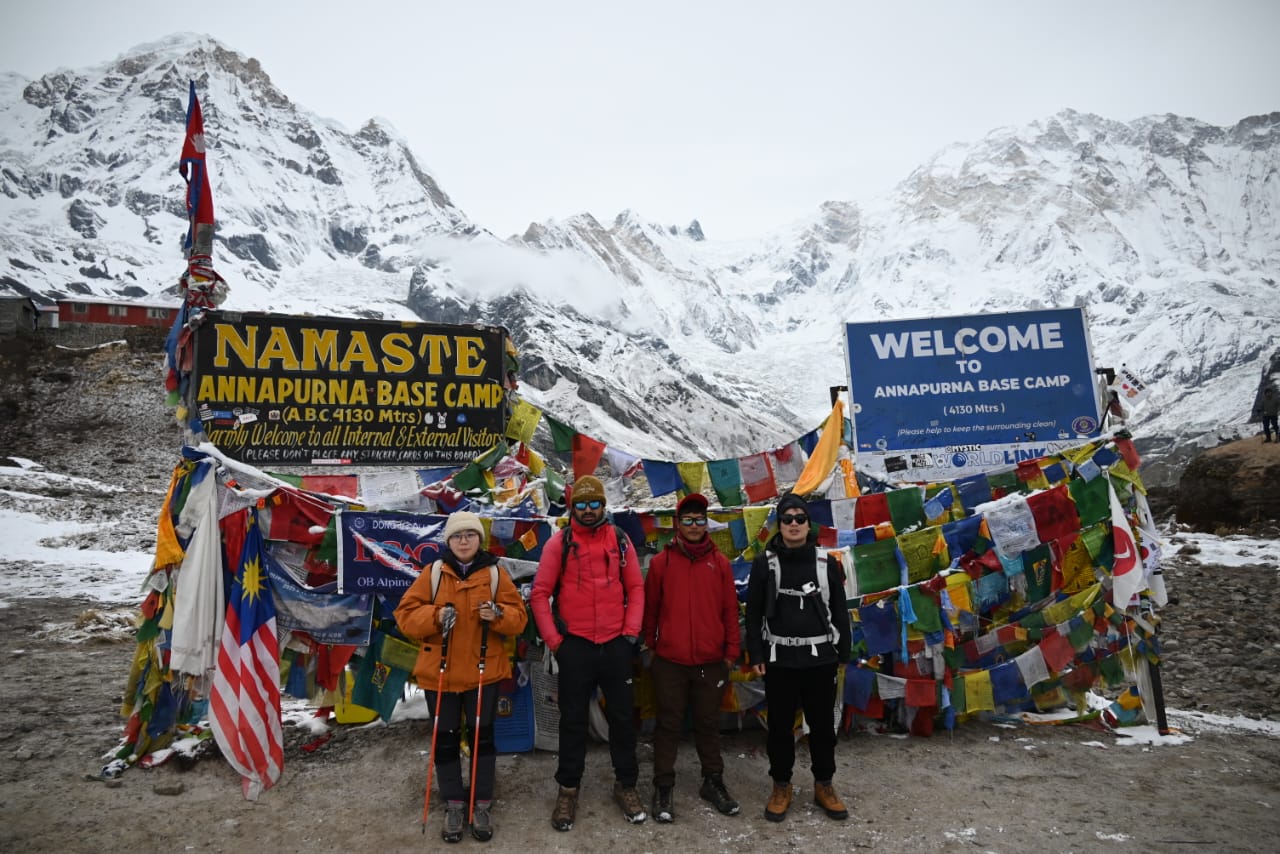
What makes this trek truly special is its accessibility combined with dramatic mountain views. Within just 8-9 days of trekking, you’ll stand at the base of Annapurna I (8,091m), surrounded by a spectacular panorama including Annapurna South, Machhapuchare (the sacred Fishtail peak), Gangapurna, and Hiunchuli. The sanctuary itself feels like nature’s cathedral—a sacred space where mountains touch the sky.
Himalayan Guide Treks Pvt. Ltd. brings over two decades of experience guiding adventurers through this magnificent region, ensuring your journey is safe, comfortable, and deeply memorable.
Who This Trek Is For
This trek welcomes a wide range of adventurers. First-time Himalayan trekkers with good fitness will find it challenging yet achievable. Experienced hikers appreciate the dramatic scenery packed into a moderate timeframe. Photographers discover endless opportunities for stunning mountain and cultural shots. Nature enthusiasts marvel at the biodiversity from subtropical to alpine zones.
The trek suits solo travelers joining small groups, couples seeking romantic mountain experiences, friends on adventure holidays, and families with teenagers. Anyone with a reasonable fitness level who can walk 5-7 hours daily with a light daypack will enjoy this journey.
Trek Difficulty Level
Grade: Moderate to moderately challenging
The Annapurna Base Camp trek requires good physical fitness but no technical mountaineering skills. Daily walking times range from 4-7 hours, with both ascents and descents on stone steps and mountain trails. The maximum altitude of 4,130m presents some challenges, though the gradual ascent profile aids acclimatization.
Expect variable terrain including forest paths, stone staircases, suspension bridges, and rocky trails. Weather conditions can change rapidly at higher elevations. Prior trekking experience helps but isn’t mandatory—determination and proper preparation matter more.
Preparation should include cardiovascular exercises (jogging, cycling, swimming) starting 4-6 weeks before departure, along with leg strengthening and hiking practice with a loaded backpack.
Best Time to Trek
Spring (March-May): Prime season with clear skies, moderate temperatures, and rhododendron forests blooming in spectacular reds, pinks, and whites. Daytime temperatures at base camp range from 5-10°C, with nights dropping below freezing.
Autumn (September-November): Most popular season offering crystal-clear mountain views, stable weather, and comfortable temperatures. Excellent visibility and festive atmosphere as many trekkers hit the trails.
Winter (December-February): Possible but challenging, with heavy snow at higher elevations, extremely cold nights (-15°C at base camp), and some lodges closed. Best for experienced trekkers seeking solitude.
Monsoon (June-August): Generally avoided due to heavy rainfall, leeches, obscured views, and landslide risks. However, lower trails remain accessible for adventurous souls.
Himalayan Guide Treks operates year-round, adjusting itineraries based on conditions while prioritizing safety.
Required Permits
Annapurna Conservation Area Permit (ACAP): NPR 3,000 for SAARC nationals, NPR 3,000 for other foreigners. TIMS Card (Trekkers’ Information Management System): Required for organized treks.
Himalayan Guide Treks Pvt. Ltd. handles all permit arrangements, saving you time and bureaucratic hassles. We’ll need your passport copies and two passport-size photos at least 3 days before departure.
Accommodation & Meals
You’ll stay in comfortable teahouse lodges throughout the trek—simple but clean mountain accommodations with twin-sharing rooms (single rooms available on lower trails). Lodges feature communal dining areas with stoves where trekkers gather each evening, creating wonderful social atmospheres.
Bathrooms are generally shared, with hot showers available at extra cost (NPR 200-500). Facilities become more basic at higher altitudes, but cleanliness and warmth are maintained.
Meals include breakfast, lunch, and dinner from extensive menus offering dal bhat (traditional Nepali meal providing unlimited refills), noodle dishes, soups, Tibetan bread, pasta, and more. Tea and coffee are available throughout. We recommend dal bhat for sustained energy—it’s nutritious, filling, and supports local lodges.
In Kathmandu and Pokhara, you’ll stay in comfortable 3-4 star hotels with modern amenities, breakfast included.
Transportation
From Kathmandu, choose between a scenic 6-hour drive to Pokhara (included in package) or a 30-minute mountain flight (available at additional cost). The drive offers stunning views of rivers, terraced hills, and rural Nepali life.
From Pokhara, we arrange private transportation to Nayapul (1.5 hours), the trek starting point. Return transportation from Dhampus to Pokhara is included. All vehicles are tourist-standard with experienced drivers.
Altitude Profile & Acclimatization
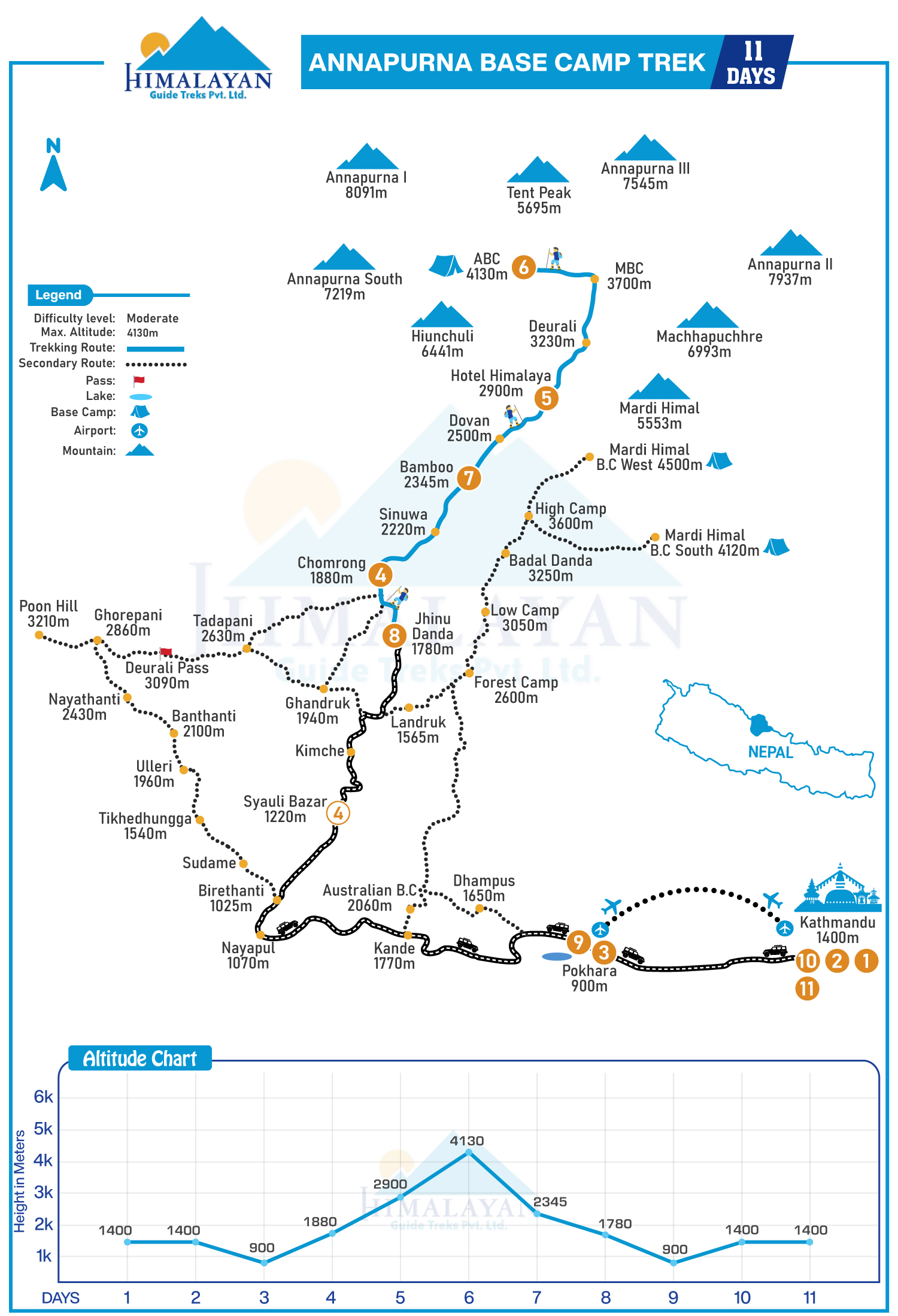
The trek follows a gradual ascent profile, reducing altitude sickness risks. You’ll spend nights at progressively higher elevations: 1,780m → 2,340m → 2,630m → 3,700m → 4,130m.
At Machhapuchare Base Camp (3,700m), you’ll already be well-acclimatized before the final push to Annapurna Base Camp. Our experienced guides monitor everyone for altitude symptoms and adjust pace accordingly.
Key acclimatization tips: Stay hydrated (3-4 liters daily), ascend slowly, avoid alcohol at high altitude, listen to your body, and communicate any symptoms to your guide immediately. Symptoms like headache, nausea, or dizziness should never be ignored.
Weather & Packing Tips
Weather varies dramatically by elevation and season. Expect warm valleys (20-25°C), cooler mid-elevations (10-15°C), and cold high camps (-5 to 5°C).
Essential Packing List:
Layered clothing system (base layers, insulating layers, waterproof outer shell)
Warm down jacket for high altitude
Quality trekking boots (broken in before departure)
Sleeping bag rated to -10°C
Trekking poles (highly recommended)
Sun protection (hat, sunglasses, high SPF sunscreen)
Headlamp with extra batteries
Water purification tablets or filter
Personal first-aid kit and medications
Quick-dry towel and toiletries
Camera with extra batteries
Detailed packing lists are provided upon booking. Remember that porters carry main luggage (12kg limit), while you carry only a daypack with essentials.
Guide & Porter Support
Every Himalayan Guide Treks group is led by government-licensed, English-speaking guides with extensive mountain experience and wilderness first-aid training. Our guides are born and raised in mountain regions, bringing deep local knowledge, cultural insights, and genuine hospitality.
Porters carry group luggage, allowing you to trek comfortably with light daypacks. We ensure fair wages, proper equipment, and insurance for all staff, adhering to International Porter Protection Group standards. Our porter-to-trekker ratio ensures no individual carries excessive weight.
Your guide handles all logistics—accommodation bookings, meal ordering, permit checks, and route navigation—letting you focus entirely on enjoying the experience.
Travel Insurance Requirements
Comprehensive travel insurance is mandatory for this trek. Your policy must cover:
Medical treatment and emergency evacuation up to 5,000m
Helicopter rescue from remote areas
Trip cancellation and interruption
Lost or stolen baggage
Flight delays
Himalayan Guide Treks requires proof of insurance before departure. We recommend reputable companies familiar with Nepal trekking requirements. Keep emergency numbers and policy details accessible throughout your trek.
Safety Measures & Emergency Support
Your safety is our absolute priority. All guides carry comprehensive first-aid kits and communication devices. We maintain direct contact with helicopter rescue services for emergencies. Detailed weather monitoring informs daily decisions.
Our guides are trained to recognize and respond to altitude sickness, injuries, and medical emergencies. Evacuation procedures are established and rehearsed. We also maintain 24/7 office support in Kathmandu for any assistance needed.
Regular safety briefings, trail condition updates, and flexible itineraries ensure we adapt to changing circumstances while keeping groups secure.
Responsible & Sustainable Travel
Himalayan Guide Treks is committed to sustainable tourism that benefits local communities and protects mountain environments. We practice Leave No Trace principles, use local lodges and services, employ local staff at fair wages, and support community projects.
We ask trekkers to: minimize plastic use (bring reusable water bottles), respect local customs and sacred sites, support local economies by purchasing crafts directly from artisans, dispose of waste properly (carry out what you carry in), and stay on designated trails to prevent erosion.
The Annapurna region is home to endangered species and fragile ecosystems. Together, we can ensure future generations enjoy these magnificent mountains.
Why Choose Himalayan Guide Treks Pvt. Ltd.
Local Expertise: Our team was born in the Himalayas—we’re not just guides, but mountain people sharing our home with genuine passion. Safety First: Comprehensive safety protocols, modern communication equipment, experienced guides with wilderness first-aid certification, and established emergency evacuation partnerships. Small Groups, Personal Care: Maximum group size of 12 ensures personalized attention and flexible pacing. Private treks available for families and friends. Transparent Pricing: No hidden costs. What you see is what you pay, with clear breakdowns of inclusions and exclusions. Responsible Operations: Fair wages and conditions for staff, support for local communities, environmental stewardship, and authentic cultural exchanges. Flexibility: Customizable itineraries, extension options, and accommodating special requests whenever possible. Two Decades of Excellence: Hundreds of satisfied trekkers, numerous five-star reviews, and consistent quality since our founding.
When you trek with Himalayan Guide Treks Pvt. Ltd., you’re not just a client—you’re family exploring our beautiful homeland together.
If you want tailor-made trip or want to personalize this itinerary, just feel free to contact us. We are always there to help you to make your holiday plan. Contact us
Day 01
Pokhara drive Ghinu dada then hike to chhomrong.
Day 02
Chhomrong to Bamboo
Day 03
Bamboo to Deurali
Day 04
Deurali to Annapurna Base Camp
Day 05
Annapurna Base Camp Trek to Bamboo
Day 06
Bamboo To Jhinu Danda
Day 07
Jhinu Danda To Pokhara
Trip Map
Inclusions
What's included
Airport pick-up and drop-off for international flights
Hotel in Kathmandu & Pokhara (with breakfast include)
Private transportation during the trek
Accommodation throughout the trek
Meals during the trek (breakfast, lunch, and dinner)
Services of an experienced English-speaking trekking guide, including their salary, food, equipment, and insurance
All necessary permits
Sleeping bag (to be returned after the trek)
Water purification tablets
Official expenses, including government tax a
Himalayan Guide Treks T-shirt
Add-ons
Airport Transfer: 2 Ways airport transfer 20 x 2 = 40 USD
What's not included
International airfare
Nepal travel visa fee
Personal medical and travel insurance (must cover helicopter evacuation)
Tips for guide, porter, and driver
Personal trekking gear and equipment
Personal expenses and bills
All beverages (soft and hard drinks)
Lunch and dinner in Kathmandu
Any other items not mentioned in the inclusions
Frequently Asked Questions
Q: Do I need previous trekking experience?
No previous high-altitude experience is required, though general hiking experience helps. Good physical fitness and mental determination are more important than experience.
Q: Can I charge electronic devices?
Yes, most lodges offer charging services for NPR 200-500 per hour. Bring a portable power bank as backup, especially for higher elevations where electricity can be unreliable.
Q: What about mobile network coverage?
NTC and Ncell networks work in most lower villages. Coverage becomes spotty above Chomrong. We recommend purchasing local SIM cards in Kathmandu for better connectivity.
Q: Are vegetarian/vegan meals available?
Absolutely. Teahouse menus offer extensive vegetarian options. Inform your guide about dietary restrictions or allergies—we'll ensure your needs are met.
Q: Can I trek solo or must I join a group?
Both options work. Solo travelers can join scheduled group departures or arrange private treks. We offer competitive pricing for both.
Q: What if I get altitude sickness?
Our guides monitor everyone daily for symptoms. Mild cases are managed by resting, hydrating, and descending slightly if needed. Serious cases result in immediate descent and evacuation if necessary. This is why travel insurance is mandatory.
Q: How fit do I need to be?
You should comfortably walk 5-7 hours daily with breaks. Start cardiovascular training 4-6 weeks before departure. If you can hike uphill for an hour without excessive fatigue, you're likely ready.
Q: What happens in bad weather?
Weather delays occasionally happen in mountain regions. Your guide makes real-time decisions prioritizing safety. Our flexible itineraries include buffer days, and we maintain contingency plans.
Q: Is WiFi available on the trek?
Most lodges offer WiFi for NPR 300-500 per day, though speeds are slow and connectivity unreliable at higher altitudes. Consider it a chance to digitally detox!
Q: Can I extend my trip?
Absolutely! We offer various extensions including Poon Hill sunrise treks, Chitwan jungle safaris, Kathmandu cultural tours, white-water rafting, and paragliding in Pokhara.
Q: What about tipping guides and porters?
Tipping is customary but not mandatory. Standard guidelines suggest USD 5-7 per day for guides and USD 3-5 for porters, adjusted based on service quality and group size.
Q: When should I book?
Peak seasons (March-May, September-November) fill quickly. Book 2-3 months ahead for these periods. Off-season treks can be arranged with shorter notice.