Nepal is unique, without a shadow of doubt. I mean, really, where will you find or even if you do, it’s very rare for you to find a nation like Nepal. From the highest of the highest peaks in the world, there are around 14 of them in Nepal, including the roof of the world, Mount Everest, along with some of the lowest points too.
Due to its unique, blended and multi-integrated geography, the Himalayan Nation offers distinction in the trekking routes, seasons and weather, and most importantly, cultures and their manifestations evolved under the influence of the geography.
Every trail, whether high, low or on narrow ridges, is full of adventure and excitement for you to explore and experience.
In a sense, Nepal, for travellers and particularly trekkers and expedition lovers, is a buffet from Mother Nature to choose from. From challenging high circuits to the remote valleys’ warm hospitality of the mountain people, every step of the trekking in Nepal will make you feel the warmth like nowhere else you have felt before.
For trekkers who love to be in greenery and the serenity of nature, classic routes like the Everest Base Camp and the Annapurna Circuit are still the major centre of attraction that draws the number in 2025/26, alongside the quieter paths like Manaslu and Lantang that offer more solitude.
In this blog, we will be talking about the trails, Tips, and adventures of trekking in Nepal.
The trails
Nepal has hundreds of trails, the top ones, but these stand out for their popularity, scenery, and variety. Let’s do a quick comparison of some of the classic routes.
Everest Base Camp
The iconic Everest Base Camp, from flight to Lukla and ascensions through Sherpa Villages like Namche Bazaar standing at the foot of the highest peak of the world, you’ll find crowds in peak season, hustle and bustle everywhere, but oh, the views, just something words aren’t enough to describe.
You’ll also get to witness some of the rare flora and fauna native to the region alongside the companionship of the superhumans of the HImalayas i.e The Sherpa, and their endurance in the harsh elevation in the vicinity of Mount Everest.
The once in a life time opportunity to witness basically the head of the world. The difficulty for this trip is quite challenging, but it is a must-see for those who want to test their limits, so add it to your bucket list and grab the opportunity to talk to some of the most hospitable people in the world, taste the local delicacies, share, and also get to know the story of the legendary Yeti and feel the peace.
Annapurna Circuit Trek
Another trail we have in here in the Annapurna Circuit, very well-renowned and famous among the mainstream trekkers, the Annapurna Circuit is something people don’t miss, and you can’t miss it either. It’s like the undisputed champion in the category of trekking trails in Nepal.
Even though tagged as mainstream, it’s beautiful with diversity, full of typical rice terraces, apple orchards, and sun-tropical woodlands.
Many people often say it’s famous among mainstream crowds, but let me remind you not to get fooled by its “famous” tag and think of it as some walk in the park. It’s gruelling, beautiful, and mostly deeply rewarding. A trip that takes you through some of the most dramatic landscapes on the face of the planet.
For the majority of people, this is the big one on their bucket list, and trust me, once you’re standing at the pass glancing over the snow peaks, you’ll get hit with the realisation of the fact why everyone told you not to miss it, or else you’ll miss one of the important windows.
If you love variation in landscapes with moderate to hard challenges, this is the one for you to test yourself.
Annapurna Base Camp Trek
Here comes another trail from the region of Annapurna Trekking. The Annapurna Base Camp Trek is an ideally shorter kind of trek compared to the other trails in the region, ranging from somewhere around a week to 12 days, and also this trek in the region is more accessible.
As for the base of the trek, it is surrounded by a panorama of peaks and the trek is often combined with some of the places renowned for their natural beauty of sunrise and sunsets, like Ghorepani Poonhill, and this trail feels better in every way possible. For instance, if you are someone with time restrictions or even just a beginner with no prior experience of trekking and worried about the strains your body might have to face, then we have got good news,s and the good news is that it’s great for both time-restricted and first-time trekkers.
Flora and fauna in this region are a diverse choice for you to take a glance at. From forests of Sal and pine along with terraced fields of diet crops like rice and millet, and the vibrant red rhododendron-covered forest and trails of spring,
Monkey’s playing swing through the trees and Himlayan goats (Tahr) standing on vertical cliffs defying gravity and the master of camouflage, the snow leopard and many more and bamboo and Oak forests where Red Panda hides itself, it’s a marvellous creation of Mother Nature.
Manaslu Circuit Trek
Time to dig into one of those gems of Nepal, the Manaslu Circuit Trek.
Starting from the essential, obviously the Manaslu Peak, which is 8,163m high and is the eighth highest peak in the world and the highest point we’ll be getting up to will be the Larkya La pass, which is around 5,106m. It’s going to be a long, gruelling day, but once on top and the panorama is visible, it feels like fatigue in every cell of the body was worth it.
Typically, this trek is completed in 12-16 days,s which is defined by your pace, acclimatisation,n and your personal preferences. The difficulty level is not for beginners s it’s graded as the strenuous one, so I’m suggesting that if you’re a first-time climber, then you might wanna hold back, or else it gonna exert some serious toll on your body, as the path is often through rugged, harsh terrain.
Even if the terrain is harsh on your body, the cultural side is what makes you feel in touch with the human side. By the way, you’ll never get to trek here alone as it’s restricted for solo travel and requires a minimum of two people to travel. You’ll be staying in teahouses in here, no hotels and these teahouses in here are very basic compared to the luxury teahouses of the Everest regions.
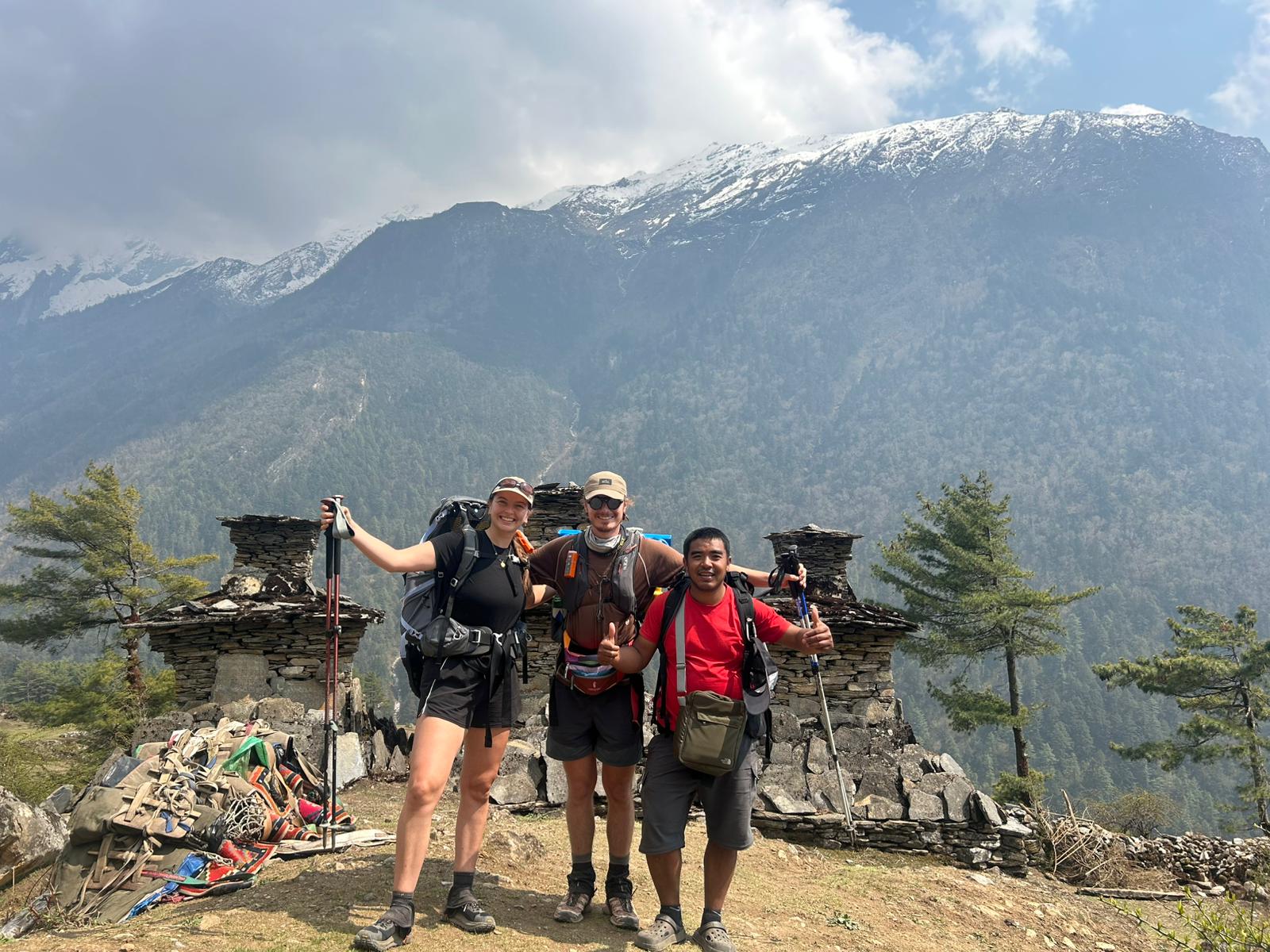
Shared dorms at high elevation places like Dharamsala will give you a very typical mountain experience, and as for the culture, it’s not just one particular but more as a blend of Hindu and Tibetan Buddhist culture, the Nubri People. You’ll get to see Mani walls and locals in traditional Tibetan outfits.
Time for the highlight, the short hike from Samagaun to Birendra Tal will be a perfect round trip for you to acclimatise, so you can rise in altitude with less strain on your body. Additionally, the trip alongside the Budi Gandaki River is another portion of the trip which will be a memorable one, as it has some of the longest and highest suspension bridges within Nepal, but if you’re someone from the lowlands, then it’ll be an element of newness for your sight.
The Pungyen Gompa is another option for a hike to a hidden monastery tucked in the south face of Manaslu.
These highlights are almost the elements that comprise this trip, and when it’s time for descent, you’ll be dropping nearly 1,500m into the forest of Bimthang, often considered the most beautiful campsite in the Himalayas by many trekkers.
And as for the flora and fauna in there, the highlights are mountain animals like the Himalayan Tahr (wild goat), Blue Sheep and Snow leopard, if you’re incredibly lucky, as they are often referred to as “Ghost of the Mountain”.
As for the tress they usually are pine trees in these high altitudes, and the national flower, the Rhododendron.
To complete all these, you’ll need to undergo some paperwork and permits issuance, like the Manaslu Restricted Area Permit (RAP), Manaslu Conservation Area Permit (MCAP), and Annapurna Conservation Area Permit (ACAP), as it finishes by stepping into the Annapurna region.
The Langtang Valley Trek
The Langtang Valley Trek is one of Nepal’s finest Himlayan adventure and it’s very fine trek in regards if you are short on time in Nepal.
It is well-rounded with a blend of culture, mountains and accessibility just like many other treks in Nepal. Just like mentioned above, it’s a perfect one for you if you’re short on time in Nepal as it can be completed in 6-8 days and very well-suited for those who want to experince the Himlayan life without committing to a long tiring expediton and you might feel like this trek might not give the feeling of authenticity due to it’s proximity to the metro capital of nation but make no mistake you’ll still get the far-away village like surrounding environment, trails full of rhododendron, Bamboo and Oak trees, rivers with gushing speeds rushing alongside the trails alpine pastures where yaks graze on green grassy ground gradually opening up to the top of the trail.
Not only that, but there’s still more for you to see, as you get even higher, the landscapes keep unfolding and revealing glaciers and sweeping mountains as if it were some kind of cinematic experience.
Trips to places like Kyanjin Ri or Tserko Ri will lead you to an elevation of upto 4,000m-5,000m. Now it might sound harsh considering the stated fact about its proximity to the capital, but once you get to that level, your effort will be rewarded with heavenly views.
Nepal is full of multilingual groups spread in every nook of the nation, creating a colourful blend of variation; hence, just like any other trekking trail, this too has a rich heritage. The region is resident of Tamang community majorly and their traditions, architecture, and Buddhist heritage shape the trip with a unique character.
Mani walls, inscriptions, and prayer wheels are some of the structural highlights of culture, whereas the cultural outfit of locals, particularly women in the region, is a highlight in itself.
Necklace (Pote) full of gems like emerald, Coral, Dzi stone (Agate) worn by women, with the addition of head ornaments like Sirbandi, a traditional forehead ornament consisting of three golden stripes that binds the hair slightly over the forehead, often with a geometric shape, is a unique attraction as part of a cultural outfit.
Another of them is Chandre (Dhungri), which is a crescent-moon-shaped gold/silver ornament worn by women with the belief of connection with the blessing and power of the moon god and lunar symbolism.
As for men, it might often come as an element of surprise since you can see the men from these communities in the region wearing large gold/silver earrings, which in Western society marks a sign of rebellious men, but in here it’s a hallmark identity of Himalayan tribal men with respect to their ancestors.
You can also get to see men carrying a curved knife called a Khukuri, which is a vital part of their outfit and tradition tucked into their sash (Waist), and wear a flat-topped wooden cap called Shyade (Tamang Tagi) with symbols of vajra (thunderbolt) or an endless knot.
Just like mentioned before, for anyone seeking cultural immersion, even for a short duration, this trip right here is a perfect package.
Vital trekking tips in Nepal
Choosing the right season
For most overseas folks, it’s necessary to plan by analysing the seasons and not just the holidays they have in their country, as the seasons in their nations might be completely on the flip side, and if not known better, the plan might go south.
Usually, the best trekking season in Nepal is Spring (March-May) and Autumn (September-November). This is considered one of the best because it is the season when nature wakes up, the trails are in good condition, and everything is green and serene.
Autumn offers a moderate temperature throughout 24 hours, with clear, warmer and much better trail conditions.
As for trekking in winter, it is still possible but in lower elevations only, as the upper regions in the Himalayas are chillingly cold, and even accommodation providers shift to the valley to escape the cold.
And if you have time for holidays only around June–August, which by the way is a monsoon season, which the majority of trekker avoid due to leeches, we still have an option for you that is the Upper Mustang, Upper Dolpo, Nar Phu, as these regions are unaffected by monsoon due to their status as a rain-shadow area and tucked behind one of the high ranges like Annapurna.
And even if it’s not great for expansive coverage, people who love solitude find it great, as the flow of tourists is very minimal and the whole teahouse can be just for them. The valley appears neon green, which isn’t typically seen in any other season.
Train before you go
Now, this is something very important for you personally. It’s the Himalayas, not like some national park hiking in overseas nations, even the playground of school kids in mountain regions is higher than most of the trekking trails of european and american trekking trails. So even if you’re a frequent trekker or hiker in your country, you’ll need to train your legs and cardio well before you commence this trip in Nepal.
You don’t need to be an elite athlete like Usain Bolt or something, rather all you need is regular walks, staircases, climbs, squats and day hikes. No matter how much of strong you think you are, the mountain has its ways of humbling, even the one with steel-fibre-like muscles.
Respect the altitude
Never try to brush off the Himalayan altitude and ac like strongmen, as mentioned above, it knows how to humble anyone. It does not care how young, fit, confident, or a gym freak you are, once the pressure shifts and the sir thins the whole sky feels like pressing on your chest, and the people start to cripple even with good legs.
You might see a normal nerd-looking local sherpa climbing with a load on their head and back and marching forward, but don’t try it; they are born in the mountains, and every walk for them is like daily jogging, which might not end the same for you.
So don’t rush with overconfidence, saying things like “It’s just a few meters rising”, or else you might get into serious altitude health issues. Always follow the rule of steady climbing and “climb high, sleep low”, it’s wisdom.
Wise packing, not bulky
Layering is often recommended rather than a heavy and bulky outfit, as it helps to adjust by switching layers to adjust with body heat by maintaining airflow to deal with the exhaustion of rising altitude. Weathers can shift from warm sunshine to freezing icy winds in just a matter of minutes.
So add insulating mid-layers, base-layers for wicking moisture, and mainly the waterproof outershell, along with some durable footwear boots and socks, and to fend off cold at night, get a well-rated sleeping bag and if you can get some knee warmers and trekking poles, as they will save your knees and back from chilly nights and as well as descent.
Hiring expedition crew (guide and porters)
It’s better to have a company of well-trained professionals in the industry during trekking or any sort of expeditions in the Himalayas, as it obviously helps to enhance the real-time experience through the knowledge of well-trained and well-experienced crew members.
Hiring guides and porters used to depend on the region and trail you were travelling to. If you’re on a mainstream route like Annapurna, then it’s not mandatory to hire a guide, let alone a porter, if you are well-knowledged and experienced trekkers and can carry your logistics with minimal effort, along with knowledge about restrictions and norms of the region, and navigation for safety but as of 2026 the poilcy has now been changed and it’s now mandatory as per rule of Nepal government in consideration for the better safety of the travellers.
And the rule stays the same as before for a trip to a restricted region, as it’s a legal mandate for you to hire a well-experienced guide and porter if you need help with logistics, as these regions have restrictions on the flow of solo-travellers due to border security reasons.
Moreover, besides the security reasons, it’s also necessary to have a companion for security and reliance in case of an emergency, which solo travelling doesn’t help with.
Respect the culture
This is the most important aspect of travelling anywhere in the world, regardless of the development, GDP, or living standard of the people.
Culture is something developed under the influence of geography for the need of survival, they are born out of necessity, they evolve overtime andmostt importantly, they vary from place to place.
Even within a nation and society, cultures are different, and it needs to be respected by respecting the boundary of the fine line as a culture suitable for one might not be for another, even if the culture and it’s pracise are fine in itself.
Similarly, in Nepal, it’s a melting pot of more than a hundred communities and their culture. If you’re an outsider or visitor, you’ll be fascinated to see how well-integrated the culture is and how peacefully they’re living in harmony. You’ll get to see people of different religions and communities living side-by-side, sharing food and love regardless of their background, which is the reason why people are living peacefully.
So whenever you pay a visit to Nepal, learn about the do’s and don’ts in here so that you can have a smooth and better experience, and feel the harmony.
Adventures
As for the part of the adventure, you don’t need to worry about it.
Everything in here is an adventure. From mountain climbing expedition trekking to bungee jumping and paragliding, canyoning, you’ve got a wide range of options of sports and activities to select from.
White water rafting.
This is basically a gift for the nation of Nepal by the Himalayas, and its topography gives fast-flowing white water river currents, which allow you to enjoy the thrill of fast-flowing white water with an intense rush of adrenaline and adventure in world-class rafting rivers like the Trishuli and Bhote Koshi with class IV intensity.
Canyoning
I’m sure you have been in a waterpark before, so you can relate to it, but the notch is up as it’s nature’s waterpark.
You’ll be basically abseiling down waterfalls and jumping into the pools of water that look like turquoise gems down the rocks.
Paragliding
Those were water adventures, now let’s talk about some in the air.
Paragliding is one of the closest human experiences of free flying, might not be like a bird, but it’s really unbounded.
Attaching a harness to a fabric wing and getting lift by air with momentum while running into the abyss to take a flight just feels out of this world. With a chance to view everything till the horizon from above in a panorama, and valleys and lakes. It’s something you must give a shot once you get to Pokhara.
Bungee Jumping
Let’s just say that this right here is a pure test of nerves, free-falling from a massive height.
There will be a massive, long, and durable cord attached to the diver to dive off the platform of the sport, which can either be a bridge or a high-positioned chamber-like structure, which varies somewhere it’s 80m to 160m, and in other places it’s 228m.
And unlike other activities where there is something to be stable, this act just involves diving headfirst into the gorge or abyss, which gives you a “heart-in-the-throat” moment.
Permits
Guided Trek only
Usually, a guided trek was policy-mandated for restricted regions only, those regions in proximity to the vicinity of the borders to Tibet and less for most areas, but as of 2026, with new regulations, the “only guided trek” policy has been implemented for the safety and security reasons of the travellers.
Regardless of what region and route you’re in, whether it’s Annapurna, Langtang or Everest, trekking solo, without a licensed government-verified guide, is strictly prohibited in all national parks, expedition and trekking trails.
And it’s necessary to acquire it cause if you don’t, then you won’t be given access from the checkpoints.
2026 “Solo Permit” update
The new government of Nepal has just worked out on it’s rule and has set some different regulation in regards to solo permit issuance. As of 2026, the Department of immigration set a new rule for solo travellers that they can now get a permit for one person only, whereas previously restricted to issuing permits for a minimum of 2 people to go to restricted areas.
Let me make it further clear, as many people often get confused about this policy:
Previously, it needed 2 travellers, excluding the guide, on paper to issue a permit, as the guide, even when together, wasn’t counted as a traveller and part of the permit process, but now travellers can travel only paying for permits of themselves with the company of a guide.
Permits and paperworks
The paperwork has now gone paperless; you don’t need to carry paper cards as the system has gone online and electronic, meaning you can now walk with E-TIMS (Electronic Trekker’s Information Management System), a digital format of permit with QR codes that can be scanned at checkpoints for real-time safety tracking, with a cost of around NPR 2,000 (∽$15) for people from overseas.
The “6,000m” safety rule
Insurance is something during travel overseas that no one should compromise with, particularly while travelling to the Himalayas. Never walk without a safety net in the region where even oxygen is rare with rising altitude, or in case of emergency and safety extraction, you might get stuck with your wallet draining bills.
So here’s some advice you should consider:
Read the altitude coverage for extraction and rescue in your contract policy, as standard rescues often are limited to 3,000m-4,000m at maximum. For EBC and mainstream trails like Annapurna Circuit, the policy must cover up to 6,000m with the inclusion of direct billing for helicopter rescue to avoid the upfront cash payment in case of emergency.
No plastic zone
The majority of regions, particularly the Khumbu (Everest) region, have declared the zone as plastic product-free,l ike plastic bottles,s as they don’t degrade biologically and in cold weather and regions like that stay intact and impact the snow caps by contributing to temperature increase through heat trapping.
Instead, it advises using metallic tumblers and UV water filters to solve the water crisis on the route.
The journey beyond the path
The transcendence experience of the journey through the landscapes of mountains is what makes overall trekking in Nepal a special one.
Small things matter, and it is what makes the trip special.
Like sharing stories over a cup of tea in teahouse, engaging in activities with local in their activities be it anything even playing with mud in farming land in June, or getting a burst of colors in holi or moving with crowds in festivals like Jatras or sharing meals with people under their mudroof and take the warmth from the wooden fire of mudstove or the Tsu chya (the Tibetan butter tea).
These small experiences are something you won’t get in everyday life, which connects you to nature on a grassroots level and makes you feel like a human again.
In a era full of seeking appreciation on social media letting yourself immerse in these kind of activities will teach you humility, humbenss and greatfulness towards the life and mother nature with every step you take through the vibrant red rhododendron forests and scented juniper and pine woodlands while listening to the sound of cuckoo singing and sparrow chirping and give you a different dimension of window to watch your life from and people to resonate your spirit with and most impportanly be a human.
Why should anyone trek in Nepal?
It’s not just about walking the trails or icy moraine or breathing the air that recharged after touching the icy walls of the high peak, no.
It’s all about getting and living to enjoy every tiny moment on this tiny pale blue dot, knowing things and living it to tell the stories to your friends and families and even grandkids as part of your legacy, something in life that you fulfilled which made you feel thankful to nature and life itself.
The shared experience, laughter, unique foods and memories from bittersweet moments, high and lows in life, the tears from blissfulness upon reaching the elevations and looking back at what you accomplished.
Something in life that gives you a profound sense of pride to look back on when you sit on a rocking chair with a newspaper, having memories of the once-in-a-lifetime moments, so you can be grateful for what you achieved.
Final thoughts
Doesn’t matter if you are a first-time trekker to Nepal, a frequent trekker, or someone who accidentally got to as a via point while trying to pass through or even an experienced one wondering for your next great challenge.
Each day in here in the nation of mountains gives you a unique life experience and an opportunity to learn, appreciate and know yourself better, know the world better and be a better human and thankful for what you have.
Each route has its own unique offering for visitors, yet they give the same magical energy through the similar-looking ridges, hills and mountains, and as for people in the mountain, no matter which region you visit, they are always there to welcome you with open arms, a warm welcome and a foot on the table to serve you.
It does really feel so humble knowing the fact that the people in the highest point on earth are the most down-to-earth people you’ll ever get to know and share a portion of your life with.