Overview
Island Peak, officially known as Imja Tse, stands at 6,189 meters in the heart of the Khumbu region. Classified as a trekking peak by the Nepal Mountaineering Association, it’s become one of the most sought-after climbing experiences in the Himalayas—and for good reason.
This isn’t just another climb. Island Peak sits within Sagarmatha National Park, surrounded by some of the world’s most iconic mountains: Lhotse, Nuptse, Ama Dablam, Baruntse, and Everest itself. The journey combines technical climbing with an immersive trek through Sherpa villages, rhododendron forests, and high-altitude landscapes that few places on earth can match.
The peak earned its name from British mountaineer Eric Shipton, who noticed from Dingboche that it appeared like an island rising from a sea of ice, flanked by the imposing south face of Lhotse and Nuptse to the north and Baruntse to the south. Famously, Tenzing Norgay and Edmund Hillary used Island Peak as a training ground in 1953 before their historic first ascent of Mount Everest—a tradition many climbers continue today.
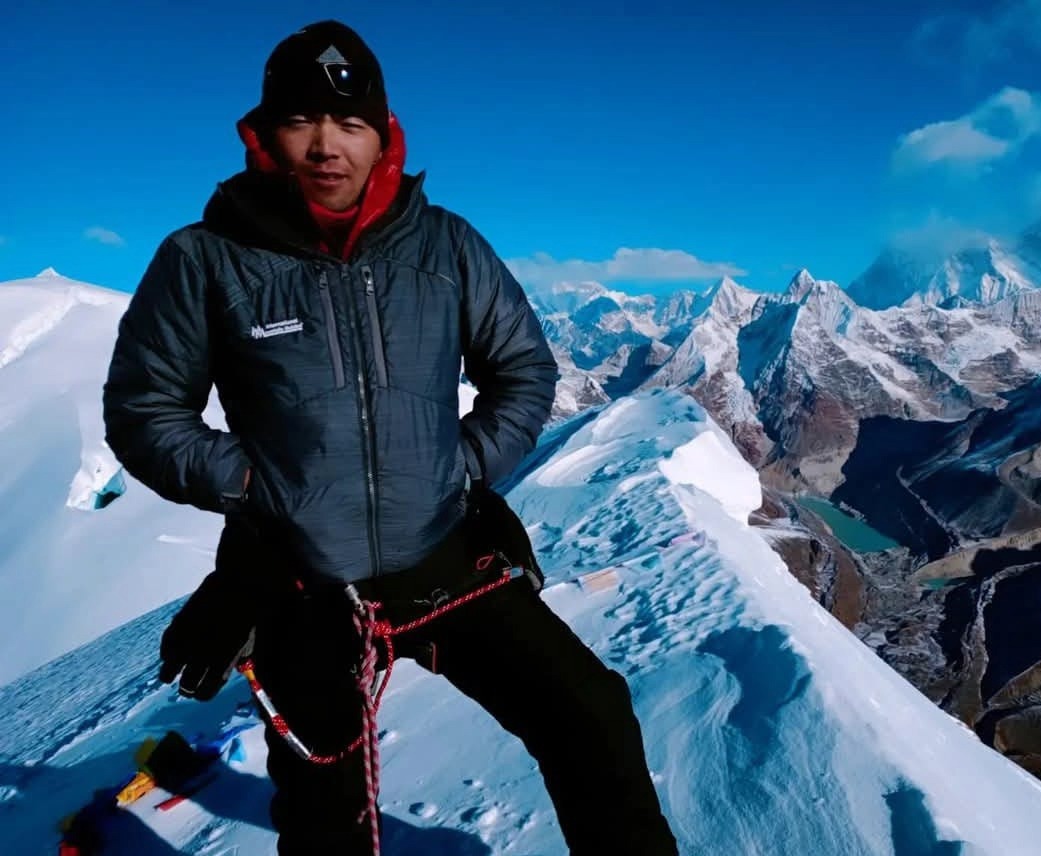
From the summit, you’ll stand face-to-face with a 360-degree panorama of giants: Nuptse (7,879m), Lhotse (8,501m), Lhotse Middle Peak (8,410m), Lhotse Shar (8,383m), and Makalu (8,475m). It’s a view that stays with you long after you’ve returned home.
Why Choose Island Peak?
Among Nepal’s Premier Trekking Peaks
Recognized by the Nepal Mountaineering Association, Island Peak offers the perfect balance between accessibility and adventure. It’s technical enough to be rewarding but achievable with proper preparation and guidance.
Breathtaking Himalayan Views
Throughout the trek, you’ll witness close-up views of Lhotse, Nuptse, Ama Dablam, and many more towering peaks that define the Everest region.
Rich Sherpa Culture
Walk through legendary villages like Namche Bazaar and Tengboche, where Buddhist monasteries, prayer flags, and warm hospitality offer insights into the mountain way of life.
Pristine Khumbu Wilderness
Experience lush forests, thundering waterfalls, massive glaciers, and the untouched beauty of one of the world’s most protected mountain environments.
The Island Peak Experience
The route to Island Peak follows the classic Everest Base Camp trail, weaving through ancient villages where life moves to the rhythm of prayer wheels and yak bells. You’ll pass through Namche Bazaar—the bustling gateway to Everest—where stone houses cling to hillsides and traders have gathered for generations.
Each day brings new landscapes. Lower valleys burst with rhododendrons and pine. Higher up, the terrain opens into stark, beautiful alpine country where glaciers carve through rock and the air grows thin. The Sherpa people who call these mountains home will welcome you into their teahouses, sharing stories over cups of hot tea.
What makes this expedition special is the gradual acclimatization. Following the EBC route gives your body time to adjust, with rest days strategically placed in Namche Bazaar and at Island Peak Base Camp. Many climbers also visit Kala Patthar or Everest Base Camp itself before attempting the summit—excellent preparation that builds both confidence and fitness.
The final push to the summit involves glacier travel, fixed ropes, and a steep snow slope that demands focus and technique. But when you stand on top, looking across an ocean of peaks stretching to the horizon, every step is worth it.
Best Time to Climb
Spring (March to May)
Spring brings stable weather, warming temperatures, and crystal-clear mountain views. The trails come alive with blooming rhododendrons, and conditions are generally excellent for climbing. Expect more climbers during this popular season.
Autumn (September to November)
Post-monsoon skies are often the clearest of the year. Temperatures are comfortable for trekking, and visibility is superb. Like spring, this is peak season, so trails and teahouses will be busier.
Winter & Monsoon
While technically possible, winter (December-February) brings extreme cold and snow, increasing risks like frostbite. The monsoon (June-August) means rain, mud, leeches in lower sections, and obscured mountain views. These seasons see far fewer climbers and require extra caution.
How Challenging Is Island Peak?
Island Peak is not a beginner’s climb. Unlike some trekking peaks, this requires basic mountaineering skills and previous high-altitude experience (ideally above 5,000 meters).
Technical Requirements
You’ll navigate crevassed glaciers, climb using fixed ropes and jumars, and ascend a steep 45-degree snow and ice headwall. Training beforehand on crampons, ice axes, and rope techniques is essential.
Altitude Considerations
At over 6,000 meters, altitude sickness is a real concern. Proper acclimatization is crucial—rushing increases your risk significantly. Listen to your body and follow your guide’s advice.
Physical Fitness
You need good cardiovascular fitness and mental resilience. Days are long, conditions can be harsh, and summit day especially demands both physical strength and determination.
The Role of Your Guide
Having experienced climbing guides makes all the difference. Our Sherpa mountaineers know these mountains intimately and will ensure you’re properly equipped, trained, and supported throughout the climb.
Permits & Regulations
Climbing Permit Fees:
- Spring season (March-May): USD 250 per person
- Autumn season (September-November): USD 125 per person
- Winter season (December-February): USD 70 per person
Additional Permits:
- Sagarmatha National Park Entry: USD 30 per person
- Khumbu Rural Municipality Permit: USD 20 per person
- TIMS Card (Trekkers’ Information Management System)
Important Note: Comprehensive travel insurance covering emergency evacuation and high-altitude climbing is mandatory for all climbers.
Ready to Climb Island Peak?
Island Peak offers an exceptional introduction to Himalayan mountaineering—challenging enough to be meaningful, accessible enough to be achievable with proper preparation. Our experienced Sherpa climbing guides have summited this peak countless times and will ensure you’re safe, prepared, and positioned for success.
Whether you’re training for bigger mountains or seeking the adventure of a lifetime, Island Peak delivers an experience you’ll carry forever