The Khopra Danda Trek—also known as the Khopra Ridge or Khayar Lake Trek—takes you along one of the Annapurna region’s quieter, more intimate trails. This relatively new route offers something […]
The Khopra Danda Trek—also known as the Khopra Ridge or Khayar Lake Trek—takes you along one of the Annapurna region’s quieter, more intimate trails. This relatively new route offers something special: fewer crowds, genuine mountain serenity, and all the stunning panoramas you’d expect from Nepal’s most celebrated trekking area, without the constant flow of other hikers.
It’s an excellent choice if you want a shorter alternative to the classic Annapurna trails but still crave authentic cultural encounters and those jaw-dropping Himalayan views that make Nepal unforgettable.
Your adventure begins with a scenic drive from Pokhara to Ghandruk, one of the region’s most picturesque Gurung villages. After lunch, you’ll hike up to Tadapani, where the evening views of Machhapuchhre (Fishtail), Annapurna South, and Hiunchuli set the tone for the days ahead.
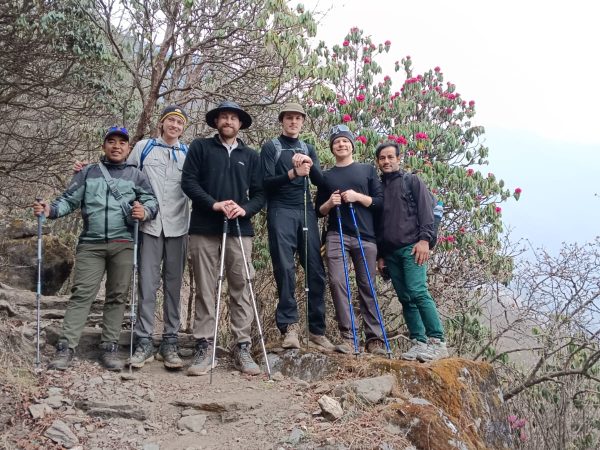
From Tadapani, the trail winds through dense forests toward Dobato, then continues upward through magnificent rhododendron woodlands—absolutely spectacular if you’re trekking in spring—and past yak pastures at Bayeli Kharka. As you gain altitude, the trees thin out and suddenly you’re walking across open slopes beneath the towering presences of Dhaulagiri and Annapurna.
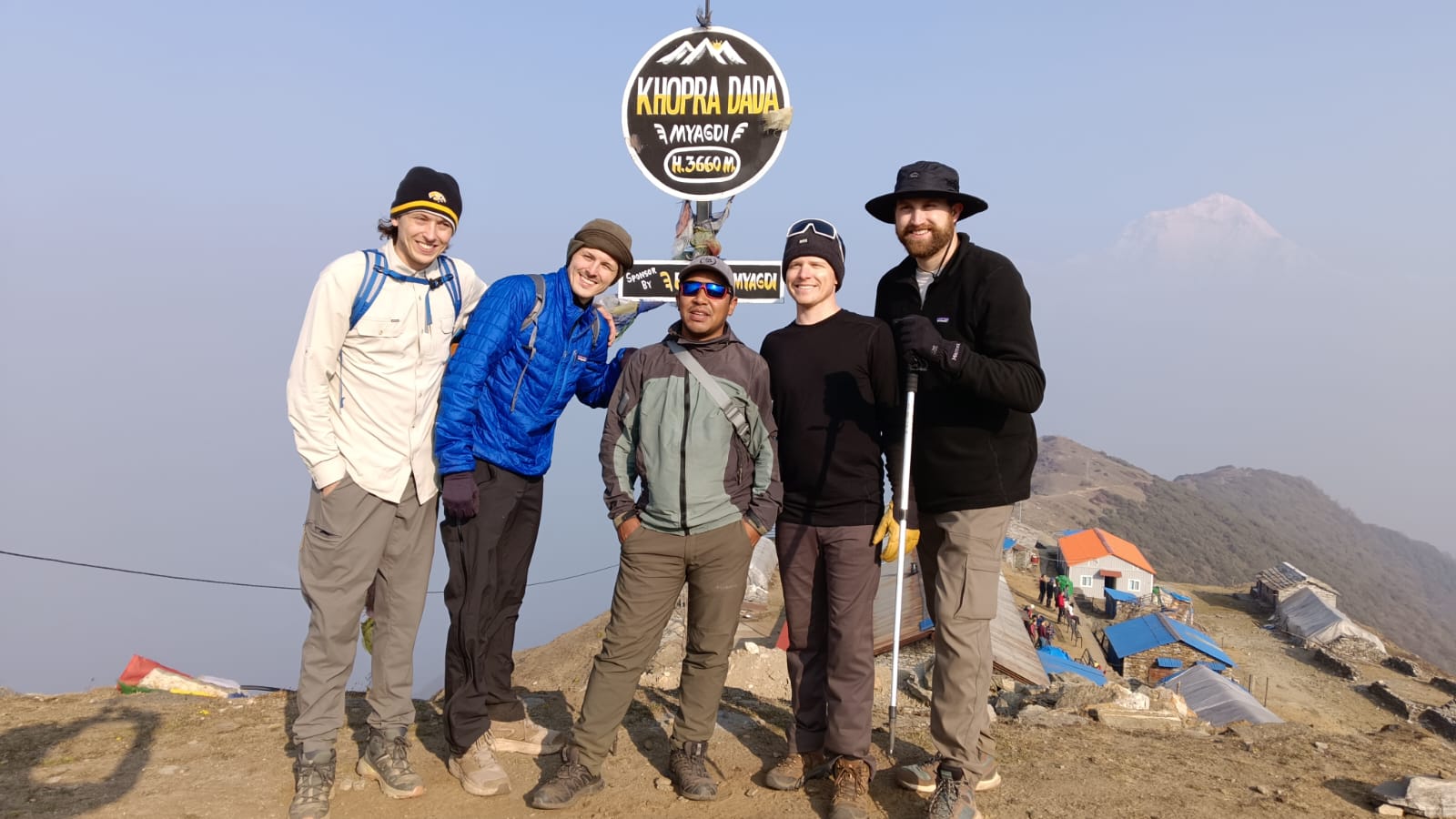
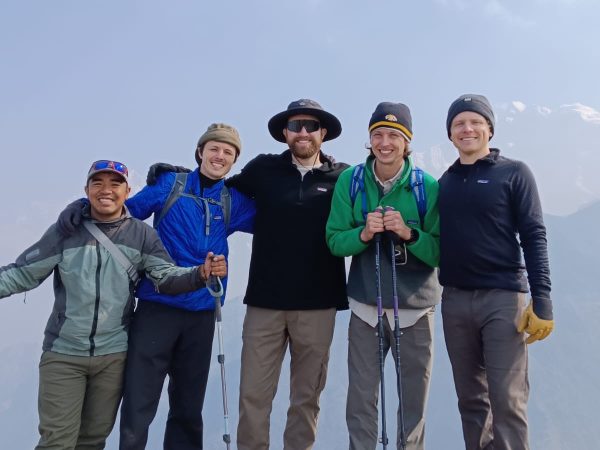
The ridge at Khopra Danda itself is a revelation: a front-row seat to some of the world’s most impressive mountains, with enough space and silence to truly take it all in.
If you’re up for it, the optional hike to Khayar Lake (4,600m) is absolutely worth the effort. This sacred Hindu site sits in a dramatic amphitheater of snow-capped peaks, and the reflections in its still waters are simply sublime. During the August festival of Janai Purnima, pilgrims make their way here to celebrate kinship and tradition—a beautiful cultural dimension to an already memorable trek.
After descending through Swanta village, you’ll reach Ghorepani, the gateway to one of Nepal’s most famous viewpoints. An early morning climb to Poon Hill (3,210m) rewards you with a sunrise that’s genuinely legendary: the entire Annapurna massif, Dhaulagiri, Machhapuchhre, and countless other peaks glowing gold and pink in the dawn light. It’s a fitting finale before you descend through beautiful rhododendron, pine, and oak forests to Nayapul and drive back to Pokhara.
If you’re looking for other off-the-beaten-path options, you might also consider the Nar Phu Valley Trek, Manaslu Circuit, or Upper Mustang.
The Khopra Danda Trek sits comfortably in the moderate category. You’ll encounter well-maintained paths as well as steeper, rockier sections, especially as you approach the ridge. While no technical climbing skills are required, the uneven terrain and daily walking hours (typically 5–7 hours) do demand a reasonable level of fitness.
Altitude is another factor to keep in mind. While this trek doesn’t venture into extreme elevations, you’ll still be spending several nights above 3,000 meters, which can affect some trekkers. Taking your time, staying hydrated, and listening to your body all help.
Weather plays its part too. During monsoon season (June to August), trails can become slippery and muddy, while winter months bring colder temperatures and occasional snow, particularly near the ridge.
The ideal trekking windows are spring (March to May) and autumn (September to November). Spring is especially lovely if you want to see the hillsides ablaze with rhododendron blooms, while autumn offers the clearest skies and most stable weather.
That said, we operate this trek year-round. If you prefer the quieter shoulder seasons or even winter, we have the local knowledge and connections to make it work safely and comfortably. Just get in touch, and our team will talk you through the best options for your timing and preferences.
When you trek with Himalayan Guide Treks, all permit arrangements are included in your package. We handle the paperwork so you can focus on preparing for your adventure.
For the Annapurna region, you’ll need two permits:
Both can be obtained before you set off, and we’ll sort everything on your behalf.
Pack smart. Layers are essential, and a good pair of trekking boots will make all the difference.
The Annapurna region is well-established with teahouses, so there’s no need to carry tents or cooking gear. Accommodation varies depending on altitude and location. In busier, lower-elevation areas, you’ll find more comfortable lodges with electricity, Wi-Fi, hot showers, and sometimes even en-suite bathrooms with western toilets.
Higher up, expect simpler, more rustic teahouses with shared bathrooms and squat toilets. Hot showers and Wi-Fi are usually available for a small fee. We provide a -20°C sleeping bag to keep you warm throughout the trek.
Food along the trail is both hearty and varied. Teahouse menus tend to be quite extensive, though you’ll notice similar offerings at most places.
Popular choices include:
Breakfast typically features chapati or Tibetan bread with jam, honey, or peanut butter, plus eggs, porridge, muesli, or pancakes.
The trek is fully vegetarian and vegan-friendly. If you have other dietary requirements, just let us know in advance—your guide will communicate with the kitchen staff.
Your package includes a welcome dinner in Kathmandu and three meals daily (plus tea or coffee) throughout the trek. You’re welcome to purchase extra snacks, desserts, or specialty coffee when available.
All ground transportation is included in your package with Himalayan Guide Treks.
The standard route involves a tourist bus from Kathmandu to Pokhara—officially a 7-hour journey, though road construction currently extends this to around 10 hours. If you prefer to fly, the journey takes just 20 minutes.
From Pokhara, common starting points include Nayapul, Kimche, or Ghandruk. The further you drive by jeep, the less you’ll trek on foot—it’s up to you how much ground you want to cover by vehicle.
Bus travel in Nepal is an experience in itself—colorful, lively, and genuinely immersive. But if you’d rather skip the bumpy roads, we can arrange a private car, jeep, or flight. Private transport cuts down travel time significantly and lets you stop for breaks whenever you like. We’re happy to discuss all options and help you choose what suits you best.
Most teahouses have either electricity or solar power. Depending on the lodge, you may be able to charge devices in your room, or you can pay a small fee (usually a few hundred rupees) to charge in the dining area. We recommend bringing a power bank as backup.
Mobile coverage has improved significantly in recent years, though it can be patchy. Nepal Telecom generally has the best reception in the Annapurna region—better than NCELL. You can pick up a local SIM card in Kathmandu when you arrive.
Many teahouses offer Wi-Fi for around USD 2–3 per night, payable in rupees. Just be aware that service can be unreliable due to weather or technical issues, so don’t count on being fully connected.
Porters are not included in our standard packages, but we’re happy to arrange one if you’d like. Many trekkers find that having a porter significantly improves their experience, especially those new to high-altitude trekking.
One porter typically carries bags for two people (up to 20kg total), leaving you with just a light daypack. If you’re on the fence, we can discuss it in more detail when you book or once you arrive in Kathmandu. Honestly, we’d recommend it—having that extra support often makes the difference between merely completing the trek and truly enjoying it.
This is non-negotiable. Trekking in Nepal—even on moderate routes—requires comprehensive travel insurance that covers:
Shop around for the best policy, and read the fine print carefully. Some insurers have altitude restrictions, so make sure your policy covers the highest point of your trek. Helicopter evacuations in Nepal are extremely expensive, and you’ll want coverage that pays medical providers directly rather than reimbursing you later.
Most hospitals and clinics in Nepal require upfront payment or insurance approval before treatment, so direct-billing policies are far more practical.
Nepal’s currency is the Nepali Rupee (NPR). US dollars, euros, British pounds, Australian dollars, Canadian dollars, and Singapore dollars are all easily exchanged in Kathmandu and Pokhara.
Credit and debit cards (Visa, MasterCard, American Express) are accepted in major hotels, restaurants, and shops in cities, though a 3.5% surcharge typically applies.
ATMs are plentiful in Kathmandu and Pokhara, especially around Thamel. Daily withdrawal limits vary—some machines cap at NPR 20,000, others allow up to NPR 35,000. Expect a fee of around USD 4 per transaction, plus any fees your own bank charges.
Important: There are no ATMs along the trekking route, and credit cards are not accepted at teahouses. Bring enough cash in rupees for snacks, drinks, souvenirs, charging fees, and any extras you might want along the way.
Yes, you can get a visa on arrival at Tribhuvan International Airport in Kathmandu, or at several land border crossings including Birgunj, Kakarbhitta, Bhairawa, Nepalgunj, and others. You can also apply in advance at a Nepalese embassy or consulate in your home country if you prefer.
We recommend bringing cash in one of the accepted currencies: US dollars, euros, British pounds, Swiss francs, Australian dollars, Canadian dollars, Hong Kong dollars, Singapore dollars, or Japanese yen. Credit card payment is also available at the airport.
Current visa fees:
Your passport must be valid for at least six months from your date of entry.
Visa extensions are available from the Nepal Immigration offices in Kathmandu and Pokhara. For the latest information, visit the official Nepal Immigration website or contact us directly.