Overview The Everest Base Camp Helicopter Tour is one of the most prestigious aerial mission in the world, offering a tactical shortcut to the roof of the world. This journey […]
The Everest Base Camp Helicopter Tour is one of the most prestigious aerial mission in the world, offering a tactical shortcut to the roof of the world. This journey allows you to bypass the trekking for weeks and reach the foot of 8,848.86 meters giant in just a few hours. Designed for those who value time and exclusivity, this mission delivers you directly into the Khumbu’s sheer vertical walls, culminating in a landing at Famous Kala Patthar for a face-to-face encounter with the world’s highest peak.
Right after you get lifted off from the helipad in the Valley, and gradually rise, when you look down, the landscape transforms. Call it dramatic or nature’s craft, it just feels like a miracle cause when you think or when people usually think of Nepal, not so much a big country, but even with the gentle and slightest rise in elevation, it changes the topography and weather and climate, and it feels like out of the world experience.
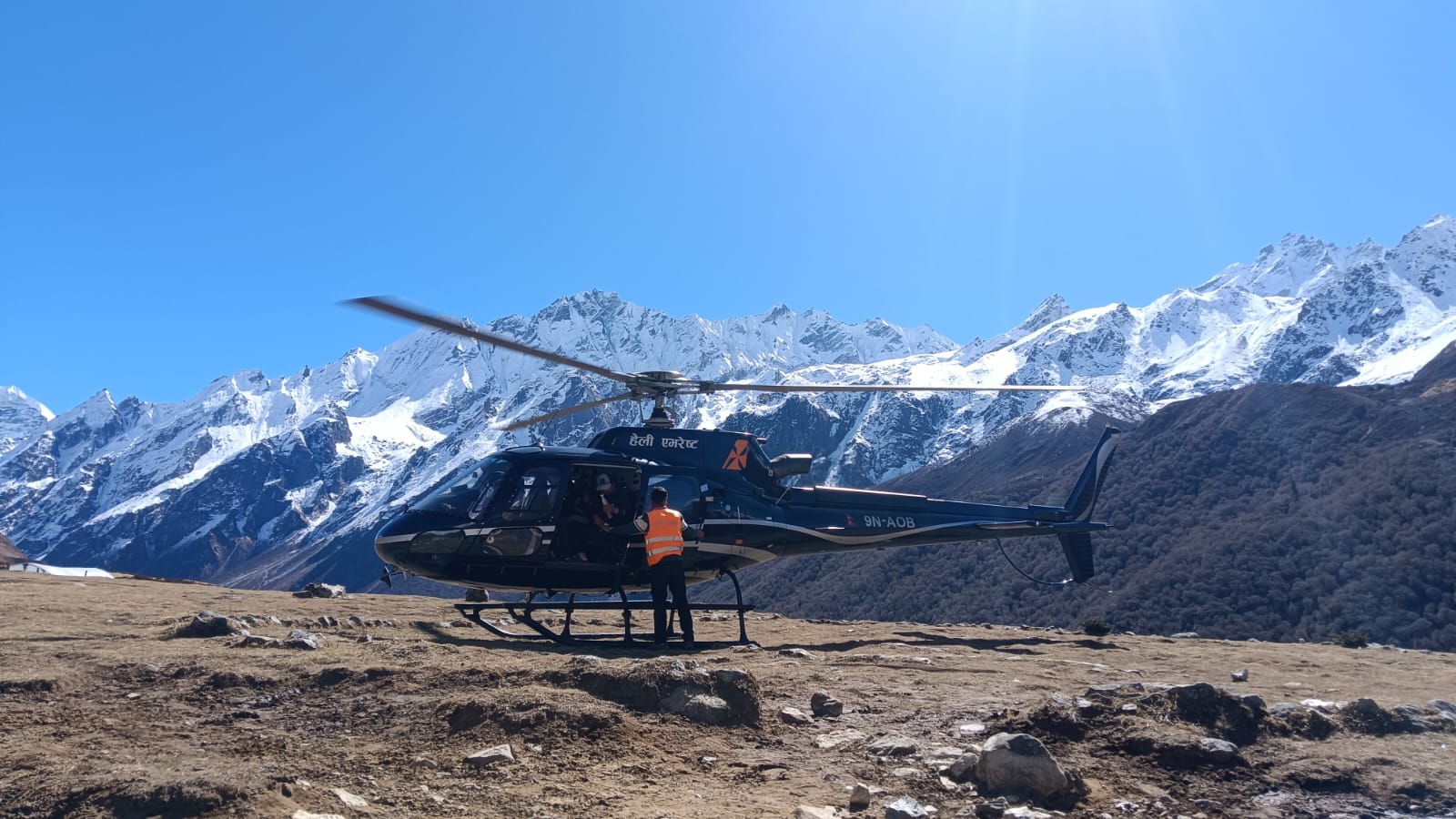
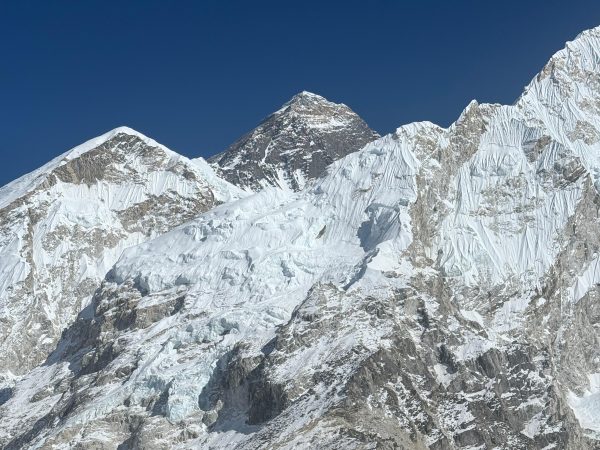
The monasteries, the traditional Sherpa villages, all those perched on ridges, feel like nature handpicked a chisel to craft them. And when the pilot rises further, you will be surprised to see the burst of panorama. Of the iconic peaks like Nuptse, Lhotse, and the ever-present bulk of Everest, drawing closer every minute.
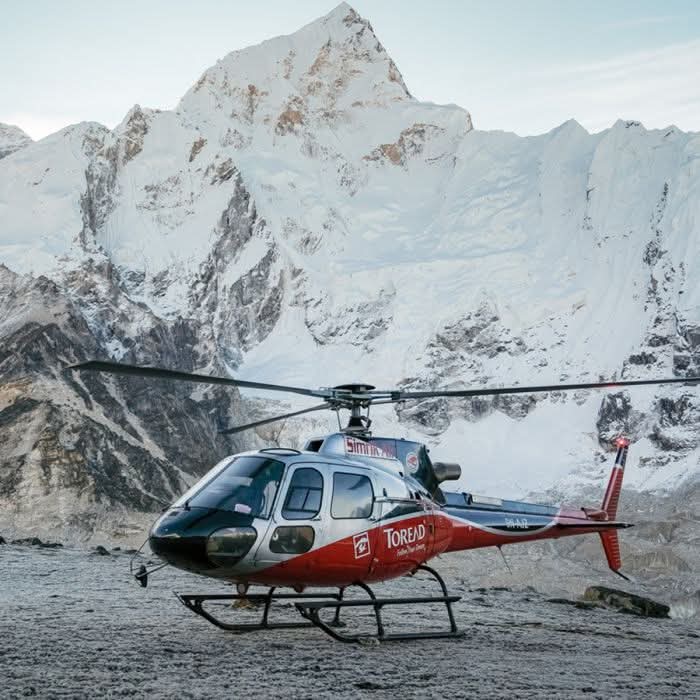
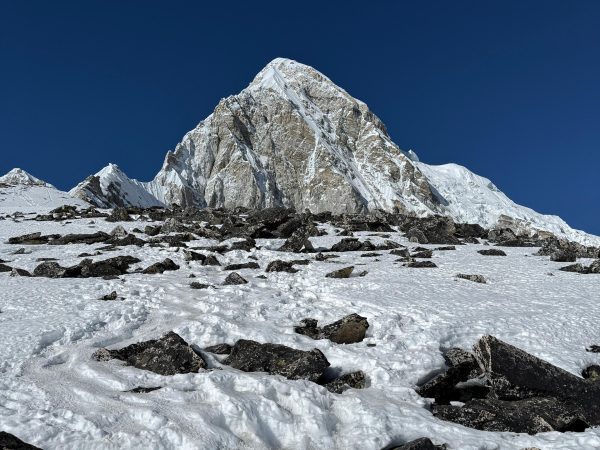
Landing at the premier vantage point for a 360° view of Everest, Lhotse, and Nuptse. This high altitude tactical insertion places 5,545m, the exact coordinates where the mountain’s true scale becomes reality.
Within this brief, intense window, you are standing face to face with the world’s highest peak while the surrounding giants form a jagged ivory perimeter around your position.
It is a moment of pure visual dominance, offering a perspective of how majestic the peaks and the nature are, and how beautiful and yet terrifying it is.
An elite aerial perspective of the world’s most dangerous glacier crossing. It feels like pure bliss. The breathtaking chaos frozen in time. Towering seracs like jagged blue, white sculptures tumbling down the flanks of Everest, crisscrossed by bottomless crevasses that glow electric turquoise in the sun.
You watch this living, suspended safely above the glacier, grind forward, reshaping its deadly path daily, while tiny base camp tents are hurled far below like colorful specks at its foot.
It’s the ultimate contrast. The mesmerizing beauty upclose, yet you feel the mountain’s raw power without risk, climbers face the ladders and ropes.
In minutes, the hilly flyover delivers the thrill of Everest. Infamous Gateway, humble, exhilarating, and profoundly unforgettable, leaving you in awe of nature’s skill and grateful for the wings.
And this is not just in writing. This comes from the very words of the Mountaineers, Experts, and Veterans, Climbers, and Guides who had been working for over several decades in this company as part of the crew.
Food choices, Dining these are completely personal topics and preferences. But my friend, Hotel Everest View, gives you a completely new and different level. The other day, you might have been dining in a normal environment, your choice of aesthetic lights, vibes, and ambience. It feels like a transcendent experience when you get to dine at an altitude of nearly 4000 meters overlooking the world below.
It is not just a highlight of our trip anymore; it is a life experience, something that will stick with you and stay in your heart, soul, and mind for the rest of your life.
I want you to close your eyes, imagine standing in a vicinity full of snow-white surfaces around and the blue sky above your head. You, holding your cup of tea, giving out a thick and warm vapor, and you, looking around, taking a sip of tea. No noise, nothing. No visual pollution. Just you and some of the most hospitable and humble people around you, while you feel the relief.
That’s the kind of moment you get to live and experience.
This right here, it is a thrill in itself. Your Everest adventure kicks off with one of the most thrilling landings on Earth. A Tenzing-Hillary airport in 2,845 meters, the undisputed gateway to the Kumbu region and Mount Everest, named in honor of the first summiteers. Tenzing Norgay Sherpa and Sir Edmund Hillary.
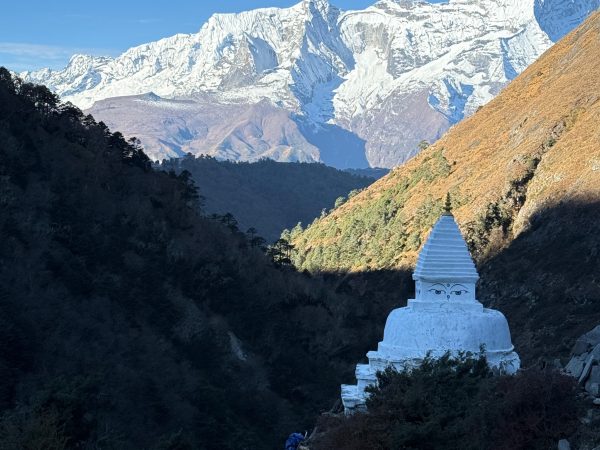
The Crispy Mountain air hits as the prayer flags flutter and Sherpa teahouses hum nearby. Everything feels as if they’ve come to life.
And then the powerful. The hilly climbs are steeply engine thundering, banking towards the towering peaks. The ground drops away, revealing villages, rivers, and the first giants like Ama-Dablam closing in.
It is a pulse rising threshold where anticipation becomes real, the everyday fades, and the raw Himalayan adventure claims you from the sky. This isn’t just a flight, buddy. Down the road of your life, it will be a story to tell about adventure to your grandkids and reflect on the beautiful life you lived.
Everybody, once in their life have at least created a bucket list. No need for paper or pen or any sticky notes, just mentally. Could be while chatting with friends, sharing and listening to experience stories, and watching TV.
You listen, you see, and then the desire to visit the place. Comes in your mind. But daily life doesn’t let you have time. Maybe the corporate clock is the thing that’s keeping you stuck, or because you might be short on time, and you might feel like you can’t enjoy the views of the glacial jewels you wanted.
Which is why this Heli tour is designed. It’s perfect. Saves your time. Gives you. And gives you. A view and a chance to have. An experience from a completely different dimension or perspective.
When you are inside the chopper, the Lakes look like scattered sapphires. As if Mother Nature is saving the Precious Jewels of precious water droplets in a bowl. The color is so intense and so surreal, feels just something different, you’ve no words to describe.
The Ngozumpa Glacier, the longest in Nepal, sprawling river of ice and debris snaking down from Cho Oyu, cracked and textured in grays, whites, and deep Blues. With the tiny village hugging its edge like colorful specks.
From your perspective, it feels like an intimate view of nature, the place flows, carving the landscape. The frame device shows you. Everest’s distant silhouette and sharp ridges everywhere.
It is a pure Himalayan imagined from the sky.
5:30 to 6:00 AM: The Extraction, Private vehicle pickup from your hotel in Kathmandu and transfer to the domestic airport terminal.
6:00 to 6:30 AM: Flight briefing, check in at the helicopter, followed by a tactical safety briefing and weight manifest verification.
6:30 to 7:15 AM: Lift off: From Kathmandu for a 45-minute flight to Lukla (2,814m), enjoying the first transition from city to the high hills.
7:15 to 7:30 AM: Gateway refuel: A Quick 15 minute tactical stop at Lukla for refueling and finalizing the flight plan into the High Khumbu.
7:30 to 8:00 AM: The ascent, the Transition into the Steep topography of the mountain, flying over Namche Bazaar and Tengboche towards Khumbu glacier.
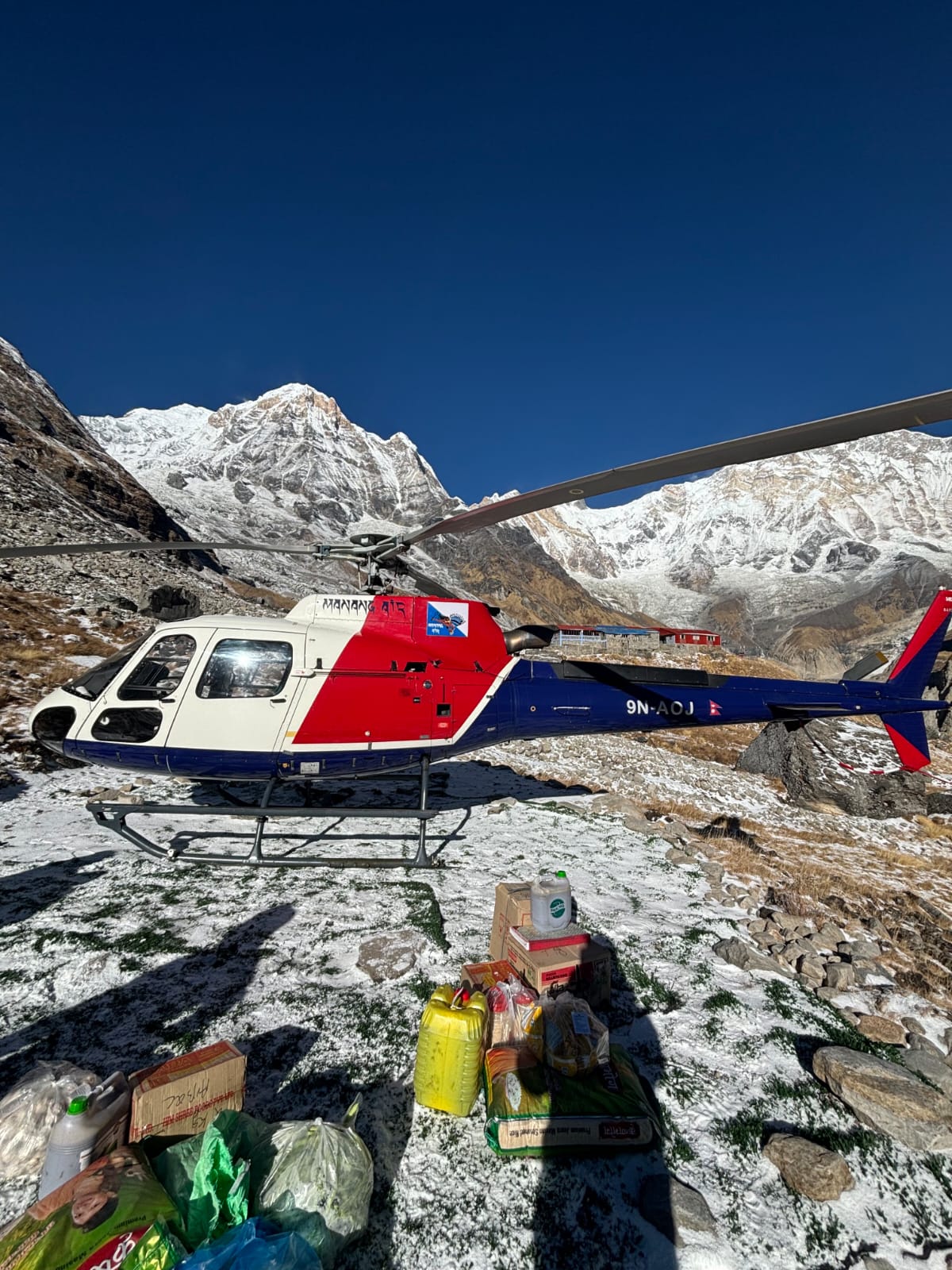
8:00 to 8:15 AM: The Objective, A high-impact landing at Kalapathar 5545m. You have 10 to 15 minutes on the ground for maximum impact photography in the thin air.
8:15 to 9:15 AM: The sustenance, a short flight to the Hotel Everest view (3,880m) for a 60-minute breakfast overlooking the entire Everest Range.
9:15 to 10:30 AM: Mission Return: Final descent back to Lukla for a second refueling stop before the 45-minute cruise back to Kathmandu.
10:30 to 11:30 AM: Re-entry: Arrival in Kathmandu and private transfer back to your hotel, completing the mission by late morning.
Weight manifests: Above 4000 meters, helicopters are restricted by air density; a group of 4-5 may be shuttled in two turns from periche to ensure safety.
Oxygen protocol: All missions carry medical-grade supplemental oxygen for immediate use if altitude pinches are felt.
Clothing gear: Dress in high altitude layers, windproof jackets, and UV400 polarized sunglasses to combat glacial glare.
Weather policy: Flights are strictly weather dependent; a Go/No Go decision is made by the pilot at 6:00 AM.
This helicopter tour is for the explorers who want to witness the pinnacle of Earth’s geography without the physical toll of 12 days break. It offers a God’s-eye view of the Kumbu’s glaciers. And providing a perspective of the glaciers and peaks that ground-level trekkers can never see. It’s the ultimate fusion of luxury and efficiency in a high-altitude adventure.
This is the most active time in Kumbu. You are flying during the primary climbing season, where the landscape is a mix of blooming Rhododendron at the lower altitudes and Base Camp city, a tactical cluster of yellow tents visible from the cockpit. The air is warming, providing the most stable flight conditions and the highest success rate for reaching the target coordinates at Kalapatthar.
Post monsoon, the atmosphere is washed clean, resulting in the sharpest visibility of the entire year. This is the prime window for professional-grade photography of the jewels, as the dust is gone and the peaks stand out in the high-contrast relief against the deep blue skies. If your mission objective is pure visual fidelity, this is the tactical choice.
For those chasing a total frozen aesthetic, the Winter season delivers a raw snow-shrouded terrain that feels like an alien world. Although the mercury drops significantly and demands heavy-duty insulation, the atmosphere is frequently transparent and bright. This is a low-volume period, ideal for adventurers who desire solitary peaks and are willing to endure the sting of Alpine chill.
Most full-day EBC heli tours run 4-6 hours round trip from Kathmandu with landings at Kalapatar and flyovers of Base Camp and the icefall, back by early afternoon.
No, tourist helicopters land at Kalapatthar (5,545m) for the iconic Everest face-to-face view; Base Camp landings are restricted to rescue/expeditions only.
Spring, March to May, and Autumn, September to November, for the clearest skies with the highest success rate; monsoon and winter bring more cancellations or extreme cold.
Very low effort. No trekking needed, just short high altitude exposure at landing spots, fine for most in reasonable health, but stay hydrated and move slowly.
Weather rules the Himalayas; cancellations happen; reputable operators offer rescheduling or partial refunds, book with flexible policies.
Layers, warm jacket, gloves, hats, sunglasses, sunspot, sturdy shoes, camera, water bottles. Your operator will give you a full briefing.
Early morning departures catch the best light in the calmest air. This quick sky adventure hits deep, leaving memories and stories for you to share for years. Safe travels.
Short ground time at 5500m usually keeps symptoms mild; headache, shortness of breath, and possible dehydration is rarely seen. Move slowly around while on the ground and tell your pilot about any concerns; most people handle it fine.
Yes, many families and seniors reached safely. No age limit, just reasonable health and no. heart, lung issues, operators often recommend consulting a doctor for high-altitude exposure.
Absolutely, yes. The Kala Patthar landing puts you on eye-level with Everest’s massive North Face, often clearer and closer than from the base camp itself. It's time for photos and an unforgettable moment.
Helicopters can feel bumpy, sit forward-facing, looking out the horizon, and eat light beforehand. Pilots are well-trained and experienced, fly smoothly, and many who get car sick do fine here.